• 首頁 (Home)
  • 理論介紹 (Theories)
    • 警戒色
    • 貝氏擬態 (Batesian mimicry)
    • 穆氏擬態 (Mullerian mimicry)
    • 副貝氏擬態 (quasi-Batesian mimicry)
  • 研究團隊 (research teams)
    • Candy Rowe
    • James Mallet
    • John skelhorn
  • 文獻蒐集 (Bibliography)
    • 2010-
      • 2016
      • 2015
      • 2014
      • 2013
      • 2012
      • 2011
      • 2010
    • 2000-2009
      • 2009
      • 2008
      • 2007
      • 2006
      • 2005
      • 2004
      • 2003
      • 2002
      • 2001
      • 2000
    • More than 650 references on mimicry

擬態生物學

警戒色與擬態的介紹團隊,學術文章導讀,歷史背景,物種,與生物多樣性


跳蛛的某些種類外觀看起來像蜂、螞蟻、或是有些像甲蟲,已經有許多的觀察與研究,但長得像蠅的似乎不太常見。這個研究描述了一個分佈於玻利維亞的跳蛛新種,其外觀的某些角度與幾種不同的蠅看起來十分相似,作者認為這可能是為了要靠近捕食這些蠅而形成的攻擊型擬態 (aggressive mimicry)

Perger, R., & Rubio, G. D. (2018). A wolf in sheep’s clothing: The description of a fly resembling jumping spider of the genus Scoturius Simon, 1901 (Araneae: Salticidae: Huriini). PLOS ONE, 13(1), e0190582. http://doi.org/10.1371/journal.pone.0190582
Wrote by Chia-Hsuan Wei


海中有名的互利共生的例子之一,就是大型魚會去讓裂唇鱼(醫生魚,俗稱飄飄)咬去體表的寄生蟲這個現象了。而三帶盾齒䲁,俗稱假醫生魚,外觀與醫生魚相似,不是為了要躲避天敵,而是要騙醫生魚的顧客,當顧客要被「醫療」而靠近假醫生魚的時候,牠就偷咬顧客的鰭,造成這稱為「攻擊型擬態」的現象。

但是有研究指出,假醫生魚的食性似乎不是以魚鰭為主,也就是把顧客騙過來吃的假設看起來有點似是而非?這個攻擊型擬態的策略到底作用於何時?或是,是不是真的有作用呢?

這個研究重新探索沖繩瀨底島的假醫生魚回答這個疑問。研究者發現假醫生魚的食物來源有四個:大旋鰓蟲(管蟲)的觸手、硨磲蛤的套膜、雀鯛的蛋與魚的鰭。本研究中的個體中,較頻繁攻擊魚鰭的個體體長明顯較小,而捕食魚蛋個體體長較大。攻擊魚蛋的個體會形成一個捕食群體,提高捕食成功率。而以魚鰭為食的個體較小,可能是因為體形的限制難以加入攻擊魚蛋的群體,只能轉而以攻擊型擬態的捕食策略來存活。

總結起來,就是較小的假醫生魚靠偷吃別魚的鰭為主,較大的就能加入捕食群體增加捕食效率,而攻擊型擬態一直都有用,但主要作用在較小的個體上。


Fujisawa, M., Sakai, Y., & Kuwamura, T. (2018). Aggressive mimicry of the cleaner wrasse by Aspidontus taeniatus functions mainly for small blennies. Ethology, 124(6), 432–439. http://doi.org/10.1111/eth.12743


Wrote by Chia-Hsuan Wei
Fig. 1 織布鳥與寡婦鳥的親緣關係。圖中框起來的就是本文主角-雌性寄生織布鳥。在其上的是擬態的模型,紅寡婦鳥(雄性紅色那隻)。
標題:Evidence for aggressive mimicry in an adult brood parasitic bird, and generalized defences in its host.

摘要

Mimicry of a harmless model (aggressive mimicry) is used by egg, chick and fledgling brood parasites that resemble the host’s own eggs, chicks and fledglings. However, aggressive mimicry may also evolve in adult brood parasites, to avoid attack from hosts and/or manipulate their perception of parasitism risk. We tested the hypothesis that female cuckoo finches (Anomalospiza imberbis) are aggressive mimics of female Euplectes weavers, such as the harmless, abundant and sympatric southern red bishop (Euplectes orix). We show that female cuckoo finch plumage colour and pattern more closely resembled those of Euplectes weavers (putative models) than Vidua finches (closest relatives); that their tawny-flanked prinia (Prinia subflava) hosts were equally aggressive towards female cuckoo finches and southern red bishops, and more aggressive to both than to their male counterparts; and that prinias were equally likely to reject an egg after seeing a female cuckoo finch or bishop, and more likely to do so than after seeing a male bishop near their nest. This is, to our knowledge, the first quantitative evidence for aggressive mimicry in an adult bird, and suggests that host–parasite coevolution can select for aggressive mimicry by avian brood parasites, and counter-defences by hosts, at all stages of the reproductive cycle.

侵略型擬態 (aggressive mimicry) 的型式有很多種,最常見的是醫生魚與假醫生魚的例子,鳥類的話就是杜鵑將蛋寄生在別種鳥類的巢中。以鳥來說,要將蛋成功寄生需要付出很大的耗費,通常是鳥蛋的樣式或是雛鳥的乞食標記,透過侵略型擬態的方式達成寄生的目的。除了蛋與雛鳥,成體是否也存在侵略型擬態呢?

原生於非洲的寄生織布鳥 (cuckoo finch, Anomalospiza imberbis) 是會將鳥蛋寄生在同屬於非洲的褐頭鷦鶯 (tawny-flanked prinia, Prinia subflava) 的巢中,而寄生織布鳥的的雌性外貌十分類似分佈於當地非寄生姓的紅寡婦鳥 (southern red bishop, Euplectes orix)。基於物種間不太可能沒來由的具有高度相似性,而且當分佈又重疊時,自然學家心中的一些疑問就產生了:難道雌性織布鳥藉由擬態雌性紅寡婦鳥來接近褐頭鷦鶯的巢,避免被趕走,增加寄生鳥蛋的成功率嗎?

作者群提出幾個假設。首先,如果織布鳥是擬態者,那麼牠們的數量應該要低於其擬態者;其次,雌性織布鳥的外貌相似的來源是是因為擬態或是系統發生上的限制?如果是因為前者,那麼應該跟紅寡婦鳥的樣子比較接近,如果是因為後者,那麼應該會跟姊妹群的樣子比較接近;其三,如果褐頭鷦鶯無法分辨雌性織布鳥與雌性紅寡婦鳥,並且認為雄性織布鳥是種威脅,那麼將兩性的織布鳥與紅寡婦鳥同時呈現在褐頭鷦鶯面前時,應該只會排除雄性織布鳥,其他三種則不會有強烈的反應;最後,如果褐頭鷦鶯發現雌性的織布鳥擬態時,是否會回頭將外來的鳥蛋排除?

Fig. 2 織布鳥、紅寡婦鳥屬與姊妹群維達鳥屬的分佈與顏色的差異。

Fig. 3 褐頭鷦鶯看到織布鳥後的警戒音與排除鳥蛋的行為結果
作者群分別以光學模型、系統發生學,與行為學的方式來驗證這些假設。結果顯示雌性織布鳥的數量遠少於紅寡婦鳥以及其姊妹群,羽毛的顏色也比較接近雌性紅寡婦鳥,支持雌性織布鳥外貌的擬態。行為的結果顯示比起對雌性織布鳥與紅寡婦鳥,對兩種鳥的雄性排除性更高,也就代表褐頭鷦鶯無從分辨雌性織布鳥與紅寡婦鳥。最後,當褐頭鷦鶯看到雌性織布鳥與紅寡婦鳥後,排除鳥蛋的行為比看到雄性紅寡婦鳥更加明顯。

或許是我對於鳥類的行為太不瞭解,但有意思的是整個實驗做完後發現雌織布鳥的擬態似乎至少在某些地方是無助於鳥蛋寄生的成功率,甚至可能因為雌紅寡婦鳥的關係增加被排除的風險,這還能算是侵略型擬態嗎?或是因為實驗設計的關係呢?或是擬態後的好處不在此?

希望能釣到比較瞭解這些鳥的故事的朋友,出來說說不同面向的看法,讓我們更瞭解這個文章的全貌。
Wrote by Chia-Hsuan Wei
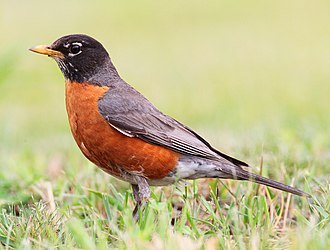
美洲知更鳥 (Turdus migratorius)
photo:
American robin (wiki)
標題:Experimental Shifts in Intraclutch Egg Color Variation Do Not Affect Egg Rejection in a Host of a Non-Egg-Mimetic Avian Brood Parasite

摘要

Avian brood parasites lay their eggs in the nests of other birds, and impose the costs associated with rearing parasitic young onto these hosts.Many hosts of brood parasites defend against parasitism by removing foreign eggs from the nest. In systems where parasitic eggs mimic host eggs in coloration and patterning, extensive intraclutch variation in egg appearances may impair the host’s ability to recognize and reject parasitic eggs, but experimental investigation of this effect has produced conflicting results. The cognitive mechanism by which hosts recognize parasitic eggs may vary across brood parasite hosts, and this may explain variation in experimental outcome across studies investigating egg rejection in hosts of egg-mimicking brood parasites. In contrast, for hosts of non-egg-mimetic parasites, intraclutch egg color variation is not predicted to co-vary with foreign egg rejection, irrespective of cognitive mechanism. Here we tested for effects of intraclutch egg color variation in a host of nonmimetic brood parasite by manipulating egg color in American robins (Turdus migratorius), hosts of brown-headed cowbirds (Molothrus ater).We recorded robins’ behav- ioral responses to simulated cowbird parasitism in nests where color variation was artificially enhanced or reduced. We also quantified egg color variation within and between unmanipu- lated robin clutches as perceived by robins themselves using spectrophotometric measures and avian visual modeling. In unmanipulated nests, egg color varied more between than within robin clutches. As predicted, however, manipulation of color variation did not affect rejection rates. Overall, our results best support the scenario wherein egg rejection is the outcome of selective pressure by a nonmimetic brood parasite, because robins are efficient rejecters of foreign eggs, irrespective of the color variation within their own clutch.


把鳥蛋下在別人家裡,讓其他的親鳥把自己的孩子拉拔長大,將飼養子代的成本轉嫁到其他的物種上,對於寄生者來說是一件省資源的好事,但對於被寄生的寄主來說就沒那麼輕鬆了。因此有些寄生者為了有效率的託孤鳥蛋,發展出能夠將鳥蛋生的跟寄主的蛋一樣,讓寄主分不出來,但也有些寄生者似乎不太在意相似度,採取以量取勝的策略,只要看到巢就到處生,這也造成寄主很容易的就把這些外來的蛋認出,使這次的寄生失敗。有意思的是,似乎不是每種被寄生的鳥都認得出來,或是辨識出來也不排除,即使鳥蛋的樣子非常不相似,這樣的行為可能與被寄生的鳥的認知能力系統差異有關。

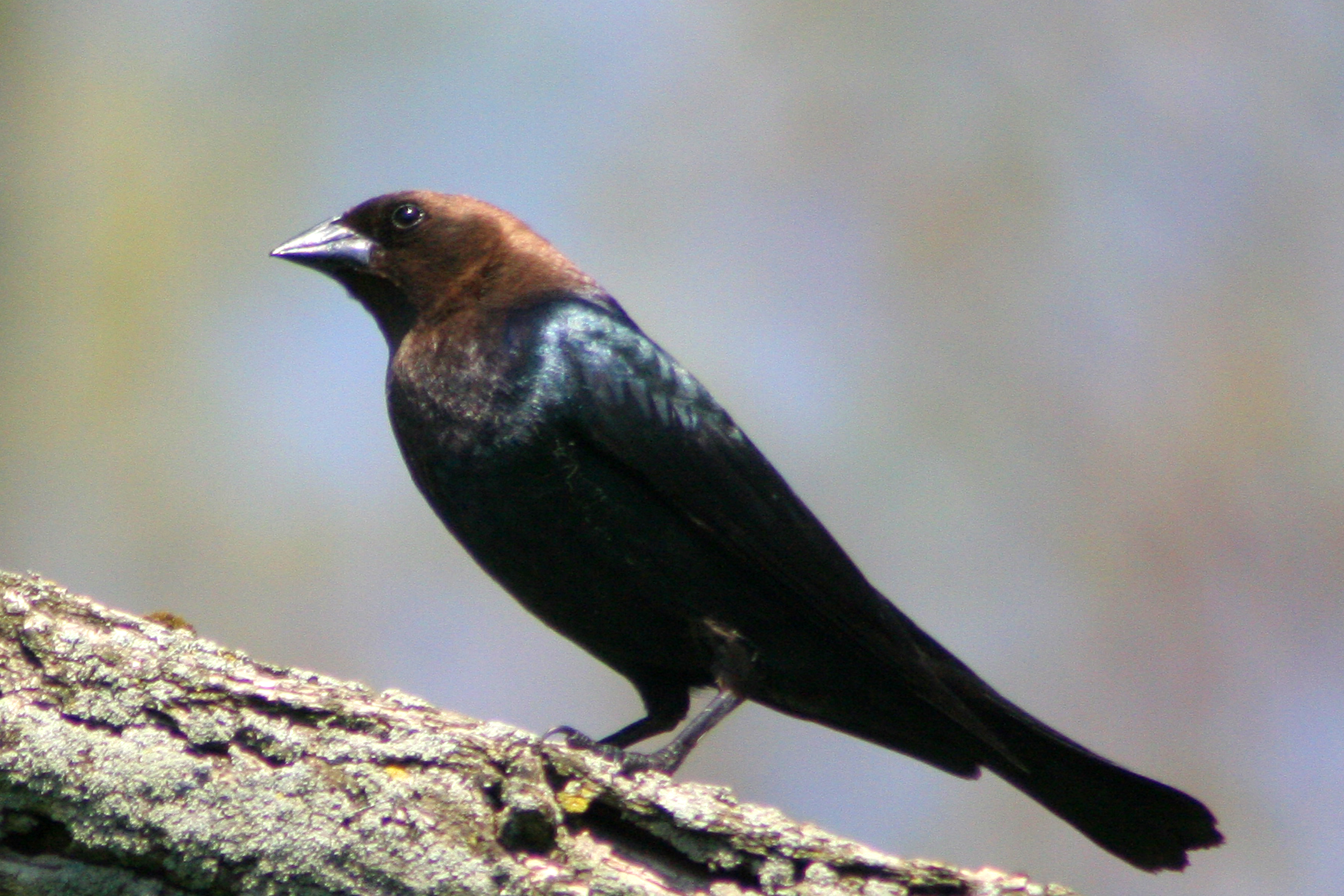
褐頭牛鸝 (Molothrus ater)
photo: Brown-headed cowbird (wiki)
褐頭牛鸝與美洲知更鳥的蛋
photo: Don Johnston
褐頭牛鸝 (Molothrus ater) 就是一種四處到別人家裡生蛋的鳥,而這種鳥的蛋就屬於完全不擬態的鳥蛋。其中的寄主之一,美洲知更鳥 (American robin, Turdus migratorius) 則是能夠高度排除褐頭牛鸝的鳥蛋,有時甚至能達到完全排除。但美國知更鳥的蛋與褐頭牛鸝的蛋差異很大,美國知更鳥之所以能有效率的排除外來的蛋,是因為其認知系統很強大到無論如何都能夠辨識並排除,或是單純的只是因為這顆蛋差異很大很奇怪,因此排除這顆鐵定與我無關的蛋?

Fig. 1 實驗進行所使用的鳥蛋顏色與反射光譜數據
Fig. 2 增加或減少鳥蛋顏色的條件下,知更鳥排除的比例
作者透過行為實驗操作,將褐頭牛鸝的蛋上色成與知更鳥的蛋類似的顏色但深淺不一,將其放入知更鳥的巢中記錄其行為,並且將這些顏色以鳥類的視覺模型檢驗,以推測究竟是認知系統或是視覺差異主導排除外來鳥蛋。結果顯示無論操作的顏色變化,都不會影響知更鳥的鳥蛋排除率,支持知更鳥的認知能夠幫助其排除外來鳥蛋。這個結果也顯示知更鳥的認知系統與寄生鳥蛋在演化上的競爭關係。
Wrote by Chia-Hsuan Wei
大杜鵑 (Cuculus canorus)
photo: Planet of Birds


標題:A shared chemical basis of avian host−parasite egg colour mimicry

摘要

Avian brood parasites lay their eggs in other birds’ nests and impose considerable fitness costs on their hosts. Historically and scientifically, the best studied example of circumventing host defences is the mimicry of host eggshell colour by the common cuckoo (Cuculus canorus). Yet the chemical basis of eggshell colour similarity, which impacts hosts’ tolerance towards parasitic eggs, remains unknown. We tested the alternative scenarios that (i) cuckoos replicate host egg pigment chemistry, or (ii) cuckoos use alternative mechanisms to produce a similar perceptual effect to mimic host egg appearance. In parallel with patterns of similarity in avian-perceived colour mimicry, the concentrations of the two key eggshell pigments, biliverdin and protoporphyrin, were most similar between the cuckoo host-races and their respective hosts. Thus, the chemical basis of avian host–parasite egg colour mimicry is evolutionarily conserved, but also intraspecifically flexible. These analyses of pigment composition reveal a novel proximate dimension of coevolutionary interactions between avian brood parasites and hosts, and imply that alternative phenotypes may arise by the modifications of already existing biochemical and physiological mechanisms and pathways.

Fig. 1 大杜鵑在匈牙利、芬蘭與捷克的蛋與當地寄主的相似度


大杜鵑 (Cuculus canorus) 是一種從內而外,從頭到尾都模仿其他物種的鳥類,成體的外觀類似某些雀鷹,牠們的鳥蛋能夠藉著擬態各種不同其他的鳥類的蛋,下在其他鳥類的窩裡,利用其他鳥類的資源來培養牠們的後代,其生活史幾乎可以說是寄生在其他鳥類的資源上,這個現象自然引起科學家對杜鵑濃厚的興趣,認為這無論是研究行為或演化,都是十分適合的生物模型。

這篇文章的作者群想討論一個問題:杜鵑的鳥蛋可以這麼相似,變化度又這麼大,是透過合成鳥蛋的化學機制控制,或是有什麼其他的機制控制呢?作者群取樣數種分佈在匈牙利、芬蘭與捷克的鳥種,其中有共域杜鵑的主要寄主、次級寄主與非寄主的鳥類,分析其鳥蛋表面的反射光譜與色素組成的化學結構,從光學與化學的角度推測杜鵑鳥蛋擬態的機制來源。

Fig. 2 光譜分析結果

Fig. 3 化學成分分析結果

結果發現杜鵑的蛋殼與當地寄主的蛋殼光譜有部分重疊,而杜鵑的蛋殼更廣泛的涵蓋到其他非寄主的蛋殼光譜。色素化學的分析結果顯示兩種主要形成蛋殼色素的化學物質,biliverdin與protoporphyrin,與當地寄主的蛋殼的濃度類似,顯示顏色的相似度可能來自色素化學物質濃度的趨同所導致。
Wrote by Chia-Hsuan Wei
大杜鵑 (Cuculus canorus)
photo from ouse washes
標題:Hawk models, hawk mimics, and antipredator behavior of prey.

摘要

Prey typically respond to potential predators by taking flight. This results in an optimal flight initiation distance (FID) at which the risk of remaining and the cost of flight are equal. Thus, FID is strongly negatively correlated with susceptibility to predation by the sparrowhawk Accipiter nisus across species of small European birds. However, not everything that looks like a hawk is in fact a hawk. Aggressive mimicry arises from the resemblance between a dangerous model such as a predatory hawk and an innocuous mimic such as a cuckoo that makes errors made by individuals that encounter models and mimics potentially dangerous and life threatening. A prime example of such aggressive mimicry is the hawk-like appearance of common cuckoos Cuculus canorus and other cuckoos. If mimicry is efficient, we should expect that species of small birds that are prey of hawks and hosts of cuckoos react just as strongly to a cuckoo as to the presence of a dangerous model like a sparrowhawk. We used FID of small birds as a measure of the reaction of prey to models and mimics, predicting that FID would be negatively related to susceptibility to predation and positively to risk of cuckoo parasitism. Both susceptibility to sparrowhawk predation and rate of brood parasitism by the common cuckoo independently explained variation in FID, consistent with the expectation that both hawks and cuckoos have imposed significant selection pressures on FID and that species of small birds perceive cuckoos as true mimics of hawks.

獵物遇到天敵要逃跑的時候,通常會評估「到底要不要跑?」

覺得奇怪嗎?遇到天敵,先跑,就對了啊,難道還等天敵到面前了才傻傻的要跑嗎?

對於野外一天到晚被人盯著瞧,隨時可能被吃掉的物種來說,隨時隨地都可能遇到天敵,但不是隨時隨地都有力氣可以跑,如果太早跑反而提早被發現,因此這些物種會評估到底捕食者離我多近才要跑,這稱為flight initiation distance (FID),也可以叫做初始逃跑距離,就是捕食者離我到多近的食後才開始逃跑。那麼為什麼會有這個距離呢?因為有些獵物身上有些隱蔽色或有些警戒色之類用來躲避天敵的機制,如果捕食者雖然靠的很近但其實沒發現,那麼就不用浪費力氣逃跑,可是相對的會遭遇非常高的風險:萬一被發現就跑不掉了。

雀鷹 (Accipiter nisus)
photo from Eurasian sparrow hawk (wiki)

那麼有意思的事情就發生了。大杜鵑 (Cuculus canorus)眾所皆知,有把蛋下在別人的巢裡,讓別的鳥幫牠孵蛋的行為。有人覺得大杜鵑長的像雀鷹 (Accipiter nisus),早期的科學家認為這是一種貝氏擬態,但後來發現有另一種可能:這些大杜鵑長的像雀鷹,把那些要幫牠孵蛋的鳥嚇走,大杜鵑就能順利的去這些鳥的巢裡下蛋了?

作者藉由測量那些幫忙孵蛋的小型鳥的FID來測試這件事。之前有研究顯示,歐洲的小型鳥的FID與感知捕食的壓力的平衡點是負相關(體型越小靠的越近),因此如果小型鳥感應到的是捕食壓力,那麼應該是負相關,如果感知到的是普通的杜鵑偷生蛋行為,則是正相關。大杜鵑看起來就像雀鷹的話,那麼小型鳥的FID應該會與看到雀鷹的FID結果相似。作者觀察了63種鳥類行為的結果顯示,雖然某些小型鳥對大杜鵑的反應就像對雀鷹一樣,但相較於捕食的壓力,對於認知「杜鵑來下蛋」這件事還是比較強烈,因此大杜鵑擬態雀鷹可能有侵略型擬態的作用,但作者還是認為這還是種貝氏擬態,功用可能在於寄生到比較兇的寄主時,不會被這些寄主反過來攻擊甚至喪命。綜合以上顯示兩種行為都帶給這些小型鳥不同的壓力,這使FID的測量與結果可能來自於更為複合的行為觀察才能解釋。
Wrote by Chia-Hsuan Wei
文中的擬態者 勞旦橫口鳚 (Plagiotremus laudandus)
photo from Dianne J. Bray, 2011, Bicolor Fangblenny, Plagiotremus laudandus, in Fishes of Australia
文章中的被擬態者,金鰭稀棘䲁 (Meiacanthus atrodorsalis)
photo: Dianne J. Bray, 2011, Eyelash Fangblenny, Meiacanthus atrodorsalis, in Fishes of Australia, accessed 31 Mar 2016

標題:Multiple selective pressures apply to a coral reef fish mimic: a case of Batesian-aggressive mimicry.

摘要

Mimics closely resemble unrelated species to avoid predation, capture prey or gain access to hosts or reproductive opportunities. However, the classification of mimicry systems into three established evolutionary mechanisms (protection, reproduction and foraging) can be contentious because multiple benefits may be gained by mimics, causing the evolution of such systems to be driven by more than one selective agent. However, data on such systems are generally speculative or anecdotal. This study provides empirical evidence that dual benefits apply to a coral reef fish mimic in terms of increased access to food (aggressive mimicry) and reduced predation risk (Batesian mimicry). Bicolour fangblennies Plagiotremus laudandus gained access to more reef fish victims, which they attack to feed on fins and scales, when they spent more time associated with their model Meiacanthus atrodorsalis. Furthermore, exact replicas of P. laudandus incurred fewer approaches from potential predators compared with control replicas that varied in resemblance to P. laudandus. Predators with trichromatic visual systems (three distinct spectral sensitivities) could potentially distinguish between replicas based on colour based on theoretical vision models. Therefore, this mimicry system could be best described as Batesian–aggressive mimicry in which mimicry evolution is driven by multiple simultaneous selective pressures.

photo from Fig. 1
a) i. 金鰭稀棘鳚 (Meiacanthus atrodorsalis) ii. 勞旦橫口鳚 (Plagiotremus laudandus)
b) 三種手工實驗用假魚與控制組物種粗吻橫口鳚 (P. rhinorhynchos)
通常科學家會把牽涉擬態的物種歸類,譬如說這是貝氏擬態,那是穆氏擬態,也有可能是介於兩者間的負貝氏擬態,那麼會不會有一個物種同時牽涉兩種擬態的系統呢?

這個研究地點在印尼蘇拉維西東南方的10個珊瑚礁,這個系統是兩種珊瑚礁魚類,勞旦橫口鳚 (Plagiotremus laudandus)藉由擬態金鰭稀棘鳚 (Meiacanthus atrodorsalis),跟著這個魚群游來游去,到處偷吃別種魚的鰭或鱗片,是一個典型的侵略型擬態的例子。可是,金鰭稀棘鳚是一個有毒牙的物種,一般的捕食者通常看到這種魚會避開避免攻擊,若是不小心吃到也會吐掉,那麼勞旦橫口鳚通常跟金鰭稀棘鳚游在一起,會不會藉著的關係,在貝氏擬態的保護關係中呢?

作者的實驗分為兩個部分,一個是在那10個珊瑚礁樣區潛水,在海下2-18公尺的地方尋找這些物種,觀察勞旦橫口鳚的攻擊次數與攻擊成功次數,以及勞旦橫口鳚留在金鰭稀棘鳚周圍30公分的時間;另一個部分是利用上圖的四種假餌,包含原樣,兩種變異與一種控制組,每個假魚會放出10分鐘,看看會不會有其他捕食性魚類來攻擊,樣區選擇三種,沒model/有mimic (Lizard island),有model/有mimic (Lizard island),有model/有mimic (Pulau Hoga),並且記錄靠近假魚的其他魚類是捕食性或是非捕食性。

photo from Fig. 2
此圖說明model/mimic比例的高低與攻擊成功率無關(黑圈圈),但花在model旁邊時間越多,成功率較高(白鑽石)


photo from Fig. 3
左邊是捕食性魚類,右邊是非捕食性魚類
從上而下分別是三組:沒model/有mimic (Lizard island),有model/有mimic (Lizard island),有model/有mimic (Pulau Hoga)
結果顯示花越多時間在金鰭稀棘鳚旁邊的勞旦橫口鳚個體,偷吃到其他魚類的成功率較高;而在兩種魚類共存的區域,捕食性魚類避開勞旦橫口鳚假魚的數量顯著的比較高,但非捕食性魚類就沒有顯著的差異,支持勞旦橫口鳚的擬態體色同時具有貝氏擬態與侵略性擬態的功用,代表這種魚可能同時承受複雜的天擇壓力。

比起透過飼養的幼雛,或是調控人工假餌來避免野外經驗影響實驗結果,這個研究的一部分是在自然環境下進行的實驗,而且明顯依賴野外捕食者的經驗來支持其結果,雖然說水下的環境與陸地差異很大,可能有更多科學家缺少考慮的因子,但我想這還是比較能夠真實的反應自然界對擬態物種的選擇。


Wrote by Chia-Hsuan Wei
photo from what-when-how

標題:Costs of Learning and the Evolution of Mimetic Signals.

摘要

Predators must use the appearance of their prey to decide whether it is likely to be defended. Most theory assumes that predators have completed learning about prey appearance, yet we do not understand how predators learn which aspects of appearance to use for classifying prey. If sampling prey can be risky, predators might forgo opportunities to learn about the relationship between prey appearance and defense. Using Bayesian inference and dynamic programming, we modeled how the immediate risks and future rewards of learning about prey appearance influence how predators learn. In addition, we explored how variation in predator learning affects the evolution of mimicry, which occurs when two prey evolve to share a common signal to predators. We found that when learning about prey with distinct appearances was expensive, optimal predators tended to lump them into the same category or exhibit an unwillingness to sample at all (neophobia). This resulted in a reduction in selection for defensive mimicry. However, the same predator behavior favored the evolution of aggressive mimicry, because in that case, mimics benefited from being sampled. When prey were very rare and costs of sampling them were high, predators exhibited neophobia, refusing to attack. This behavior could forestall the evolution of mimicry and instead select for polymorphism.

捕食者的學習對於警戒性/擬態的演化實在很重要,因為這是最主要的天擇來源,但科學家實在對捕食者的學習模式太不瞭解,主要的癥結點在於不知道捕食者什麼時候吃,什麼時候不吃,要幾次才學的起來,學的多快才能推動這些斑紋的演化,有多少心理學的因子牽涉在裡面,其中一種研究方法就是透過數學模型的模擬,來推估哪些因子可能牽涉其中。

擷取自文中的方程式
捕食者在面對具有警戒性/擬態訊號的獵物時,吃了,可能會拉肚子甚至喪命,不吃,浪費了難得可以得到能量的機會,在這中間捕食者時如何評估獲得(reward)與學習的消耗(cost),這會如何對獵物產生影響,就是這篇文章所要探討的。作者評估了一些因子,建立了一些模型,跑了一些模擬(過程很複雜也很難,容我跳過),得到的結論是捕食者對於分辨兩個長的很像的東西的代價是非常昂貴的,可以想像一下,捕食者首先要先學到兩種獵物,如果是貝氏擬態,牠要分辨這個物種是不是能吃的那個,如果是穆氏擬態,要學到兩邊都不能吃,更別提如果環境中同時存在兩個系統,光在那邊學半天餓都餓死了。因此模擬出來的結果顯示,捕食者傾向把這類的獵物通通歸類於不能吃的那邊(也就是恐新症,neophobia),這就讓擬態的斑紋有演化的空間了。此外,作者發現侵略性擬態(aggressive mimicry)也有類似的趨勢。
Wrote by Chia-Hsuan Wei
photo from content

標題:A complex mode of aggressive mimicry in a scale-eating cichlid fish

摘要

Aggressive mimicry is an adaptive tactic of parasitic or predatory species that closely resemble inoffensive models in order to increase fitness via predatory gains. Although similarity of distantly related species is often intuitively implicated with mimicry, the exact mechanisms and evolutionary causes remain elusive in many cases. Here, we report a complex aggressive mimicry strategy in Plecodus straeleni, a scale-eating cichlid fish from Lake Tanganyika, which imitates two other cichlid species. Employing targeted sequencing on ingested scales, we show that P. straeleni does not preferentially parasitize its models but—contrary to prevailing assumptions—targets a variety of co-occurring dissimilar looking fish species. Combined with tests for visual resemblance and visual modelling from a prey perspective, our results suggest that complex interactions among different cichlid species are involved in this mimicry system.

movie from supplemental movie
侵略性擬態的食鱗魚-斯氏織麗鯛 (Plecodus straeleni)與其被擬態者六帶新亮麗鯛(=坦桑尼亞金六間,Neolamprologus sexfasciatus) 與 駝背非鯽 (=藍六間,Cyphotilapia gibberosa)


侵略性擬態顧名思義,是mimic擬態model的時候不是「借」好處而是去「搶」好處,通常是藉由擬態某些物種去偷咬別人的身體或搶別人的食物,是一種人類會覺得這樣的行為很壞,然後拿來做文章變成語的一種自然現象。

這個例子說的是非洲坦湖的慈鯛,其中的食鱗魚-斯氏織麗鯛(又稱食鱗惡魔、變色龍食鱗魚),被認為是擬態六帶新亮麗鯛(又稱五間半、金六間)與駝背非鯽(六間),如果這個侵略性擬態關係為真,那麼這個食鱗魚理論上就應該會混在這兩種慈鯛的魚群裡,並且特定只吃這兩種魚的魚鱗。這個團隊想要測試這個假設,就把斯氏織麗鯛胃中的魚鱗拿來用分子鑑定的方式分析,發現不只這兩種魚,居然鑑定出43不同的慈鯛 (見補充資料),可以代表總共12的支系裡的10個支系。其中更發現某一個樣本的胃中更是鑑定出高達9種不同的魚鱗,而不同個體間魚的種類的重疊程度更是只有0.5-15%,顯示這個擬態者的食性其實很廣泛。

即使專一的關係不存在,作者還是認為這是擬態,只是在其他的行為發揮作用。

個人的疑問是慈鯛的線條不是廣泛存在於整個慈鯛中嗎?剛好三種長的像,其中一種剛好是食鱗魚而已,這樣的趨同也有可能吧?
Wrote by Chia-Hsuan Wei
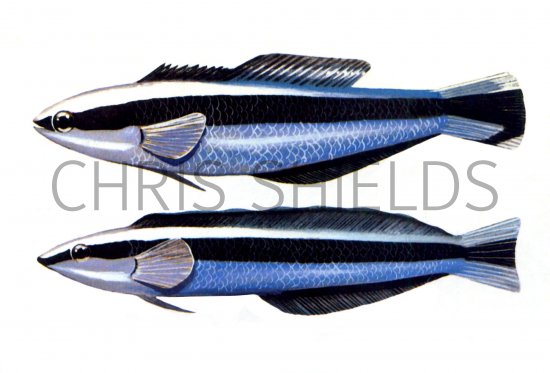
photo from http://goo.gl/4KEih6,上為醫生魚,下為假醫生魚

原文標題:Geographical variation in the benefits obtained by a coral reef fish mimic

摘要 [原文網址]

Mimicry systems are frequently categorized by the type of benefit gained by the mimic's resemblance to its model: protection from threat, including predation (protective mimicry), and increased access to resources, including prey items (aggressive mimicry). These category types may not be mutually exclusive, and some mimics may gain more than one type of benefit. Here we examined a contentious classic textbook example of mimicry between the cleaner wrasse Labroides dimidiatus and its mimic, the sabre-toothed blennyAspidontus taeniatus. We found that the benefit obtained by the sabre-toothed blenny varied between four geographical locations. At the Great Barrier Reef, in Indonesia and in the Red Sea, it rarely attacked reef fish victims, but instead relied on other food sources such as substrate items, damselfish eggs and tubeworms. Here, the main function of the mimicry system could be to protect the sabre-toothed blenny from predation (protective mimicry) and was consistent with a previous study in Japan. However, in French Polynesia, the sabre-toothed blenny aggressively attacked reef fish frequently, and potential victims were more likely to pose to solicit a cleaning interaction. Diet analysis from individuals in French Polynesia indicated material was gleaned from the surface of fish, including large pieces of fin, implying an increase in the benefits obtained from attacking reef fish (aggressive mimicry). This study provides a potential second example of a mimicry system in which multiple types of benefits are gained by a mimic, and importantly, that the benefits obtained by the mimic vary between different environmental conditions and/or geographical locations. This may have important implications for the maintenance and evolution of mimicry systems and may reflect different stages of an arms race with potential victims.

裂唇魚(醫生魚)與三帶盾齒䲁(假醫生魚)是一個極為經典的侵略型擬態(aggresive mimicry)的例子,以往介紹這個例子的時候,都會說到假醫生魚藉由擬態醫生魚靠近他的換「患者」,然後偷咬別人的肉得到好處,但是這個故事已經不是那麼簡單了。

近年來有些證據顯示,擬態斑紋的作用或許不只一個,或是擬態的對象不是單純的一對一,可能是一個中間型像多個擬態的對象。這篇研究討論假醫生魚的擬態現象,主要是跟著1983年日本的關於假醫生魚的一個研究,再進一步擴大討論,作者探索了幾個不同的海域,發現假醫生魚的擬態可能有多種功能:在大堡礁、印尼與紅海區域,假醫生魚可躲過掠食性魚類的攻擊,而且鮮少攻擊其他魚類,這個益處來自醫生魚不會被某些掠食性魚類攻擊(即為保護性擬態),這個部分的結果與日本的嚴就是一致的;而在法屬波里尼西亞海域,假醫生魚則透過侵略型擬態的關係得到較多的好處。最重要結果告訴我們同一個擬態群在不同的時空與環境下,可能會有不一樣的運作模式。

這篇文章基本上該做的都做了:他們是在野外做的(每天要潛水8hr以上觀察)而非實驗室內操作;確認被攻擊的種類與掠食的種類;同時他們也比較了一些變因(移除某些或保留某些魚類觀察行為變化),是一篇滿完整的研究。

雖然近幾年有文章指出這些事情(一個擬態斑紋有多model/多作用),可是研究的類群分布廣泛,而且相對來說證據薄弱文章數量較少,目前尚無法看出是否有某些通則。

Wrote by Chia-Hsuan Wei
Older Posts Home

FB專頁

熱門文章

  • 越紅越凶:草莓箭毒蛙的警戒色除了警告天敵也反應個體侵略性
  • 看起來很警戒,身上的顏色就都很警戒?重新評估北美經典擬態模型的警戒色的例子
  • 放棄身為跳蛛的堅持:除了型態之外,蟻蛛的動作也像螞蟻嗎?

精選文章

貓頭鷹蝶的眼紋真的擬態貓頭鷹的眼睛嗎?

相關網站

  • Heliconius Homepage
    Michel Cast sent me pictures of this nice hybrid specimen from Ceara, Brazil! Thank you Michel and P. Jauffret!
  • 這是什麼啊? 可以吃嗎?
    最近出現一個被狂轉的新聞,大意是說有人為了避免蝸牛被路殺所以在其殼上彩繪,希望這樣就能讓人類注意到蝸牛的存在而不要把牠們踩死。這聽起來好像立意不錯喔? 但就我們研究警戒與擬態的角度來說,我們認為這種作法天真且有些荒謬,為什麼呢? - 在偽裝(camouflage)與警戒(aposematism)形成...
  • WELCOME TO THE BIODIVERSITY LAB! | Biodiversity Lab
  • Kronforst Lab at the University of Chicago
  • mallet lab
  • MimeticButterflies
  • Mathieu Joron - Home
  • Evolution of predator-prey interactions — Bio- ja ympäristötieteiden laitos

文章類型

  • 文章 (Article) 113
  • 擬態環 (mimicry ring) 12
  • 回顧 (review) 10
  • 科普 4
  • 擬態那些事 3
  • 書 (Book) 3
  • 評論 (comment) 1

研究領域

  • 貝氏擬態 (Batesian mimicry) (43)
  • 警戒性 (Aposematism) (40)
  • 穆氏擬態 (Müllerian mimicry) (37)
  • 多態型 (polymorphism) (16)
  • 擬態環 (mimicry ring) (12)
  • 侵略型擬態 (aggressive mimicry) (10)
  • 隱蔽性 (crypsis) (10)
  • 不完美擬態 (imperfect mimicry) (6)
  • 種化 (speciation) (5)
  • 雌性擬態 (female-limited mimicry) (5)
  • 性擇 (sexual selection) (4)
  • 鳥蛋寄生 (egg parasite) (4)
  • 眼斑 (eyespot) (3)
  • 假頭 (false head) (2)
  • 性雙型性 (sexual dimorphism) (2)
  • 擬蟻性 (Myrmecomorphomania) (2)
  • 機動性擬態 (locomotory mimicry) (2)
  • "模糊"型擬態 (satyric mimicry) (1)

研究方式

  • 行為學 (Ethology) (46)
  • 生態 (Ecology) (21)
  • 系統發生學 (phylogenetics) (16)
  • 基因體 (Genomics) (12)
  • 視覺模型 (visual model) (10)
  • 模擬(modelling and simulation) (6)
  • 遺傳學 (genetics) (6)
  • 族群遺傳 (population genetics) (5)
  • 分子生物學 (Molecular biology) (4)
  • 化學生態 (Chemical ecology) (3)
  • 分子鑑定 (molecular identificaiton) (1)
  • 古生物學 (palaeontology) (1)
  • 地理資訊系統 (GIS) (1)
  • 演化發育學 (Evo-Devo) (1)

分類群

Copyright © 2015 擬態生物學. Designed by OddThemes | Distributed By Gooyaabi Templates