• 首頁 (Home)
  • 理論介紹 (Theories)
    • 警戒色
    • 貝氏擬態 (Batesian mimicry)
    • 穆氏擬態 (Mullerian mimicry)
    • 副貝氏擬態 (quasi-Batesian mimicry)
  • 研究團隊 (research teams)
    • Candy Rowe
    • James Mallet
    • John skelhorn
  • 文獻蒐集 (Bibliography)
    • 2010-
      • 2016
      • 2015
      • 2014
      • 2013
      • 2012
      • 2011
      • 2010
    • 2000-2009
      • 2009
      • 2008
      • 2007
      • 2006
      • 2005
      • 2004
      • 2003
      • 2002
      • 2001
      • 2000
    • More than 650 references on mimicry

擬態生物學

警戒色與擬態的介紹團隊,學術文章導讀,歷史背景,物種,與生物多樣性


相對於中高緯度地區,熱帶普遍是物種多樣性比較高的區域。然而,在熱帶非洲並非每個類群都如此,而這讓非洲相較其它熱帶區域顯得「格格不入」(odd man out)。

這與擬態有什麼關係?

蟻蜂是物種或是斑紋都呈現很高的多樣性,也是世界上大規模參與穆氏擬態的類群之一,在全世界約有4900個已被命名的型態,而其中約三分之一(1600種與亞種)分佈於非洲,面對這麼高的物種多樣性,非洲的蟻蜂在卻鮮少出現在擬態研究的歷史上。

由於非洲的蟻蜂擬態的多樣性沒有被討論過,因此這個研究首先調查了非洲蟻蜂的斑紋多樣性,比較每個物種的斑紋相似性,發現這些蟻蜂可分為四個穆氏擬態群,也就是說雖然非洲蟻蜂的物種多樣性很高,但比起北美的斑紋可分為8個擬態群來說,其擬態的分化並未隨著多樣性而爆炸性提高。

研究者認為這個現象可能來自於非洲的生物分區比起北美來說少很多(108 vs 168),並且捕食者的多樣性也就低(特別是蜥蜴,非洲:北美 = ~940:980),因此這可能影響蟻蜂擬態多樣性的分化。

簡單的說,可能就是蟻蜂一來沒那麼多棲位可以分化,而且也沒有這麼多樣化的捕食者需要面對,因此斑紋的分化就被限制,而在非洲的擬態樣式比起北美少了一半,這就符合非洲熱帶那「格格不入」的現象了。

Wilson JS, Pan AD, Limb ES & Williams KA. 2018. Comparison of African and North American velvet ant mimicry complexes: Another example of Africa as the ‘odd man out’. PLOS ONE 13: e0189482.
Wrote by Chia-Hsuan Wei

擬態主要的演化機制來自天擇,也就是由捕食者來決定擬態是否能留在環境中,但是由哪類捕食者來推動演化呢?

鳥類?哺乳類?爬蟲類?會飛的或是爬樹的?這是個很大未解的問題。

這個以分佈在北美的絨蟻蜂的穆氏擬態群為主的研究給了一個可能性。研究者用以下四個基本原則篩選可能的候選者

1. 捕食者與獵物間分佈相似性
2. 相似的絨蟻蜂擬態者出現區域的捕食者群集相似性
3. 潛在捕食者的食性偏好
4. 比較時間與空間上捕食者與獵物間的演化一致性
研究者認為物種多樣性最高的安樂蜥科(Dactyloides, the anoles)與角蜥科(Phrynosomatidae, horned-lizards, spiny-lizards, and allies)與絨蟻蜂活動範圍最相似,有可能是其主要捕食者,因此以這兩個科的物種為標的,評估以上四個因子,探討這兩類獵蜥是演化推力的可能性。結果發現獵蜥有可能是絨蟻蜂擬態群最可能的推動者,在評估各種因素後(食性、視覺能力等),其中多樣性最高的安樂蜥科最有可能是最大的演化推力,而在中美兩個絨蟻蜂擬態群(Black-headed Timulla 與 Tropical)就可能是由安樂蜥科所形塑。

來源
Pan AD, Williams KA & Wilson JS. 2017. Are diurnal iguanian lizards the evolutionary drivers of New World female velvet ant (Hymenoptera: Mutillidae) Müllerian mimicry rings? Biological Journal of the Linnean Society 120: 436–447. https://academic.oup.com/biolinnean/article/120/2/436/2954954
Wrote by Chia-Hsuan Wei

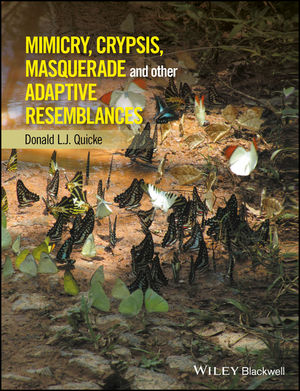
  • 書名     Mimicry, Crypsis, Masquerade and Other Adaptive Resemblances 
  • 作者     Donald L. J. Quicke 
  • 出版者 Wiley Blackwell 
  • ISBN    111893153X, 9781118931530 
  • 頁數     576 頁
擬態/警戒色的生物學進展相當快速,眾多的文章讓很多人難以一窺理論發展的全貌。這本書
縱觀自亨利貝茨十八世紀起的觀察,到近代的理論發展,將擬態生物學的基礎理論與實務發展做了相當清楚的整理,內容包含名詞的爭議與解釋、理論介紹、實務實驗介紹,與許多相關的實例等,這本書可說是未來擬態生物學相關領域的重要文獻。

作者原為Imperial College London生物科學系的教授,2013年退休後至曼谷的Chulalongkorn University作為訪問教授。主要研究領域有寄生蜂的系統分類、生態與演化,系統發生學方法,擬態與警戒色等諸多領域。

內容目錄

Preface 
Acknowledgements 
1 INTRODUCTION AND CLASSIFICATION OF MIMICRY SYSTEMS 
2 CAMOUFLAGE: CRYPSIS AND DISRUPTIVE COLOURATION IN ANIMALS 
3 CAMOUFLAGE: MASQUERADE 
4 APOSEMATISM AND ITS EVOLUTION 
5 ANTI-PREDATOR MIMICRY. I. MATHEMATICAL MODELS 
6 ANTI-PREDATOR MIMICRY. II. EXPERIMENTAL TESTS 
7 ANTI-PREDATOR MIMICRY. III. BATESIAN AND MULLERIAN EXAMPLES 
8 ANTI-PREDATOR MIMICRY. ATTACK DEFLECTION, SCHOOLING, ETC. 
9 ANTI-HERBIVORY DECEPTIONS 
10 AGGRESSIVE DECEPTIONS 
11 SEXUAL MIMICRIES IN ANIMALS (INCLUDING HUMANS) 
12 REPRODUCTIVE MIMICRIES IN PLANTS 
13 INTRA- AND INTERSPECIFIC COOPERATION, COMPETITION AND HIERARCHIES 
14 ADAPTIVE RESEMBLANCES AND DISPERSAL: SEEDS, SPORES AND EGGS 
15 MOLECULAR MIMICRY: PARASITES, PATHOGENS AND PLANTS 
Extended glossary 
References 
Author index 
General index 
Taxonomic index


相關書籍

  • Ruxton GD, Sherratt TN & Speed MP. 2004. Avoiding Attack: The Evolutionary Ecology of Crypsis, Warning Signals and Mimicry. Oxford University Press. 260 pp. 


Wrote by Chia-Hsuan Wei
Fig. 1 本研究定序的目標物種的分佈與其相關類群的親緣關係
標題:Butterfly genome reveals promiscuous exchange of mimicry adaptations among species

摘要

The evolutionary importance of hybridization and introgression has long been debated. Hybrids are usually rare and unfit, but even infrequent hybridization can aid adaptation by transferring beneficial traits between species. Here we use genomic tools to investigate introgression in Heliconius, a rapidly radiating genus of neotropical butterflies widely used in studies of ecology, behaviour, mimicry and speciation. We sequenced the genome of Heliconius melpomene and compared it with other taxa to investigate chromosomal evolution in Lepidoptera and gene flow among multiple Heliconius species and races. Among 12,669 predicted genes, biologically important expansions of families of chemosensory and Hox genes are particularly noteworthy. Chromosomal organization has remained broadly conserved since the Cretaceous period, when butterflies split from the Bombyx (silkmoth) lineage. Using genomic resequencing, we show hybrid exchange of genes between three co-mimics, Heliconius melpomene, Heliconius timareta and Heliconius elevatus, especially at two genomic regions that control mimicry pattern. We infer that closely related Heliconius species exchange protective colour-pattern genes promiscuously, implying that hybridization has an important role in adaptive radiation.

Fig. 2 a. 毒蝶染色體與家蠶染色體同源基因的比較圖,染色體間的連線代表同源基因的來源
b. 毒蝶化學感受蛋白與大樺斑蝶、家蠶間的關係,顯示出蝴蝶獨有與毒蝶獨有的擴張
Fig. 4 這個分析顯示控制擬態斑紋的基因座B/D的在族群間的基因交換證據
這篇是「毒蝶是否真的交換了控制擬態斑紋的基因?」的主要基礎,作者群是很威猛的毒蝶基因體協會 (The Heliconius Genome Consortium),透過定序數個Heliconius melpomene族群的全基因體,比較毒蝶的基因體變化與鱗翅目基因體的演化。作者群從基因體中挑出12669基因出來作各種分析,首先比較毒蝶與家蠶 (Bombyx mori)在染色體學上的差異,大部分的基因都能在家蠶上發現,但染色體位置有所差異。其次將化學感受蛋白(Chemosensory protein, CSP)的序列,加上家蠶與大樺斑蝶 (Danaus plexippus),以系統發生學的方式分析,發現蝴蝶特有與毒蝶特有的基因擴張。毒蝶內部基因體分析則發現族群間或是共擬態者間的基因交換頻繁,特別是兩個控制擬態斑紋的基因,顯示這樣的交換可能對於毒蝶的迅速種化與斑紋的多樣化有關。
Wrote by Chia-Hsuan Wei
Fig. 1 基因入侵與祖先多態的兩個對立假設
標題:Do Heliconius butterfly species exchange mimicry alleles?

摘要

Hybridization has the potential to transfer beneficial alleles across species boundaries, and there are a growing number of examples in which this has apparently occurred. Recent studies suggest that Heliconius butterflies have transferred wing pattern mimicry alleles between species via hybridiz- ation, but ancestral polymorphism could also produce a signature of shared ancestry around mimicry genes. To distinguish between these alternative hypotheses, we measured DNA sequence divergence around putatively introgressed mimicry loci and compared this with the rest of the genome. Our results reveal that putatively introgressed regions show strongly reduced sequence divergence between co-mimetic species, suggesting that their divergence times are younger than the rest of the genome. This is con- sistent with introgression and not ancestral variation. We further show that this signature of introgression occurs at sites throughout the genome, not just around mimicry genes.

南美洲的毒蝶 (Heliconius)在2012年的Nature刊出透過12669個基因討論毒蝶基因體演化的文章,發現三個共擬態的物種H. melpomene, H. timereta與H. elevatus間控制擬態的基因會互相交換,在那篇文章中的毒蝶團隊因此推測新的物種可能藉由種間雜交,得到擬態斑紋的基因,而加入擬態群。雖說偵測到這個現象,但斑紋的多樣性來源還是個謎團,是透過雜交後產生的迅速演化?或是這些基因演化早期就已經交換,只是隨著物種分化,造就擬態斑紋的多樣性?

為了測試這兩個對立假說,作者群基於2012年的資料做了進一步分析。作者群假設如果是透過雜交後的基因轉移的話,代表入侵的基因分化應該比起其他基因來的小;反之,如果基因是演化早期就交換的話,那麼相近斑紋間的分化應該高於相異斑紋的分化(最上面圖一)。

Fig. 2 基因分化程度的比較
作者群比較兩個共域的擬態群 H. melpomene amaryllis/H. timereta ssp. nov (ama-tim),H. m. aglaope/H. t. florencia (agl-tim),以及將H. m. amaryllis/H. m. aglaope (agl-ama) 做為異域族群,比較其分化的程度。比較的基因是B/D與N/Yb兩個控制擬態斑紋的基因座,以及其他基因體的基因座。統計的結果發現控制擬態斑紋基因的分化比較接近基因入侵的模型,如果把擬態基因排除後分析的話,也同樣發現顯著較低的基因分化,顯示除了控制擬態的基因外,也有其他的基因有種間或族群間滲漏的現象。這個結果也就再次支持2012年的假設,也同時發現更多基因在物種間交換。

如果同屬間的擬態有機會因為親緣關係較近,讓基因交換維持擬態的斑紋,或是以此為斑紋多樣化的基礎,那麼如何解釋跨屬,甚至跨科的擬態群也擁有的斑紋多樣性?是祖徵?還是跨科的基因交流?或者最後只能從天擇解釋?
Wrote by Chia-Hsuan Wei
Fig. 1 實驗區域與實驗中所使用的表型
Hom. 同型合子
Het. 異型合子
exotic 非本地型
標題:Crossing fitness valleys: empirical estimation of a fitness landscape associated with polymorphic mimicry

摘要

Characterizing fitness landscapes associated with polymorphic adaptive traits enables investigation of mechanisms allowing transitions between fitness peaks. Here, we explore how natural selection can promote genetic mechanisms preventing heterozygous phenotypes from falling into non-adaptive valleys. Polymorphic mimicry is an ideal system to investigate such fitness landscapes, because the direction of selection acting on complex mimetic colour patterns can be predicted by the local mimetic community composition. Using more than 5000 artificial butterflies displaying colour patterns exhibited by the polymorphic Mullerian mimic Heliconius numata,we directly tested the
role of wild predators in shaping fitness landscapes.We compared predation rates on mimetic phenotypes (homozygotes at the supergene controlling colour pattern), intermediate phenotypes (heterozygotes), exotic morphs (absent from the local community) and palatable cryptic phenotypes. Exotic morphswere significantly more attacked than local morphs, highlighting predators’ discriminatory capacities. Overall, intermediates were attacked twice asmuch as local homozygotes, suggesting the existence of deep fitness valleys promoting strict dominance and reduced recombination between supergene alleles. By including information on predators’ colour perception, we also showed that protection on intermediates strongly depends on their phenotypic similarity to homozygous phenotypes and that ridges exist between similar phenotypes, which may facilitate divergence in colour patterns.

在先前的導讀中提到,控制穆氏擬態的毒蝶 (Heliconius) 斑紋基因的顯性性狀比較佔有優勢,中間型或隱性性狀能控制斑紋的機會相對減弱,而顯隱性與中間型又分別代表同型合子 (homozygous) 與異型合子 (heterozygous),雖說遺傳結構支持顯性性狀比較容易表現,可這畢竟是實驗室內觀測到天擇的結果,在已經知道超基因的控制與顯隱性的優勢後,再次回到野外的話,這些斑紋的適存度 (fitness)又會有什麼樣的故事?

這篇研究就在討論我們已經知道穆氏擬態的毒蝶具有多態型,而且不同區域的多態型的遺傳結構各有不同,顯隱性表現也有各自的差異,但這是因為遺傳結構的限制,或是自然環境中天擇的影響,控制某些基因型的選汰還不清楚,在已經知道這麼多的基因體結構與其跟天擇連結的推測後,作者群再次把故事拉回野外實驗室中,測試天擇比較偏好同型或異型合子。

作者群依據Heliconius numata不同區域的型態,分別放置同型、中間型與非本地型的人工蝴蝶到野外環境中,總共放了超過5000隻的樣本到野外中,經過三天後回收樣本,檢查是否有U型或V型的攻擊痕跡,必且根據對應的形狀判斷是來自哪種捕食者的攻擊。

Fig. 2 不同表型的被攻擊次數,顯示中間型與非當地型被攻擊次數顯著較高
BB aa 同型合子
Ba 異型合子
exotic 非本地型

Fig. 3 不同表型在各種視覺模式下的關聯性
綜合各區域的結果顯示,同型合子個體受到的攻擊率顯著較低,異型合子(中間型)個體與非本地型的攻擊率顯著較高至同型合子的兩倍,支持這些斑紋的在不同場域的適存度有深度的分化。最後,若結合捕食者的視覺模型來看的話,發現中間型的適存度與當地的擬態型相似度有密切的關係,結合之前的研究來看,這個現象也會貢獻在斑紋的分化上。


<<相關閱讀>>
  • 擬態蝴蝶的超基因(supergene)的顯性遺傳機制的演化
  • 穆氏擬態的優勢斑紋演化的分子生物學機制
  • 天擇在自然環境中如何正向篩選警戒訊號?
Wrote by Chia-Hsuan Wei
Heliconius numata的斑紋多樣性
photo: Keith. S. Brown Jr. (1979)
標題:Evolution of dominance mechanisms at a butterfly mimicry supergene

摘要

Genetic dominance in polymorphic loci may respond to selection; however, the evolution of dominance in complex traits remains a puzzle. We analyse dominance at a wing-patterning supergene controlling local mimicry polymorphism in the butterfly Heliconius numata. Supergene alleles are associated with chromosomal inversion polymorphism, defining ancestral versus derived alleles. Using controlled crosses and the new procedure, Colour Pattern Modelling, allowing whole-wing pattern comparisons, we estimate dominance coefficients between alleles. Here we show strict dominance in sympatry favouring mimicry and inconsistent dominance throughout the wing between alleles from distant populations. Furthermore, dominance among derived alleles is uncoordinated across wing-pattern elements, producing mosaic heterozygous patterns determined by a hierarchy in colour expression. By contrast, heterozygotes with an ancestral allele show complete, coordinated dominance of the derived allele, independently of colours. Therefore, distinct dominance mechanisms have evolved in association with supergene inversions, in response to strong selection on mimicry polymorphism.

求學的過程中大概多少都學過孟德爾(遺傳學之父,不知道他是誰的請面壁)的豌豆實驗,從那時候開始我們學過棋盤格方法,推演顯性與隱性間性狀在子代身上出現的比例。孟德爾的遺傳實驗讓我們知道兩件事:1)如果要知道性狀的顯隱性,要各種自交雜交回交子代間雜交再雜交 2)如果實驗對象沒辦法做到容易飼養這件事,想知道性狀的顯隱性簡直天方夜譚。到了現在,對於某些物種性狀的顯隱性我們可以容易的察覺,像人類、果蠅這類知之甚詳物種,但對於更多那些只知道現象,但對性狀的顯隱性卻很難推斷,而且性狀的變化對物種的演化有何優勢,我們瞭解的還只是表層的現象而已。

在開始之前這篇前,先釐清一件事:可能有人覺得顯性比起隱性在天擇上更有優勢,因為在遺傳上比較容易表現出來,但實際上不是如此,隱性基因的頻率也可能比顯性基因來的高,一出現顯性性狀就被篩選,當然反過來也有可能。知道這件事後,這篇的概念就是想瞭解一種在南美洲參與穆氏擬態的毒蝶,Heliconius numata,的超基因(supergene)(註)如何控制斑紋顯隱性在翅紋上的分佈,以及這在演化上哪種更具有優勢。毒蝶很符合好操作好生好養的條件,首先透過很多的雜交取得同型合子(homozygote)的個體(AA, aa),然後再度雜交,就能取得異型合子的個體(Aa),透過三種基因型的比較,我們就知道哪些斑紋是顯性或隱性,再跟實際上野外捕捉的個體相比,就能知道顯性或隱性在自然環境哪種比較佔有優勢。

(註:超基因指數個控制某些性狀的基因座,因為天擇與分子機制的調控而集中到某處,看起來就像一個很大的基因座控制與微調全部的性狀,以這個例子來說,這個超基因控制的就是擬態斑紋的表現,而實際上如何透過基因倒位/插入/反轉來調控,又是另一個故事)

Fig. 2 上半部是共域個體雜交結果,下半部是半共域個體雜交結果,黑色背景圖為基因表現相對顯性程度,可以看出共域個體的顯性基因所佔比例較高

Fig. 3 異型合子的個體顯示參與擬態的顏色相對表現程度
作者群藉由比較不同族群的擬態斑紋型態間的雜交,找出斑紋的顯隱性,發現共域的個體間雜交,會出現與顯性基因比較相近的斑紋,而異域雜交的個體就不一定,顯示在某個區域內,顯性遺傳是比較佔有優勢的。作者群還做了一個有趣的分析,毒蝶的斑紋主要由黑、黃、橘所組成,那麼斑紋的變化與不同區域的顏色比例有關,這些顏色間是否有相對的顯隱性?結果發現這些透過六個基因座所控制的顯性性狀,其顏色的顯隱性排序是黑色>橘色>黃色。透過這些遺傳學的結果,讓我們對於擬態的多態性斑紋變化,以及族群間的優勢斑紋的維持機制又有更深一層的認識。

最後要說的是,這樣的研究是透過長期累積的基因體研究、野外的資料與無數的養蟲雜交才能有這樣的成果,而且還有物種本身單態性的優勢,讓推測遺傳性狀上不那麼困難。若是像大鳳蝶這種雄性單態性,雌性多態性的物種,光是要知道雄性是不是同型合子就很困難,推測顯隱性更是一大挑戰。

Wrote by Chia-Hsuan Wei
photo: what-when-how.com


標題:The effect of dominance on polymorphism in Müllerian mimicry

摘要

Dominance controls the phenotype of heterozygous individuals, and plays an important role in the maintenance of polymorphism. Here we focus on the dominance acting on warning-pattern polymorphism in species engaged in Müllerian mimicry. Müllerian mimics are toxic species which display bright colour patterns used as a warning signal to predators and are subject to local positive density-dependent selection. Some Müllerian mimics are polymorphic due to a selection/migration balance in spatially heterogeneous communities of prey. Since heterozygotes at a locus controlling warning pattern might exhibit intermediate, non-mimetic heterozygous morphs, dominance is likely to influence the polymorphism at this locus. Using a deterministic model describing migration, density-dependent predation and reproduction, we investigated the influence of dominance on the dynamics of alleles at locus determining mimetic phenotype. Our results suggest dominance may interact with migration and selection and plays an important role in shaping the conditions of polymorphism persistence and the frequency of alleles at this locus. Our results thus highlight the important role of dominance in the dynamics of polymorphism at loci under balancing selection due to environmental heterogeneity.

有些穆氏擬態物種多態性的產生與維持,一直是個吸引科學家的問題,雖然已經從很多個方面討論,但總很難有個結論,主要是因為要解釋斑紋的有效性與不同斑紋的族群間的平衡來自多重複雜的因素,並且因素間可能有交互作用,很不容易從一而論,解釋所有的情況。

這個研究的目的是想從遺傳學的角度著手,解釋顯性遺傳在穆氏擬態多態性的維持上的重要性。如果穆氏擬態的多態性來自不同斑紋族群遷徙時的雜交,那麼控制這個斑紋的基因座(locus)的顯隱性必然影響斑紋性狀的表現,當兩個族群雜交時就會出現中間型 (intermediate forms),又因為只有顯性的斑紋可以表現在斑紋上,演化的歷程中就可能根據這些顯性表型逐漸的影響讓基因頻率轉移,進而產生新的斑紋。

本篇所使用的數學模型的一部分
作者用數學模型討論顯性基因的演化模式,其中考慮物種的遷徙、密度為基礎的被捕食率與生殖等因素探索顯性性狀對於多態性演化產生的影響。經過一堆公式的推導與模擬後,結果顯示遷徙與擇汰對多態型的維持與斑紋基因的頻率扮演重要的角色,這個結果也同時揭示顯性遺傳在多態性的平衡上的重要性。

Fig. 2 假設一個對偶基因ab在不同的狀況下的模擬結果。
灰:多態型維持 白:a被固定 黑:b被固定
A:全隱性 B:部分隱性 C:共顯性 D:全顯性

說實在的,這真是篇讓人看完頭很痛的文章......
Wrote by Chia-Hsuan Wei
photo: NSF
標題:Multilocus species trees show the recent adaptive radiation of the mimetic Heliconius butterflies

摘要

Müllerian mimicry among Neotropical Heliconiini butterflies is an excellent example of natural selection, associated with the diversification of a large continental-scale radiation. Some of the processes driving the evolution of mimicry rings are likely to generate incongruent phylogenetic signals across the assemblage, and thus pose a challenge for systematics. We use a data set of 22 mitochondrial and nuclear markers from 92% of species in the tribe, obtained by Sanger sequencing and de novo assembly of short read data, to re-examine the phylogeny of Heliconiini with both supermatrix and multispecies coalescent approaches, characterize the patterns of conflicting signal, and compare the performance of various methodological approaches to reflect the heterogeneity across the data. Despite the large extent of reticulate signal and strong conflict between markers, nearly identical topologies are consistently recovered by most of the analyses, although the supermatrix approach failed to reflect the underlying variation in the history of individual loci. However, the supermatrix represents a useful approximation where multiple rare species represented by short sequences can be incorporated easily. The first comprehensive, time-calibrated phylogeny of this group is used to test the hypotheses of a diversification rate increase driven by the dramatic environmental changes in the Neotropics over the past 23 myr, or changes caused by diversity-dependent effects on the rate of diversification.We find that the rate of diversification has increased on the branch leading to the presently most species-rich genus Heliconius, but the change occurred gradually and cannot be unequivocally attributed to a specific environmental driver. Our study provides comprehensive comparison of philosophically distinct species tree reconstruction methods and provides insights into the diversification of an important insect radiation in the most biodiverse region of the planet.

說起毒蝶 (Heliconius)的故事,真是怎麼說也說不完,有關研究怎麼做也做不完。(文章也怎麼看都看不完.....)

早在大概二十世紀初的時候,一群研究毒蝶的科學家以當時的分子生物學技術,增幅幾個在粒腺體內的基因,重建毒蝶的演化歷史,終於得到一個長久以來疑問的證據:這些長的很像的毒蝶的親緣關係不是最近緣的,因此得知這些擬態的斑紋都是趨同演化來的。

Beltrán et al (2002) 以四個基因片段為基礎重建的親緣關係,包含25毒蝶屬物種與有關的外群
是不是近緣種這問題很重要嗎?試想,以普通的物種來說,有相似的斑紋或特徵代表牠們可能分類上是同一屬,同一科,或同一目,這個概念暗示相似特徵物種的親緣關係比較接近,很多類群的親緣關係結果也支持這個概念,這稱為系統發生學上的限制 (phylogenetic constrain)。那麼擬態的斑紋這麼像,雖然我們都假設這些斑紋是趨同演化來的,但在沒有證據的情況下,相似性可能來自牠們是近親的的原因也無法排除,直到系統發生學的結果出來後,才發現原來比我們想像的更複雜。

一開始就說,毒蝶的故事說也說不完,舊的議題配上新的技術是可以弄出新梗的。由於早年技術限制的問題,用的基因片段不多,種類也不多,只能看出個大概的輪廓,於是這個作者群重新檢驗毒蝶族 (Heliconiini) 的親緣關係,取樣了92%的物種以及22個基因,再次建立這個系統發生樹,並且輔以定年的資料,深入探討演化的歷史。

Fig. 1 本篇的主要結果,左下角為分化速率,越紅表示分化速率越快。作者同時將某些重要地理事件以紅線與雪花表示,並未與某些特定的節點產生關聯。
大方向的結果沒有改變,長的相似的依然不是姊妹群,分類上的結果支持一些稀有種分類上應該與某些常見種合併。透過這次全面性的取樣,作者群有機會測試兩個假說:毒蝶族的物種多樣性的分化,是因為過去兩千三百萬年的環境變遷,還是因為自身的演化速率的影響。在這個方面有了一個新的結論:整個族到了毒蝶屬的節上,似乎產生適應上的輻射演化 (adaptive radiation),透過分化速度的分析,發現毒蝶屬的演化速度確實比起其他的節來說快,但這個速度是漸進的而非急速的 (rapid radiation),而目前作者群無法明確的指出高度的分化是與哪個環境因子有明確的關聯。

毒蝶的故事,看起來還會繼續綿延下去,科學家的奮鬥將永不止息!
Wrote by Chia-Hsuan Wei
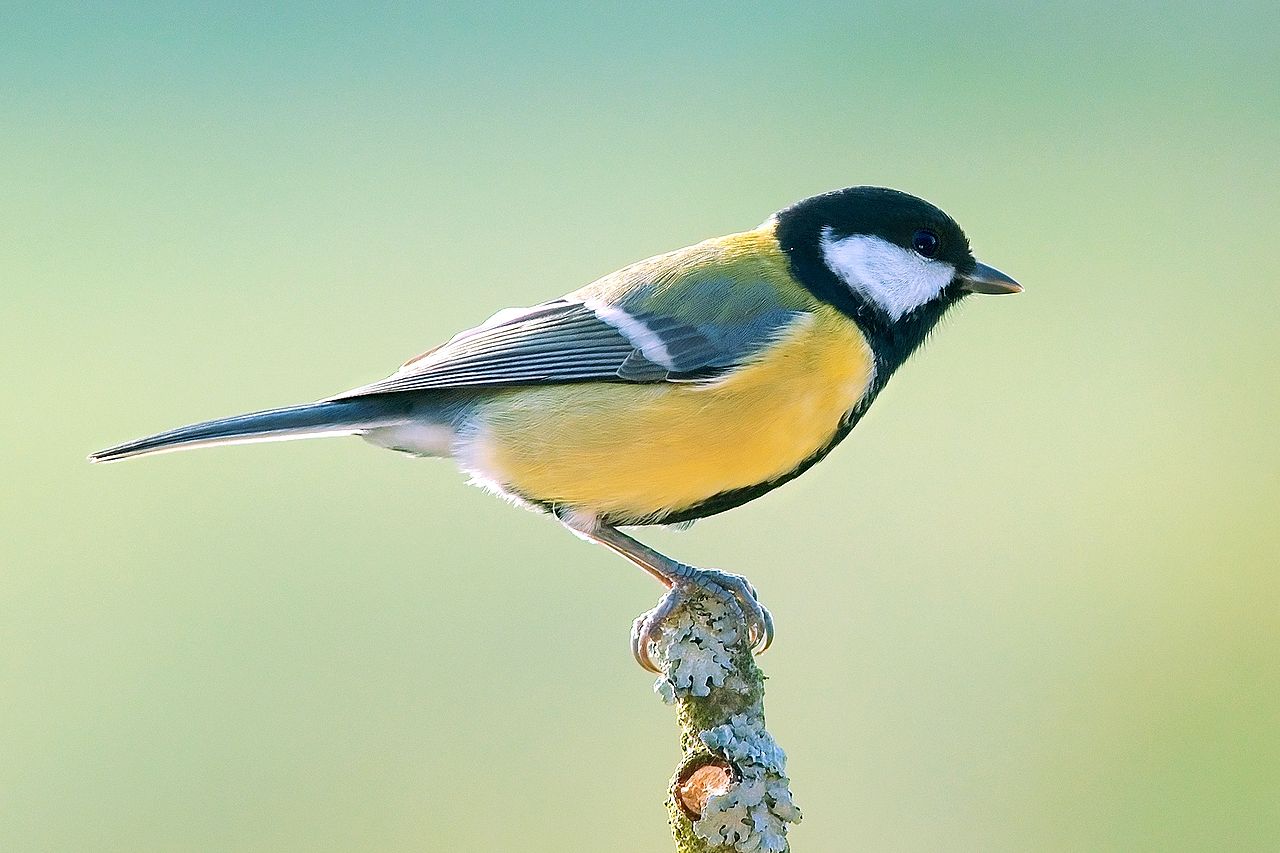
大山雀 (Great tit, Parus major) (wiki)


標題:How do predators learn to recognize a mimetic complex: Experiments with naive great tits and aposematic heteroptera.
摘要

We tested the importance of innate wariness, avoidance learning, memory and generalization for the formation of predatory behaviour in naive great tits (Parus major) towards mimetic complex of four aposematic species of true bugs (Insecta: Hemiptera: Heteroptera): Lygaeus equestris, Spilostethus saxatilis, Pyrrhocoris apterus and Graphosoma lineatum. The birds showed almost no innate wariness against the aposematically coloured bugs, although a hidden wariness elicited by defensive chemicals of some of the bug species is not excluded. Naive birds learned to avoid different species at different rates, which resulted in different prey mortalities. The avoidance learning was faster when the defensive chemicals produced an immediate irritating effect (particularly when squirted into distance – G. lineatum) than when they caused sickness several minutes after the consumption (P. apterus). The experience of birds from learning to avoid a particular species of bug affected their subsequent behaviour to other species – experience with better-defended species resulted in longer attack latencies, more cautious attacks, broader generalization and lower prey mortality. The least defended species, P. apterus, benefited from the experience of birds with better-defended species, whereas the birds’ experience with P. apterus did not reduce mortality risk of the other species comparably. Judging from the inexperienced young birds, the mimetic relation- ships are likely to be quasi-Batesian. However, as wild-caught great tits avoid all the four species to the same extent, the relationships may become more mutualistic (quasi-Müllerian) in later phases of learning under natural conditions. The relationships among species in the mimetic complex thus seem to depend on the amount of experience of the bird predators.

雖然很多討論擬態的文章以行為學的實驗來驗證假設,最常使用的是大山雀、藍山雀與家雞,除了好生好養好抓,對這種鳥的習性瞭解,更重要的行為學家認為這可以代表鳥類的捕食者。但有意思的是,雖然做過這麼多實驗,真的討論這些鳥種的基礎認知行為的證據似乎都很間接,通常是某個實驗做完後順便討論一下「這個鳥似乎天生有點怕某個東西」,因此雖然做了這麼多實驗,仍有許多的現象與理論發生衝突,有沒有可能因為對於我們所使用的鳥種還不夠瞭解?


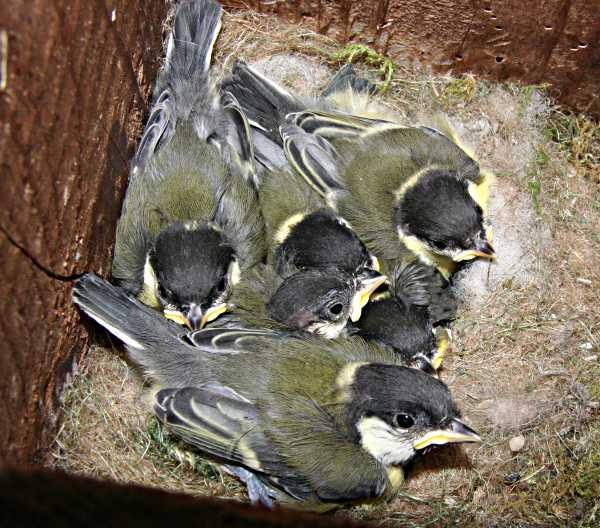
大山雀亞成鳥
photo: Clarke Brunt


作者群因此想知道捕食者的辨識警戒性/擬態的重要認知因子的基礎能力,像是天然呆(X),天生的警覺性(O),避免再次吃到難吃獵物的學習力,記憶力,與概括認知能力等,最常採用討論相關理論的大山雀 (Parus major) 自然就是討論的目標首選。作者群讓完全沒有經驗,天真無邪的大山雀攻擊四種椿象:Lygaeus equuestris, Spilostethus saxatilis, Pyrrhocoris apterus, Graphosoma lineatum。這類的椿象大多具有紅黑條紋,體內有防禦機制,有些種類被攻擊時還會放出臭氣讓捕食者避忌。就這四種椿象來說的話,其防禦的程度P. apterus的臭氣是最低的。作者群25隻手養的大山雀,飼養過程中符合動物福利原則,在飼養的過程中餵食麵包蟲、家蟋蟀、食蟲鳥類綜合飼料、綠色與褐色的昆蟲(野外抓)、水煮蛋與維他命,確保幼鳥能取得多類型的營養平安又健康的長大,又不會被飼養中某些特殊顏色影響學習經驗。等到這些鳥長大到40-60天時,就開始進行實驗。實驗進行主要分為兩個部分:第一天是「避忌學習」(avoidance learning),第二天是「概括學習」(generalization)。避免學習的實驗讓鳥試著學習避免上述四種椿象之一,然後在概括學習中同時呈現四種椿象。

Fig. 1 實驗中討論的四種椿象,與其在系統發生學上的特徵與相對親緣關係。

結果顯示這些鳥幾乎對這些警戒色沒有任何天生的警覺性(天然呆?),但對某些防禦性化學物質有警覺。這些天真的鳥對不同椿象的學習速度都不一樣。在「避忌學習」的結果中,會放出防禦性化學物的物種G. lineatum,能讓鳥學的比咬下去才知道難吃的學的快(P. apterus)。這些鳥基於學到的經驗,對於接下來的行為產生改變:有很難吃經驗的個體,在面對類似的警戒色時,攻擊延遲時間會比較長,更多謹慎的攻擊,讓這些獵物的死亡率較低。而這些椿象中防禦性最低的P. apterus,受惠於那些有過很難吃經驗的個體,反之,若鳥沒經歷過那些很難吃的,P. apterus的死亡率沒有顯著的降低。綜合以上的結果來看,這些椿象看起來像是準貝氏擬態(quasi-Batesian mimicry)的關係,但從野外抓回來的鳥的實驗來看,對於四種椿象都有避忌行為,因此作者群認為大山雀在野外學習到最後,會讓椿象的關係比較接近準穆氏擬態(quasi-Müllerian mimicry)。

這個實驗結果部分的揭開大山雀這個實驗物種的學習經歷,與這對警戒性/擬態物種的影響,但仍有些問題存在。像是其實我們對於鳥類的大腦發育與學習不如人類瞭解,手養鳥雖然可以避免某些額外的因子,但有沒有可能在飼養的過程中大腦的發育與認知就已經被限制,許多的飼養觀察也指出,手養鳥與野生鳥的行為差異極大,前兩年也有篇Nature的文章指出,實驗室飼養的果蠅比起野外的果蠅行為單一許多。這讓我們不得不考慮用手養鳥究竟是不是能解釋實驗動物的天生行為,但如果不手養,又有沒有什麼辦法測試這些內在因素?

而這樣的試驗是否又告訴我們,未來若要採用新的實驗動物前,必須要先瞭解動物的「內心」,才能進行進一步的試驗?
Wrote by Chia-Hsuan Wei
精靈箭毒蛙各區域型態與分佈
photo: Ranitomeya imitator (wiki)/nl


標題:Alkaloid defenses of co-mimics in a putative Müllerian mimetic radiation

摘要

Background: Polytypism in aposematic species is unlikely according to theory, but commonly seen in nature. Ranitomeya imitator is a poison frog species exhibiting polytypic mimicry of three congeneric model species (R. fantastica, R. summersi, and two morphs of R. variabilis) across four allopatric populations (a "mimetic radiation"). In order to investigate chemical defenses in this system, a key prediction of Müllerian mimicry, we analyzed the alkaloids of both models and mimics from four allopatric populations.

Results: In this study we demonstrate distinct differences in alkaloid profiles between co-mimetic species within allopatric populations. We further demonstrate that R. imitator has a greater number of distinct alkaloid types than the model species and more total alkaloids in all but one population.

Conclusions: Given that R. imitator is the more abundant species in these populations, R. imitator is likely driving the majority of predator-learned avoidance in these complexes. The success of Ranitomeya imitator as a putative advergent mimic may be a direct result of differences in alkaloid sequestration. Furthermore, we propose that automimicry within co-mimetic species is an important avenue of research.


如果擬態的關係裡有個物種扮演的是擬態模型(model)的角色,我們會預期這個物種要比較多、比較毒,簡而言之就是比較能忠實的反應代表牠的警戒性,如此才能有效率的警告或教訓捕食者,讓這個警戒特徵的獲益度提高。問題在於,我們知道模型要比較毒,但怎麼知道模型真的比較毒?有多毒?真的比擬態者(mimic)毒嗎?透過捕食者的反應是個管道,但間接的透過另一個物種終究比較有難度,有沒有什麼直接測量的方法呢?

Fig. 1 作者取樣的族群

精靈箭毒蛙(Ranitomeya imitator)是個多態型的物種,分佈於新熱帶區的核心地帶,也是參與穆氏擬態的一員,各個不同族群參與或帶領不同的擬態群。作者群透過直接測量精靈箭毒蛙的防禦性化學物質,也就是植物鹼 (alkaloid),推測精靈箭毒蛙有沒有可能是各族群穆氏擬態斑紋的領頭羊,如果是的話,結果應該反應精靈箭毒蛙相對數量比較多,而且比較毒。

作者群採用的方法是直接分析其難吃的源頭:生物鹼化合物的性質。他們用化學的方式直接定性與定量生物鹼的種類與數量,比較各族群的模型與擬態者的差異。作者群假設生物鹼的種類越多就越難吃,含量越高也越難吃。

Fig. 2 各族群的植物鹼組成相似度分析,顯示植物鹼種類在族群間有差異

結果顯示各地族群的植物鹼組成顯著有差異。精靈箭毒蛙除了在Varadero這個地方的族群植物鹼含量少於其擬態者 ,R. fantastica,其他的指標:族群數量,以及植物鹼種類與含量都是精靈箭毒蛙比較高。精靈箭毒蛙在這兩個指標上符合擬態模型的前提,代表牠比較有機會「教育」當地捕食者,基於這個機制,有可能帶領各地區斑紋的演化。

Fig. 3 各地族群的植物鹼種類數比較,精靈箭毒蛙的種類都比較多

Fig. 4 各地族群的植物鹼含量。除了Varadero外,精靈箭毒蛙體內的植物鹼含量較高。


這個研究告訴我們,用化學生態的方法直接呈現某些指標數據,可以解答物種在擬態中所扮演的生態角色,但直接測定植物鹼實在是有難度的一件事,只能看未來有沒有更多的柯學家有興趣解答其他的擬態群。(簡單的說,又是藍海)


Wrote by Chia-Hsuan Wei
photo from Morpho menelaus (wiki)
標題:Both Palatable and Unpalatable Butterflies Use Bright Colors to Signal Difficulty of Capture to Predators

摘要

Birds are able to recognize and learn to avoid attacking unpalatable, chemically defended butterflies after unpleasant experiences with them. It has also been suggested that birds learn to avoid prey that are efficient at escaping. This, however, remains poorly documented. Here, we argue that butterflies may utilize a variety of escape tactics against insectivorous birds and review evidence that birds avoid attacking butterflies that are hard to catch. We suggest that signaling difficulty of capture to predators is a widespread phenomenon in butterflies, and this ability may not be limited to palatable butterflies. The possibility that both palatable and unpalatable species signal difficulty of capture has not been fully explored, but helps explain the existence of aposematic coloration and escape mimicry in butterflies lacking defensive chemicals. This possibility may also change the role that putative Müllerian and Batesian mimics play in a variety of classical mimicry rings, thus opening new perspectives in the evolution of mimicry in butterflies.

無論是警戒色或是擬態,理論告訴我們這些物種所使用的是化學性的物質來防禦,無論是散發難聞的氣味,或是咬下去覺得噁心苦澀難吃想吐,讓捕食者徹底的記得這個「教訓」,就能夠提升整體的適存度。

所有的例子都是用化學機制來防禦嗎?前兩年以球背象鼻蟲的例子做的行為實驗的證據支持,物理性的硬度也可以用來做為防禦,或是身上長刺之類的。此外,野外觀察者通常有經驗,譬如說我們看到青帶鳳蝶通常飛的很快,要抓到牠很困難,要拍到也不容易,如果是在大熱天飛的更快,更不會是觀察者拍照的首選:因為要追上實在太累了。有意思的是在中國南方也有擬態青帶鳳蝶的物種,但沒有證據支持其擬態關係,僅是人類視角看起來很像。

作者討論的蝴蝶之一,摩爾福蝶。背面與腹面差異很大,其飛行行為讓人覺得很難追。
photo from Morpho menelaus (wiki)
以這個想法來推測,我們覺得追上去很累,那麼捕食者要追是不是也會很累?如果這些訊號代表的不是「我很難吃」,而是「我很難抓」呢?捕食者看到就覺得好累,是不是就會放棄捕捉了呢?

文章中的範例之一,Parides anchises nephalion
photo from Aluisio Ribeiro
這篇文章以新熱帶區的蝴蝶為例子,某些不具有化學防禦的物種,可是又具有很明亮的色彩,如果不具有防禦的話,不是很容易被捕食者攻擊嗎?因此作者假設無論是能吃還是不能吃的蝴蝶,這些看起來明顯的訊號遍佈所有的蝴蝶,可能是因為代表不容易被捕捉,讓捕食者放棄。作者整理出看起來很明顯的斑紋與相關物種,以及比較代表好吃或不好吃的行為,看看這是不是有什麼趨勢。

最後的結論很簡單,就是我們對這個現象依然知道的太少,以目前的資料還看不出什麼趨勢。作者認為如果朝著這個方向研究,能夠提供解釋擬態/警戒色演化的新方向。

--
可能有人會覺得這個方向很重要嗎?不就是把化學改成物理,獵物一樣難吃而已?

其實機動性這件事情不是沒有人研究過,但證據實在太難捕捉。試想,要如何去證明某些特定的飛行方式是「困難」,哪些是「容易」捕捉呢?捕食者不吃,可以有很多種理由,如果要做這樣的行為實驗,又要有多大的空間,才能讓捕食者與蝴蝶同時表現出如同自然般的行為呢?此外,「覺得不能吃」與「覺得累不想去抓」是兩種完全不同的認知模式,或許不是單純的把某些因子替換掉就能輕易的解釋這樣的現象。

總之,是個有趣但很難做的方向。(換句話說就是藍海)
Wrote by Chia-Hsuan Wei
photo from Phillip's Natural World

標題:Beyond magic traits: Multimodal mating cues in Heliconius butterflies

摘要

Species coexistence involves the evolution of reproductive barriers opposing gene flow. Heliconius butterflies display colorful patterns affecting mate choice and survival through warning signaling and mimicry. These patterns are called “magic traits” for speciation because divergent natural selection may promote mimicry shifts in pattern whose role as mating cue facilitates reproductive isolation. By contrast, between comimetic species, natural selection promotes pattern convergence.We addressed whether visual convergence interferes with reproductive isolation by testing for sexual isolation between two closely related species with similar patterns, H. timareta thelxinoe and H. melpomene amaryllis. Experiments with models confirmed visual attraction based on wing phenotype, leading to indiscriminate approach. Nevertheless, mate choice experiments showed assortative mating. Mon- itoring male behavior toward live females revealed asymmetry in male preference, H. melpomene males courting both species equally while H. timareta males strongly preferred conspecifics. Experiments with hybrid males suggested an important genetic component for such asymmetry. Behavioral observations support a key role for short-distance cues in determining male choice in H. timareta. Scents extracts from wings and genitalia revealed interspecific divergence in chemical signatures, and hybrid female scent compositionwas significantly associatedwith courtship intensity by H. timareta males, providing candidate chemical mating cues involved in sexual isolation.

對於穆氏擬態的毒蝶 (Heliconius)來說,因為大家長的都很像(從人類的角度來)那麼這些那麼像的蝴蝶在找尋配偶的時候會不會弄錯呢?一些早期的研究指出毒蝶可經由視覺來挑選配偶,並且會偏好與自己比較相像的個體交配。比較近期(2000後)的一些研究也指出,雖然人類看起來很像的毒蝶,但不同種間的色素來源是不一樣的,因此會有些微妙的差異,而不同種毒蝶的視覺正好可以辨識這些差異,降低找錯配偶的機會。

可是實際上不知道為什麼,就是會有些種類只要有點像就交配,又有些種類似乎很忠誠,而基因體的研究又告訴我們不同種/亞種/族群可能會雜交,那麼究竟背後還有什麼因素,能讓某些種分辨跟自己同種的個體呢?
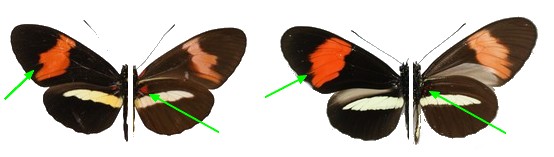
左為H. timareta ssp,右為H. melpomene amaryllis
photo from La diversite des Heliconius
這個研究就在討論這個問題,究竟有什麼樣的因素會影響共域間擬態物種的種間隔離。實驗的概念基本上是利用兩種近緣的蝴蝶 H. timareta thelxinoe與H. melpomene amaryllis,透過雄性與雌性間的求偶行為觀察來得到結果。實驗的進行分為翅紋模型與費洛蒙分析兩個部分,除親代的純系實驗外,也執行兩者雜交後代的求偶偏好。實驗進行使用的雌性蝴蝶都是首次交配,確保沒有其他因子影響。

結果顯示H. melpomene的雄性會同時偏好兩者,但H. timareta則強烈的只偏好同種的個體,即使是雜交的雄性後代也同樣支持這樣的偏好。H. timareta的求偶行為觀察中發現,雄性要接近雌性到很短的距離才會決定交配與否。從翅膀與生殖器取出費洛蒙的分析顯示這兩種間的化學訊號顯著的不同。雜交的雌性後代的費洛蒙組成明顯的會吸引H. timareta。這樣的結果支持除了透過視覺外,費洛蒙也扮演重要的角色。

雖然說鱗翅目昆蟲有複合式的求偶與種間辨識訊號也不是什麼大新聞,但透過遺傳學、化學生態學、行為學與生物統計學各種工具來更深入解析已知的資訊,這種跨界分析近來也成為討論擬態各種問題的趨勢。
Wrote by Chia-Hsuan Wei
photo from The magic of life butterfly house

標題:Molecular mechanisms of dominance evolution in Müllerian mimicry.

摘要

Natural selection acting on dominance between adaptive alleles at polymorphic loci can be sufficiently strong for dominance to evolve. However, the molecular mechanisms underlying such evolution are generally unknown. Here, using Müllerian mimicry as a case-study for adaptive morphological variation, we present a theoretical analysis of the invasion of dominance modifiers altering gene expression through different molecular mechanisms. Toxic species involved in Müllerian mimicry exhibit warning coloration, and converge morphologically with other toxic species of the local community, due to positive frequency-dependent selection acting on these colorations. Polymorphism in warning coloration may be maintained by migration–selection balance with fine scale spatial heterogeneity. We modeled a dominance modifier locus altering the expression of the warning coloration locus, targeting one or several alleles, acting in cis or trans, and either enhancing or repressing expression. We confirmed that dominance could evolve when balanced polymorphism was maintained at the color locus. Dominance evolution could result from modifiers enhancing one allele specifically, irrespective of their linkage with the targeted locus. Nonspecific enhancers could also persist in populations, at frequencies tightly depending on their linkage with the targeted locus. Altogether, our results identify which mechanisms of expression alteration could lead to dominance evolution in polymorphic mimicry.

根據很多對於擬態的觀測與研究結果,無庸置疑的這是一個天擇的結果,但科學家無論如何觀測,從野外的族群到細胞裡的基因體,都只能觀測到這些結果,與推測可能的原因,對於天擇實際上透過什麼樣的「工具」來留下有優勢的斑紋,至今仍然是個很大的謎團。

文章中基礎的方程式(1)與(2)式
這個研究透過數學模型,模擬分子生物學中的調節子 (modifier) 如何作用在控制顏色斑紋的基因上。方程式中假設不同族群的多態型能夠透過族群某種比例的遷徙交換基因,在不同的族群就會產生不同的斑紋,進而模擬天擇是如何透過調節子來留下具有優勢的基因。方程式的展開與建構很複雜就姑且不提,總之是透過考量了優勢參數、突變、毒性程度、族群遷徙、基因重組率與捕食者的認知等等參數建構出的數學模型。結果發現具有優勢的斑紋能夠透過顏色基因的多態型平衡來達成。這個優勢的演化能夠從調節子來增強某個特殊的基因,無論這個基因是否與某個特殊的基因在同一條染色體上。

總之,這篇實在太抽象了,有興趣或有需要的朋友請自行詳細研讀吧。
Wrote by Chia-Hsuan Wei
photo from Heliconius.org


photo from Kronforst Lab


標題:Wing patterning genes and coevolution of Müllerian mimicry in Heliconius butterflies: Support from phylogeography, cophylogeny, and divergence times.

摘要

Examples of long-term coevolution are rare among free-living organisms. Mullerian mimicry in Heliconius butterflies had been suggested as a key example of coevolution by early genetic studies. However, research over the last two decades has been dominated by the idea that the best-studied comimics, H. erato and H. melpomene, did not coevolve at all. Recently sequenced genes associated with wing color pattern phenotype offer a new opportunity to resolve this controversy. Here, we test the hypothesis of coevolution between H. erato and H. melpomene using Bayesian multilocus analysis of five color pattern genes and five neutral genetic markers.We first explore the extent of phylogenetic agreement versus conflict between the different genes. Coevolution is then tested against three aspects of the mimicry diversifications: phylogenetic branching patterns, divergence times, and, for the first time, phylogeographic histories.We show that all three lines of evidence are compatible with strict coevolution of the diverse mimicry wing patterns, contrary to some recent suggestions. Instead, these findings tally with a coevolutionary diversification driven primarily by the ecological force of Mullerian mimicry.

穆氏擬態的毒蝶(Heliconius)就是很像又都有毒,這麼相像的斑紋到底怎麼來的?這是一個很大的疑問。而且,很多人認為兩個物種長的這麼像又分佈在同一個地方,承受一樣的天擇壓力,那麼,這個斑紋應該是共演化(coevolution)的關係吧?

大約十幾年前時有James Mallet有寫文章特別討論過,那個時候特別提到,雖然毒蝶的每個斑紋都很像,但這僅是斑紋上的趨同,不是兩個物種的共演化。然而在這十年間,分子生物技術的發展大量應用在毒蝶擬態的研究上,無論是控制斑紋的基因,或是與種化有關的基因都被找出來了,如果重新檢視有沒有共演化這個問題,會不會不一樣呢?

於是H. erato 與H. melpomene這兩個經典的穆氏擬態分類群又上場了。作者利用了五個控制斑紋的基因 (optix, bves, kinesin, GPCR, and VanGogh)跟五個中性基因 (COI and COII, plus four nuclear genes: SUMO, Suz12, 2654, and CAT)再次重建親緣關係。作者透過比較兩個物種的親緣關係的樹型、分化的時間與生物地理的演化歷史,重新分析這兩個物種的演化歷史。結果發現這兩個物種在這三方面的分析中都支持兩者間的共演化關係,樹型相似、斑紋分化時間相似,生物地理的分析也相關,這個結果似乎提供了一個與之前完全相反的證據,支持新熱帶蝴蝶的擬態斑紋的共演化。

這個文章有另一個值得討論的地方,以前總認為控制擬態的斑紋,或是說明顯受到天擇/性擇的基因,是不能用來重建物種的親緣關係,因為會有無法正確反應物種演化歷程的疑慮,因此總是會選擇被天擇/性擇影響比較小,比較「中性」的基因來重建親緣關係,可是這個文章用了應該明顯受到天擇影響的基因,反而呈現了完全不同的理論與故事,這給研究演化的科學家們一個新的思考方向,或許使用以前不被考慮的基因,更能反應該性狀的演化歷程。
Wrote by Chia-Hsuan Wei
photo from Fig. 1
標題:Warning signals are under positive frequency-dependent selection in nature.

摘要

Positive frequency-dependent selection (FDS) is a selection regime where the fitness of a phenotype increases with its frequency, and it is thought to underlie important adaptive strategies resting on signaling and communication. However, whether and how positive FDS truly operates in nature remains unknown, which hampers our understanding of signal diversity. Here, we test for positive FDS operating on the warning color patterns of chemically defended butterflies forming multiple coexisting mimicry assemblages in the Amazon. Using malleable prey models placed in localities showing differences in the relative frequencies of warningly colored prey, we demonstrate that the efficiency of a warning signal increases steadily with its local frequency in the natural community, up to a threshold where protection stabilizes. The shape of this relationship is consistent with the direct effect of the local abundance of each warning signal on the corresponding avoidance knowledge of the local predator community. This relationship, which differs from purifying selection acting on each mimetic pattern, indicates that predator knowledge, integrated over the entire community, is saturated only for the most common warning signals. In contrast, among the well-established warning signals present in local prey assemblages, most are incompletely known to local predators and enjoy incomplete protection. This incomplete predator knowledge should generate strong benefits to life history traits that enhance warning efficiency by increasing the effective frequency of prey visible to predators. Strategies such as gregariousness or niche convergence between comimics may therefore readily evolve through their effects on predator knowledge and warning efficiency.
photo from Fig. S1

面對擬態這個自然現象時,科學家都會說「因為同享這個斑紋的物種被捕食者避免,所以擬態斑紋是天擇後留下來的結果」,也就是說,天擇偏好牠們,所以留下來了,可是其實只有很片面的證據支持,有的時候是實驗室內的行為實驗,有的時候是區域性的生態觀察,所以「天擇偏好擬態的性狀」這件事其實是結果,科學家對天擇如何偏好這樣的性狀知道的還很少。

秘魯北方的數個區域的毒蝶(Heliconius)提供研究這個假說的環境。作者利用1997-2013年的採集資料判斷出幾個區域,這幾個區域的毒蝶(見上圖一)佔優勢的擬態型都不盡相同,而且每個區域佔優勢的型每年出現的頻率都很穩定。作者測試如果有其他的擬態型出現在當地的話,應該會被捕食者所篩選的假設,利用製作非常精巧的人工假餌(印製精確,經過測試反射光譜與套用捕食者模型後,知道看起來可能的模樣),在各地區設置6-8公里的穿越線,放置480-600個假餌(120/型,4-5型/區域)。

photo from fig. 2
結果顯示如果不是當地佔優勢的擬態型,被攻擊的頻率就是會比較高(圖二)。但有趣的是不佔優勢的擬態型不會無限制的被攻擊,而是會被攻擊到與當地不佔優勢的擬態型的比例相當。這也就是說當地捕食者的篩選不是只針對某個型,而是基於全面性的「知識」判斷能不能吃。而那些看起來跟優勢型相像的也某種程度上受到保護,這可能會因為捕食者的「知識」不足而有機會發展成為優勢族群。

這整個實驗展示天擇如何在擬態上展現「正向選汰」的機制,實驗本身不難,珍貴的是那1997-2013的採集資料,若非有這些基礎資料,連判斷擬態型的區域都極為困難,更別提當地的各型所佔的比例,也凸顯長期樣區的物種記錄基礎研究的重要性。
Wrote by Chia-Hsuan Wei
photo from Cleridae (wiki)
標題:Aposematism and mimicry in soft-bodied beetles of the superfamily Cleroidea (Insecta)

摘要

The evolution of animal life strategies is among the main themes of current evolutionary biology. Checkered beetles, soft-winged flower beetles and their allies (superfamily Cleroidea), exhibit well-known aposematic colour patterns, particularly in the family Cleridae, which participate in mimicry complexes mostly with unpalatable beetles, ants and velvet ants representing a Mullerian–Batesian continuum. Many cleroids also exhibit attenuated hardening of cuticular layers resulting in a soft-bodied appearance. Here, a molecular phylogenetic analysis of the entire Cleroidea was performed using sequences of two nuclear and two mitochondrial loci of ~4 kb total length. Inferred phylogenies were used to reconstruct ancestral colour patterns and involvement in mimicry complexes. The hypothesis of a soft-bodied ancestor of Cleridae and allies was tested. The phylogenetic analyses corroborated the expanded Cleroidea concept including Byturidae and Biphyllidae formerly classified as Cucujoidea. Character state optimization showed cryptic col- oration was the ancestral state in Cleroidea, from which aposematic coloration originated several times in distant cleroid lineages. Within Cleridae, mimicry also arose from an ancestor that was cryptic, and multiple lineages that mimicked unpalatable beetles (Chrysomelidae, Meloidae, Lycidae) and stinging Hymenoptera evolved. Aposematic coloration was acquired in all major clerid lineages including Thanerocleridae, which are either the sister group of Chaetosomatidae or Cleridae. These findings suggest that mimetic traits in the clerid clade evolved at various times, possibly soon after the origin of soft-bodiedness. The adaptive value of aposematism in cleroids is likely to be enhanced in soft-bodied species, as this trait provides limited means of protection against predators, and therefore may promote the acquisition of aposematic and mimetic col- oration in various ecological situations.

郭公蟲 (Cleroids)是鞘翅目下的一個總科,全球約有3000種,從訪花到食腐肉的食性都有,有的郭公蟲還是飼料害蟲(如赤足郭公蟲)。這類群的外觀有的看起來像菊虎,有的看起來像葉蚤,有的看起來像螞蟻,說白了就是一個到處複製其物種斑紋的類群,可是這樣的斑紋演化是怎麼來的,其祖先是隱蔽色還是原本就有這些警戒色呢?郭公蟲的身體有硬有軟,這些硬的類群跟軟的類群各自獨立演化,或者這是一個各種不同的衍徵呢?

photo from content

作者用了兩個核基因(18S 與 28S的D2區域)與兩個粒線體基因(16S與cox1),大約4kb的長度來重建郭公蟲總科的親緣關係。細部的分類就不談了,特徵追溯的結果顯示郭公蟲總科的體色的祖徵應該是隱蔽色(82%),擬態螞蟻或其他甲蟲的特徵都是各自演化出來的。而軟/硬身體的類群則顯示郭公蟲總科的祖徵的身體是硬的而且有的是隱蔽色(97%)。這個演化關係似乎暗示軟身體的那群與演化出警戒色/擬態的關係比較緊密(軟身體群比較多與警戒色/擬態的類群),或許是因為身體柔軟受到捕食者(也就是天擇)的影響比較大,因此演化的方向朝著留下具有警戒色/擬態的類群。
photo from content
現在推測特徵演化大部分用MCMC的參數模型,這個研究也是,對於這個模型的使用沒什麼太大的意見,甚至可以說這種變動式的模型更適合計算演化特徵的改變,只是說這種方法算出來後,各個節上所呈現的是機率,這該如何解釋呢?該說那個共祖有x%的機會是A特徵,(1-x%)的機會是B特徵嗎?可是學生態的人很難理解這點,因為野外看到的特徵就是100%是某樣子(我這裡所說的不是野外族群的比例,那是另一個計算法了),不會因為時空背景有差異(有誰可以說說5%的機率看到某支蟲是紅色實際上應該是怎樣?一直在亂數閃爍嗎?)

我想,這就是薛丁格的貓吧。


Wrote by Chia-Hsuan Wei
photo from content


標題:Multi-trait mimicry and the relative salience of individual traits

摘要

Mimicry occurs when one species gains protection from predators by resembling an unprofitable model species. The degree of mimic–model similarity is variable in nature and is closely related to the number of traits that the mimic shares with its model. Here, we experimentally test the hypothesis that the relative salience of traits, as perceived by a predator, is an important determinant of the degree of mimic–model similarity required for successful mimicry. We manipulated the relative salience of the traits of a two-trait artificial model prey, and subsequently tested the survival of mimics of the different traits. The unrewarded model prey had two colour traits, black and blue, and the rewarded prey had two combinations of green, brown and grey shades. Blue tits were used as predators. We found that the birds perceived the black and blue traits to be similarly salient in one treatment, and mimic–model similarity in both traits was then required for high mimic success. In a second treatment, the blue trait was the most salient trait, and mimic–model similarity in this trait alone achieved high success. Our results thus support the idea that similar salience of model traits can explain the occurrence of multi-trait mimicry.

photo from The Haunted Pen
警戒性的物種身上通常會有不只一個顏色,而是透過複合式的顏色組合成某種「樣式」,形成強烈的對比色,這個樣式會讓捕食者產生警醒的認知,避免捕食這類的獵物。可是若扯到兩個物種間的擬態就比較複雜了,因為警戒性的物種若成為model,可是身上的顏色不只一種,那麼有作用的是哪個部分,而mimic只會演化出有用的又明顯的那個部分嗎?或是必須拷貝整體的「樣式」才有用呢?

這個研究利用人工的模型,與藍山雀做為捕食者討論這個問題。作者設定的警戒色是「藍+黑」,選擇藍色是為了避免藍山雀因為以前的經驗影響實驗結果。實驗設計如上圖,主要分為兩個部分,一個測試整體認知,一個測試顏色突出認知,其中設計以藍色是最為明顯的顏色,兩個部分都有1對1與1對多的設計。第一個結果顯示mimic的對比度與「藍+黑」最接近的最為成功,第二個結果顯示對比度與藍色最接近的最成功。這證據支持mimic的顏色突出度必須與model接近才有可能降低天擇的選汰。

如果這樣就有趣了,意思就是mimic的斑紋演化上來說,無法先變出A部分再變出B部分,看起來是必須整體同時出現,也就是題目所說的「複合式」斑紋。那麼如果不是像毒蝶那樣可以透過基因滲透傳遞性狀的族群,要如何一次性的出現相似的斑紋呢?這個研究的結果是不是比較支持「兩步演化」理論(two-step theory)呢?
Wrote by Chia-Hsuan Wei
photo from content

標題:The Functional Basis of Wing Patterning in Heliconius Butterflies: The Molecules Behind Mimicry

摘要

Wing-pattern mimicry in butterflies has provided an important example of adaptation since Charles Darwin and Alfred Russell Wallace proposed evolution by natural selection .150 years ago. The neotropical butterfly genus Heliconius played a central role in the development of mimicry theory and has since been studied extensively in the context of ecology and population biology, behavior, and mimicry genetics. Heliconius species are notable for their diverse color patterns, and previous crossing experiments revealed that much of this variation is controlled by a small number of large-effect, Mendelian switch loci. Recent comparative analyses have shown that the same switch loci control wing-pattern diversity throughout the genus, and a number of these have now been positionally cloned. Using a combination of comparative genetic mapping, association tests, and gene expression analyses, variation in red wing patterning throughout Heliconius has been traced back to the action of the transcription factor optix. Similarly, the signaling ligand WntA has been shown to control variation in melanin patterning across Heliconius and other butterflies. Our understanding of the molecular basis of Heliconius mimicry is now providing important insights into a variety of additional evolutionary phenomena, including the origin of supergenes, the interplay between constraint and evolvability, the genetic basis of convergence, the potential for introgression to facilitate adaptation, the mechanisms of hybrid speciation in animals, and the process of ecological speciation.


photo from content

photo from content

這個文章整理從Bates發現擬態這個現象以來,從外在的生物學到近年利用基因體學與遺傳學的方法,找出控制某些擬態斑紋的基因,以及這一切都來自其中一個超基因 (supergene)的一個綜合回顧,近年來無論從系統發生學的角度,族群遺傳學的角度,基因體內部的變化,或是基因在族群間的入侵與移動等,都在這個回顧中做了整理。

對於近年毒蝶與擬態的發展有興趣的朋友可以參考。
Wrote by Chia-Hsuan Wei
Older Posts Home

FB專頁

熱門文章

  • 越紅越凶:草莓箭毒蛙的警戒色除了警告天敵也反應個體侵略性
  • 看起來很警戒,身上的顏色就都很警戒?重新評估北美經典擬態模型的警戒色的例子
  • 放棄身為跳蛛的堅持:除了型態之外,蟻蛛的動作也像螞蟻嗎?

精選文章

貓頭鷹蝶的眼紋真的擬態貓頭鷹的眼睛嗎?

相關網站

  • Heliconius Homepage
    Michel Cast sent me pictures of this nice hybrid specimen from Ceara, Brazil! Thank you Michel and P. Jauffret!
  • 這是什麼啊? 可以吃嗎?
    最近出現一個被狂轉的新聞,大意是說有人為了避免蝸牛被路殺所以在其殼上彩繪,希望這樣就能讓人類注意到蝸牛的存在而不要把牠們踩死。這聽起來好像立意不錯喔? 但就我們研究警戒與擬態的角度來說,我們認為這種作法天真且有些荒謬,為什麼呢? - 在偽裝(camouflage)與警戒(aposematism)形成...
  • WELCOME TO THE BIODIVERSITY LAB! | Biodiversity Lab
  • Kronforst Lab at the University of Chicago
  • mallet lab
  • MimeticButterflies
  • Mathieu Joron - Home
  • Evolution of predator-prey interactions — Bio- ja ympäristötieteiden laitos

文章類型

  • 文章 (Article) 113
  • 擬態環 (mimicry ring) 12
  • 回顧 (review) 10
  • 科普 4
  • 擬態那些事 3
  • 書 (Book) 3
  • 評論 (comment) 1

研究領域

  • 貝氏擬態 (Batesian mimicry) (43)
  • 警戒性 (Aposematism) (40)
  • 穆氏擬態 (Müllerian mimicry) (37)
  • 多態型 (polymorphism) (16)
  • 擬態環 (mimicry ring) (12)
  • 侵略型擬態 (aggressive mimicry) (10)
  • 隱蔽性 (crypsis) (10)
  • 不完美擬態 (imperfect mimicry) (6)
  • 種化 (speciation) (5)
  • 雌性擬態 (female-limited mimicry) (5)
  • 性擇 (sexual selection) (4)
  • 鳥蛋寄生 (egg parasite) (4)
  • 眼斑 (eyespot) (3)
  • 假頭 (false head) (2)
  • 性雙型性 (sexual dimorphism) (2)
  • 擬蟻性 (Myrmecomorphomania) (2)
  • 機動性擬態 (locomotory mimicry) (2)
  • "模糊"型擬態 (satyric mimicry) (1)

研究方式

  • 行為學 (Ethology) (46)
  • 生態 (Ecology) (21)
  • 系統發生學 (phylogenetics) (16)
  • 基因體 (Genomics) (12)
  • 視覺模型 (visual model) (10)
  • 模擬(modelling and simulation) (6)
  • 遺傳學 (genetics) (6)
  • 族群遺傳 (population genetics) (5)
  • 分子生物學 (Molecular biology) (4)
  • 化學生態 (Chemical ecology) (3)
  • 分子鑑定 (molecular identificaiton) (1)
  • 古生物學 (palaeontology) (1)
  • 地理資訊系統 (GIS) (1)
  • 演化發育學 (Evo-Devo) (1)

分類群

Copyright © 2015 擬態生物學. Designed by OddThemes | Distributed By Gooyaabi Templates