• 首頁 (Home)
  • 理論介紹 (Theories)
    • 警戒色
    • 貝氏擬態 (Batesian mimicry)
    • 穆氏擬態 (Mullerian mimicry)
    • 副貝氏擬態 (quasi-Batesian mimicry)
  • 研究團隊 (research teams)
    • Candy Rowe
    • James Mallet
    • John skelhorn
  • 文獻蒐集 (Bibliography)
    • 2010-
      • 2016
      • 2015
      • 2014
      • 2013
      • 2012
      • 2011
      • 2010
    • 2000-2009
      • 2009
      • 2008
      • 2007
      • 2006
      • 2005
      • 2004
      • 2003
      • 2002
      • 2001
      • 2000
    • More than 650 references on mimicry

擬態生物學

警戒色與擬態的介紹團隊,學術文章導讀,歷史背景,物種,與生物多樣性


動物的隱蔽性是來自與背景符合的程度,如果與背景越相似,就越有可能逃出捕食者的魔掌。但現今許多的棲地因人為的管理,而改變了原有的自然環境,如因森林利用而改變原有的植物組成,如此造成的影響是否會衝擊原本以隱蔽性躲避天敵的物種呢?

美國佛州的奧卡拉國家森林公園可能就有這樣的例子,這個研究討論在一種在國家公園中的一種強稜蜥—Floria scrub lizard (Sceloporus woodi),探討在有人類管理過的棲地中對其隱蔽色效果的影響。這種蜥蜴偏好佔領修剪後的沙松 (sand pine) 的灌木叢與有指定燃燒區域(註)中的長葉松,而其體色背面是與枯葉相近的顏色,腹面則有很亮的青藍色斑塊。在這個研究中,作者們使用該蜥蜴的粘土模型(沒錯,又是粘土模型)放在這兩種棲地中,比較其間粘土模型被攻擊的比率與棲地背景異質性的關係,而這些地方預期的捕食者是食火雞。結果之一毫無意外顯示體色與背景體比最大時被攻擊的比率最高。而背面的體色與開放的沙地與死去的木頭對比最大,與枯葉的對比最小,顯示其在後者應有良好的隱蔽效果。

這與棲地管地有何關係?無論是哪種棲地,在枯葉背景上的被攻擊率都是最低的,而作者認為藉由燃燒或是修剪後增加的落葉能增加這種蜥蜴躲藏的地方,因此人為的管理就間接的影響隱蔽色的有效性與物種的適存度。

註:指定燃燒區域 (prescribed burning)是指在森林的某處,為了達到某些目的(如疏伐),在環境允許的情況下,以燃燒的方式達到該目的。

Orton RW, McElroy EJ & McBrayer LD. 2018. Predation and cryptic coloration in a managed landscape. Evolutionary Ecology: 1–17.

Wrote by Chia-Hsuan Wei
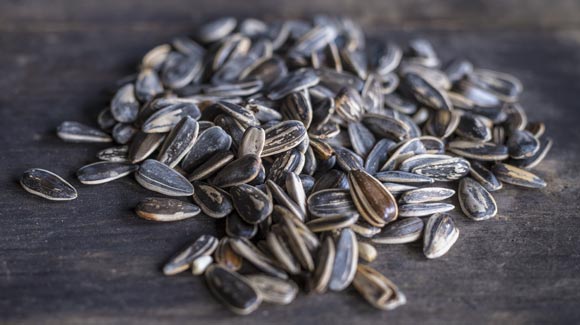
用來進行實驗的葵瓜子
photo: P. Allen Smith


標題:Protection by association: Evidence for aposematic commensalism

摘要

Aposematism is a well known and widely used strategy for reducing predation by conspicuous signalling of unprofitability. However, the increased conspicuousness could make this strategy costly if there are no secondary defences to back the signal up. This has made the elucidation of the evolutionary mechanisms for aposematism and that of the closely-related Batesian and Mullerian mimicry difficult. The present study aims to test whether cryptic and nondefended prey could reduce their predation risk by grouping with aposematic and defended prey. To do this, we used groups of artificial baits that were either cryptic and palatable or conspicuous and unpalatable, along with the corresponding control treatments. These were then presented in mixed and homogeneous treatment groups within a field setting and the local wild bird assemblage was allowed to select and remove baits at will. The results obtained show that undefended non-aposematic prey can benefit by grouping with aposematic prey, with no evidence that predation rates for aposematic prey were adversely affected by this association. These results provide insights into the evolution of Batesian mimicry.

警戒性是一種用來降低被捕食風險的策略,基本上是由警戒色加上次級防禦(化學、物理、行為)才能發揮作用,以演化的角度來看的話,性狀的演化會有些弔詭的地方:警戒色先出現而沒有次級防禦,耗費龐大的演化能量且可能反而吸引目光;先演化出次級防禦而沒有警戒色,無論如何被攻擊率都可能上升,被攻擊沒被吃掉但個體死亡,也會失去把性狀遺傳的可能性;天擇同時作用於兩者身上呢?概率實在太低了。因此在天擇的權衡下,警戒色演化的初期是個很難解釋的迷團。

作者群基於這個疑問,提出一個假設:隱蔽性的個體是否能藉著警戒性個體的保護傘降低被捕食者風險?作者群設計一連串的試驗,以葵瓜子染成紅色跟綠色,以奎寧做為次級防禦的化學物質,將紅色/綠色分別滴上奎寧製造出四種不同的組合,並將其實驗設計為紅色與綠色單色組與混色組,配上不同的數量,以瞭解各種因子的交叉作用。以上實驗都在英國格拉斯哥 (Glasgow) 市郊進行,各地至少觀察到八種不同的鳥類。

結論上來說,如果單純的以防禦機制來看的話,只要有滴上奎寧的組別,無論顏色的被捕食比例都比較低。把綠色(無防禦)比較混色組與單色組的話,會發現混色組的被捕食比例顯著較低,但反過來,綠色(有防禦)的組別不會降低紅色(無防禦)的被捕食比例。無論哪個統計都沒有個體數量上的顯著差異。


Table 3. 綠色(有防禦)與紅色(無防禦)的Mann-Whitney U-test統計結果
這個結果顯示隱蔽性的個體可能藉由與警戒性個體的混棲以降低被捕食的風險,可能是一個片利共生(commensalism,單方得利,另一方無損失)的一種現象。而這解釋部分警戒性與擬態在演化初期的問題:藉著與型態相似的警戒性物種混棲,來得到演化喘息的空間。但又有些問題產生了:第一個警戒性的個體怎麼來的呢?某些隱蔽色(褐色、綠色)完全沒可能在自然環境被當成不能吃的顏色嗎?

真是個雞生蛋,蛋生雞的問題。

此外,本篇的結果以數個難以看懂的表格呈現,請有志同仁務必避免。
Wrote by Chia-Hsuan Wei
photo: Hannah Rowland

標題:Masquerade is associated with polyphagy and larval overwintering in Lepidoptera

摘要

Masquerading animals benefit from the difficulty that predators have in differentiating them from the inedible objects, such as twigs, that they resemble. The function of masquerade has been demonstrated, but how it interacts with the life history of organisms has not yet been studied. Here, we report the use of comparative analyses to test hypotheses linking masquerade to life-history parameters.We constructed a phylogenetic tree of the British species of the lepidoptera families Geometridae and Drepanidae, and compiled life history and coloration data from the literature. We found that masquerade is associated with the exploitation of a greater diversity of host plants whether measured by the number of families or genera. We found a positive relationship between body size and polyphagy among masquerading species, and no relationship among cryptic species. Among those species predomi- nantly found on woody host plants, masquerading species are more likely to overwinter as larvae while cryptic species mostly overwinter as pupae. Polyphenism was associated with multivoltinism in masquerading species but not cryptic species. Taken together, our results show that masquerade must be viewed as a strategy distinct to crypsis and hence may provide insights into the evolution of both defensive strategies. Our study further demonstrates the utility of broad-scale between-species comparisons in studying associations between diverse life-history parameters and sensory aspects of predator-prey interactions.

Fig. 1 使用不同策略的尺蛾幼蟲。上左警戒色,上中、上右不同顏色的隱蔽,下排全為偽裝。

「偽裝」(mesquerading) 這個現象就是生物的外觀類似枝條、葉子,對目標捕食者發送我不是食物的訊息,降低被找到的風險。而凡事都有代價,如果要適應這樣的外觀,生活的方式勢必要出現某些演化上的權衡 (trade-off),生活史或策略產生某些對應的變化,讓這個策略的優勢得以最大化。

這篇文章的作者群想瞭解物種的生活史與偽裝這個策略在演化上的關聯性,建立英國的尺蛾科與鉤蛾科的親緣關係,並將其生活史特徵(食性、棲息位置、年世代數等,見內文table 1)映象至親緣關係上,推測特徵的演化。

Fig. 2 尺蛾與鉤蛾的親緣關係。白線為隱蔽性,藍線為偽裝,黑線為警戒性,虛線為混合策略。
從樹的結構與特徵的推測來看,採用偽裝策略的物種,無論從屬級或科級的角度來看,連結了利用較高的寄主植物多樣性。生活史的分析發現以偽裝策略為主的物種中,身體的尺寸與廣食性是正相關的關係,但在採取隱蔽性的物種則沒有這個關係。而偽裝策略為主的物種大多棲息在木本的植物上,以幼蟲的形式過冬,而隱蔽性的物種則以蛹的形式過冬。多表型性在偽裝的物種中與一年多世代有關聯,但在隱蔽物種中則沒有這個關聯性。總合這全部的結果來看,偽裝策略與隱蔽性策略物種所擁有的生活史與其演化歷史甚有差異,因此應該把這兩種策略視為不同的防禦體系。

Fig. 4 寄主植物的數量與棲息位置的差異。白柱為隱蔽性,斜線為偽裝。

Fig. 3 身體尺寸與寄主屬級數量的關係。圓圈為隱蔽性,方塊為偽裝。
可能看到這有人會覺得很奇怪,為什麼一開始只是討論生態特徵的演化,到最後結論變成偽裝與隱蔽性要視為兩種不同的機制?

這其實有個很長的故事,但先在這說個精簡版。一言蔽之,如果看到像枝條的蟲,一般人想到的是「這像枝條,顏色也像枝條,平常我分不太出來,捕食者也分不出來,所以這是隱蔽也是偽裝」。關於這兩者的定義在30年前已經有人吵過一架(正在整理中,出文時間不確定),但兩者間的確有相似處讓人弄不清楚究竟是「偽裝成落葉」或是「隱蔽於落葉中」之類的問題,這也反應在眾多科普文章常常也沒說明定義,讓受眾也搞不太清楚到底哪個是哪個。既然以前有人起過爭議,就代表兩個概念各有人支持合併或分開,所以這個研究到最後才會去討論這兩者間的特徵起源與生活史演化的差異對應,總結出應該把兩個概念視為不同體系防禦的論述。
Wrote by Chia-Hsuan Wei
photo: Chia-Hsuan Wei
標題:Revealed by conspicuousness: distractive markings reduce camouflage.

摘要

Animal camouflage is a textbook example of natural selection. Despite substantial progress, one historical theory remains controversial: that conspicuous “distractive” markings draw predator attention away from the prey outline, preventing detection. Here, we present evidence from 4 experiments to resolve this controversy. In field experiments, we measured bird predation on artificial cryptic prey that were either unmarked or had distractive markings of various attributes (number, color, and location). Prey with 3 high-contrast distractive markings, and with markings located away from the body outline, suffered reduced survival compared with unmarked controls or prey with low-contrast markings. There was no effect of small single markings with different colors on the survival of targets. In 2 computer-based experiments with human subjects searching for hidden targets, distractive markings of various types (number, size, and location) reduced detection times compared with controls. This effect was greatest for targets that had large or 3 markings. In addition, small and centrally placed markings facilitated faster learning. Therefore, these 2 experimental approaches show that distractive markings are detrimental to camouflage, both facilitating initial detection and increasing the speed of predator learning. Our experiments also suggest that learning of camouflaged prey is dependent on the type of camouflage present. Contrary to current and historical discussion, conspicuous markings are more likely to impair camouflage than enhance it, presenting important implications for the optimization of prey coloration in general.

我們在野外觀察的時候,會發現某些生物,譬如說尺蛾,有些看起來灰灰土土的,我們會覺得那可能是隱蔽性,有些灰灰土土的顏色上多了一些條紋,或在中室多了幾個斑點,我們會覺得這是為了讓自身的輪廓不那麼明顯。

真的是這樣嗎?

相對於警戒性與擬態這種彰顯自身警告捕食者的方式,另一個不要被捕食的方法概念很簡單:不要被捕食者看到就好了(不做死就不會死),自然不會有被吃掉的問題,因此很多物種天擇後的結果,就是讓看起來不顯眼的個體留下來,成為現在我們認為是具有隱蔽性的顏色或行為,像是背景的契合度、身體某些部分與環境光影的吻合或是移動時斑紋產生的炫目行為,都被當成是隱蔽性的一種模式。但有爭議的部分是,有些看起來是隱蔽色的物種身上會產生某些花紋,早期的自然學家提出一假設,認為這些花紋應該是為了破壞身體的輪廓,讓捕食者不那麼輕易的認出個體所發展出來,但有另一個問題在於實際上看起來這些花紋可能破壞與環境的契合度,反而可能吸引注意力。

Fig. 1 用來測試野外顏色影響的三角形人工假餌
Fig. 2 測試斑點位置與對比的假餌與結果。
為了嘗試解決這個理論上的衝突,作者群以兩個部分測試,一個是用人工印製的假餌,放到自然的環境中觀察被攻擊的程度,另一個是以人類為實驗對象,讓受試者看電腦呈現的影像並做紀錄。假餌呈現的影像是以符合白臘樹(Fraxinus excelsior)的樹皮為基礎,首先測試顏色的因子分為控制組與另外四組點上黑色、綠色、白色與紅色的顏色來「分散」捕食者的注意力,另一個部分測試標記的對比與在身體上的位置(是否遠離邊緣)是否對生存度產生影響。在實驗室進行的部分分為標記的位置與標記的尺寸與數量兩個部分對受試者測驗,以得知哪種因素對於受試者更容易辨識與是否容易記憶。

Fig. 3 實驗室給受試者觀察的圖片與實驗結果。
野外實驗的結果顯示,具有3個高對比度的標記,以及最遠離身體邊緣標記個體最容易受到攻擊,對於小且數量少的標記顏色尚沒有顯著的影響。在實驗室的結果顯示,無論哪種標記(數量、尺寸、位置),受試者皆縮短尋找的時間,這在標記的尺寸最大以及數量最多時最為明顯。此外,尺寸小且靠近中央的標記也有促進學習速度的能力。總結來說,在身上的某些花紋可能會破壞隱蔽性,反而可能讓個體更容易被發現,這結果也為長期對立的爭論增添新的證據。

這個研究的確是連結了高智能動物的辨識力與野外的實驗結果,以人來做實驗當然有好有壞,不用實際捕食者來考量當然也是一個具有爭議的論點,但這個假餌的設計真讓人覺得微妙?
Wrote by Chia-Hsuan Wei
photo: Don Hodgers


標題:Size-dependent microhabitat selection by masquerading prey.

摘要

Masquerading prey gain protection from their predators by being misclassified as an inedible or uninteresting part of the envi- ronment. It has recently been demonstrated that twig-mimicking caterpillars benefit from masquerade; and that size disparity between twigs and caterpillars reduces protection from relatively naive predators. Using an established experimental system in which domestic chicks Gallus gallus domesticus predate twig-mimicking caterpillars of the Early Thorn Moth Selenia dentaria, we show that this effect is even stronger when predators have the opportunity to learn that size is an effective cue for discrimination. However, using a series of binary choice tests, we also show that caterpillars are able to minimize predation risk by selecting microhabitats that enhance the benefits of masquerade: those containing size-matched twigs. Furthermore, caterpillars trade off the relative benefits of protection from predation and feeding, when branches that provide the best protection from preda- tion do not contain food. Finally, both the preferred microhabitat and the strength of caterpillars’ preferences for that habitat change with size: small caterpillars prefer branches with small twigs over branches with large twigs, and the reverse is true of large caterpillars; and preferences tend to be stronger in larger caterpillars, perhaps because of their increased detectability and desirability to predators.

在野外採集的時候常常會看到某些尺蛾的幼蟲,這些幼蟲無論體色與行為,幾乎都很像植物的枝條,有的配上延伸的剛毛甚至長的像花的雄蕊。依據觀點與理論的差異,描述這個現象的名詞很多,例如擬態 (mimicry)、偽裝 (camouflage) 或喬裝 (masquerade),無論是使用哪個專有名詞,使用這個策略的物種會受到諸多限制,像一定要在某些環境中才能發揮效果,那麼要移動到有食物的地方就會導致與環境不符合,增加被捕食的風險等等,因此這個策略對於躲避捕食的效果是自然學家感興趣卻又是長期未解之謎。


photo: Selenia dentaria (wiki)
這個研究討論一種尺蛾 Early Thorn Moth (Selenia dentaria) 的幼蟲期喬裝成枝條的現象。作者群產生的疑問是尺蛾會不會移動到跟自己看起來差不多大小的地方?如果這個地方的葉子被吃完了,尺蛾會寧可繼續待在差不多大小的枝條上獲得保護,或是移動到其他未知的區域取得更多的食物?這個疑問出於很多原因,像是尺蛾的體型會隨著齡期增長,如果與枝條的差異度太高,會增加被捕食者發現的風險,但貿然移動也會增加風險,不管怎樣都會提高風險,這時尺蛾幼蟲會怎麼決定自己的命運?

作者群以35隻初生的雌家雞 (Gallus gallus domesticus) 做為捕食者進行實驗,測試兩個主要假設:1) 捕食者是否能依據尺寸差異分辨尺蛾? 2) 喬裝的尺蛾幼蟲是否會選擇尺寸相近的枝條做為掩蔽?為了回答第一個問題,作者群設計以2.5公分的幼蟲分別放置在枝條上,讓家雞在觀測12個枝條與1隻幼蟲(2.5公分),以三種不同的觀測距離(1、2.5、4公分)代表視覺上的相對尺寸,測試是否能夠辨識。對於第二個問題,作者群將幼重放置在不同條件的枝條上,分為枝條的尺寸(大或小)與是否有葉子(食物),以測試幼蟲的選擇。

Fig. 1 捕食者攻擊枝條的次數隨測驗進行下降,與幼重差不多大小的中間尺寸組高於其他兩組,顯示捕食者較無法辨別尺寸差不多的情況

Fig. 3 & 4. 左圖為小幼蟲,右圖為大幼蟲選擇不同枝條的數量。

從第一個實驗的結果來看,所有的捕食者最後都能夠學會分辨枝條與幼蟲,並且減少攻擊枝條的次數,而在中距離(2.5公分)這個組別,捕食者的辨別能力不如其他兩組來的準確,顯示尺寸的確是影響喬裝是否成功的重要因子。在幼蟲選擇枝條的結果中顯示,即使枝條上沒有任何葉子,幼蟲仍會待在與自身尺寸相近的枝條上,而且與自身尺寸相近的枝條比較受到明顯偏好:小的蟲會選小枝條,大的蟲會選大枝條,這個偏好在大的幼蟲中更為明顯,這也表示出在食物的來源與被偵測到的風險間的利害權衡(trade-off)。

看完後仔細想一下,若只從這個研究來看,這個生存策略簡直是走在鋼索拿命在賭的策略,雖然說昆蟲能維持一段時間不進食,齡期越大的幼蟲能撐的時間越久,如果在沒有食物的情況下,就是賭是要冒著移動的風險找食物,在被吃掉之前化蛹,或是留在原地,餓死之前化蛹。但這個幼蟲是不是也發展其他的行為來彌補這個策略的風險,像是我們知道尺蛾成蟲大多是夜行性,幼蟲是不是也在黑夜時移動到有食物的地方,取決於我們對這個物種的知識與觀察,最後仍須回到更為廣泛性的知識面通盤考量如何詮釋一個自然現象。
Wrote by Chia-Hsuan Wei
小丑箭毒蛙 (Oophaga granulifera)紅色型
photo: ARKive


標題:NOT EVERYTHING IS BLACK AND WHITE: COLOR AND BEHAVIORAL VARIATION REVEAL A CONTINUUM BETWEEN CRYPTIC AND APOSEMATIC STRATEGIES IN A POLYMORPHIC POISON FROG

摘要

Aposematism and crypsis are often viewed as two extremes of a continuum of visual conspicuousness to predators. Theory predicts that behavioral and coloration conspicuousness should vary in tandem along the conspicuousness spectrum for antipredator strategies to be effective. Here we used visual modeling of contrast and behavioral observations to examine the conspicuousness of four populations of the granular poison frog, Oophaga granulifera, which exhibits almost continuous variation in dorsal color. The patterns of geographic variation in color, visual contrast, and behavior support a gradient of overall conspicuousness along the distribution of O. granulifera. Red and green populations, at the extremes of the color distribution, differ in all elements of color, contrast, and behavior, strongly reflecting aposematic and cryptic strategies. However, there is no smooth cline in any elements of behavior or coloration between the two extremes. Instead populations of intermediate colors attain intermediate conspicuousness by displaying different combinations of aposematic and cryptic traits. We argue that coloration divergence among populations may be linked to the evolution of a gradient of strategies to balance the costs of detection by predators and the benefits of learned aversion.

小丑箭毒蛙(箭頭青蛙、細疣箭毒蛙,Oophaga granulifera)也是一種隨區域顏色不相似的箭毒蛙,其族群間體色的變化十分劇烈,從醒目的紅色到看起來不太顯眼的綠色都能找的到,奇妙的是箭毒蛙本身應該是透過醒目的顏色來警告捕食者的種類,那麼不太顯眼的綠色代表的是另一種警戒色,或是暗示這個物種的不同族群採用的顏色策略不一樣?

Fig. 1 本篇研究採用的四個族群分佈
photo: National Geographic
作者群討論哥斯大黎加西方低地小丑箭毒蛙的的體色變異(如上圖),選定四個區域的族群,以量測背面八處(頭部兩處,背部六處)與腹面八處(胸部兩處,腹部六處)的反射光譜,以及六種不同的環境基質(樹皮、岩石、綠葉、落葉、香蕉樹、泥土),比較顯眼的程度,並且將個體的光譜資訊套用藍山雀的視覺模型,模擬捕食者的視覺型態。另一方面透過行為的觀察,比較從顯眼到不顯眼的個體是否存在不同程度的行為差異。

光譜測量的結果顯示從紅色到綠色族群存在漸進式的差異。紅色與綠色的族群間,不論是顏色、對比或行為都呈現顯著的差異,顯示兩個族群的顏色分別反應警戒與隱蔽兩種不同的策略(綠色的族群明顯的叫聲較少,捕食率也較低)。雖然如此,但這看似漸進式的顏色變化,其實反應的是中間型個體的顏色是透過不同身體部分的顏色組合來呈現,而非單純的只是皮膚顏色的變化。

Fig. 2 光譜反射與彩度分析結果,A與B是背部,C與D是腹部。
這些證據顯示即使是有防禦的物種,還是有可能透過不醒目的顏色採取隱蔽的策略,而這與當地的捕食者結構是否有因果關係(太聰明?視覺模式有很大的差異?再毒也吃的下去的物種?),未來的類似討論勢必需要更多的捕食者資訊,而非反覆透過特定數種「模式物種」,狹隘的驗證有多重變因的現象。
Wrote by Chia-Hsuan Wei
圓眼燕魚 (Platax orbicularis),幼期
photo from Chaloklum diving
圓眼燕魚 (Platax orbicularis),成體
photo from 圓眼燕魚 (wiki)
標題:Comparative Allometric Growth of the Mimetic Ephippid Reef Fishes Chaetodipterus faber and Platax orbicularis

摘要

Mimesis is a relatively widespread phenomenon among reef fish, but the ontogenetic processes relevant for mimetic associations in fish are still poorly understood. In the present study, the allometric growth of two allopatric leaf-mimetic species of ephippid fishes, Chaetodipterus faber from the Atlantic and Platax orbicularis from the Indo-Pacific, was analyzed using ten morphological variables. The development of fins was considered owing to the importance of these structures for mimetic behaviors during early life stages. Despite the anatomical and behavioral similarities in both juvenile and adult stages, C. faber and P. orbicularis showed distinct patterns of growth. The overall shape of C. faber transforms from a rounded-shape in mimetic juveniles to a lengthened profile in adults, while in P. orbicularis, juveniles present an oblong profile including dorsal and anal fins, with relative fin size diminishing while the overall profile grows rounder in adults. Although the two species are closely-related, the present results suggest that growth patterns in C. faber and P. orbicularis are different, and are probably independent events in ephippids that have resulted from similar selective processes.

大西洋棘白鯧 (Chaetodipterus faber),成體
photo from Kamila Sedziak/Marcin Smok
如果兩個物種呈現類似生態性目的,雖然型態在成長的過程中發生變化,那麼擁有類似生態目的的物種的變化會不會相似呢?本篇所討論的大西洋棘白鯧 (Chaetodipterus faber)與圓眼燕魚 (Platax orbicularis),幼體時的行為與型態被認為很像掉落在水面的葉子,成體則長的與幼體完全不像,型態發生很大的改變(這稱為異速生長, allometric growth)。這兩個種的親緣關係「似乎」很近,因此作者想瞭解這兩個擁有相似的成長過程的物種,型態變化的趨勢是不是也很像。


photo from Fig. 1
大西洋棘白鯧 A) 擬態型幼體 B)非擬態型亞成體 C) 非擬態型成體
圓眼燕魚 D-E) 擬態型幼體 F) 非擬態型成體
photo from Fig. S1
相對物種與年齡表示如上圖
作者藉由比較各個不同的生長位置,透過形質測量的方式比較異速生長的相似性。結果發現雖然這兩種魚都有這個現象,但異速生長的相似度是顯著有差異,顯示這兩種魚的擬態與異速生長的演化來源可能是獨立的。

photo from Fig. 3
CAP analysis,結果顯示兩種魚不同型態有差異
可是這兩種魚不同屬,說牠們是"closely-related species"沒問題嗎?
另外,兩種魚都有機會棲息在紅樹林區,說牠們像枯葉(中文wiki居然說擬態垃圾!?),圓眼燕魚也就算了,看起來是有個幾分像,可是那個白鯧你跟我說這像枯葉?

擬態這種事果然是見仁見智。
Wrote by Chia-Hsuan Wei

photo from dailymail

標題:Cognition and the evolution of camouflage

摘要

Camouflage is one of the most widespread forms of anti-predator defence and prevents prey individuals from being detected or correctly recognized by would-be predators. Over the past decade, there has been a resurgence of interest in both the evolution of prey camouflage patterns, and in under- standing animal cognition in a more ecological context. However, these fields rarely collide, and the role of cognition in the evolution of camouflage is poorly understood. Here, we review what we currently know about the role of both predator and prey cognition in the evolution of prey camouflage, outline why cognition may be an important selective pressure driving the evolution of camouflage and consider how studying the cognitive processes of animals may prove to be a useful tool to study the evolution of camouflage, and vice versa. In doing so, we highlight that we still have a lot to learn about the role of cognition in the evolution of camouflage and identify a number of avenues for future research.

photo from wohinauswandern

隱蔽與偽裝一直是科普教材的最愛,放一張圖片讓大家來尋找目標物種在哪裡,體驗生物體色的驚奇變化,讚嘆為何能如此躲過大家的視線,必然也能躲過野外的眾多天敵。姑且不論隱蔽、偽裝與擬態在定義上的分野(很多文章會把這些名詞混為一談,但這其實不容易弄清,科學家們也吵過架,日後我會發專文詳談各名詞的定義與使用),光是上述所說的狀況,就是讓人類扮演捕食者的角色,尋找自己的獵物,而當你面對這樣的圖片時會有什麼反應?仔細的慢慢尋找?快速的搜尋?如果找到一次,第二次是否更容易找到?

這些想法與認知都可能出現在野外的捕食者,而野外的這些生物面對的是更嚴酷的三維空間的搜尋,以及路過就沒得吃會餓死的壓力,反過來說,獵物所經歷的就是一旦被發現就可能喪命的風險。

因此認知行為必然在偽裝/隱蔽的演化上扮演重要的角色,但是究竟如何運作,捕食者實際上會做出什麼行為,在這篇文章中整理了近十年來用認知行為學的方式進行測試,通常是以家雞與Opisthograptis luteolata的幼蟲(尺蛾科)進行實驗。現在已經知道當捕食者沒經驗的時候會傻傻的把枝條當成可以吃的,但經歷過之後就會放慢攻擊的速度,似乎有某種程度的判斷。

Opisthograptis luteolata 幼蟲
photo from http://www.fredmiranda.com/forum/topic/1250262

捕食者判斷這類的獵物時,有很大部分依賴自身經驗所產生的搜索印記 (searching image),也就是說必須經歷過才能對獵物產生選汰壓力。那麼對於實際上是否有夠多的個體有這樣的經歷,或是能透過社會性的交流來學習,我們都還不知道,對於這些關鍵還需要更多未來的研究才能揭開迷團。

這可以從下圖來說明:
這是一個測試,將鳥分成兩組,其中一組只給單一隱蔽性獵物(實線),另一組給兩種隱蔽性獵物(虛線),分別各給10個測試,1次測試連續呈現20次獵物。左圖說明無論是經歷一種或兩種,捕食者的學習速度會呈現漸進線的曲線(就是會趨近一個數值,而不會無止盡的上升或下降),右圖呈現的是當鳥同時面對兩種獵物時,搜索印記似乎很難產生。結果就是捕食者面對越多種隱蔽/偽裝獵物時,就更難注意到原來有這樣的東西可以吃,這個忽略就讓隱蔽/偽裝的獵物有演化的空間。而對捕食者來說,就是會忽略這樣的獵物


photo from Fig. 1
即使如此,作者也不停強調,我們對於這樣的認知還是知道的太少,但瞭解捕食者的認知行為的確有助於推測這種性狀的演化。
Wrote by Chia-Hsuan Wei
photo from Fig. 1
標題:Teasing apart crypsis and aposematism – evidence that disruptive coloration reduces predation on a noxious toad

摘要

Both cryptic and aposematic colour patterns can reduce predation risk to prey. These distinct strategies may not be mutually exclusive, because the impact of prey coloration depends on a predator's sensory system and cognition and on the environmental background. Determining whether prey signals are cryptic or aposematic is a prerequisite for understanding the ecological and evolutionary implications of predator–prey interactions. This study investigates whether coloration and pattern in an exceptionally polymorphic toad, Rhinella alata, from Barro Colorado Island, Panama reduces predation via background matching, disruptive coloration, and/or aposematic signaling. When clay model replicas of R. alata were placed on leaf litter, the model's dorsal pattern – but not its colour – affected attack rates by birds. When models were placed on white paper, patterned and unpatterned replicas had similar attack rates by birds. These results indicate that dorsal patterns in R. alata are functionally cryptic and emphasize the potential effectiveness of disruptive coloration in a vertebrate taxon.

一個生物如果牠的顏色與背景很像,我們會說這是隱蔽色;如果他的身上有些斑紋但不太明顯,或許還是隱蔽色,那麼如果身上的斑紋又更明顯,那麼這時還會覺得是隱蔽色嗎?或是這是警戒色呢?又該如何判斷呢

分佈於巴拿馬的枯葉蟾蜍(Rhinella alata)是一個有毒的多態型的物種,型態的變化可分為純色、有線條與鑽石型的斑紋,之所以會認為鑽石型的斑紋就是因為蟾蜍本身有毒(在其他的行為學實驗中,只要能將毒+斑紋產生整體認知,就會產生避免捕食的行為)。作者將類似實體的36個黏土模型(上圖)放置在野外的45條穿越線上,共1620個模型放置在落葉上,另將一樣的1008個模型放置在白紙上,比較被鳥類捕食者的攻擊率。
photo from Fig. 5
結果如上圖,若是只有純色的模型被攻擊率是統計不顯著,將斑紋+純色放在白紙上也是不顯著,甚至有斑紋的被攻擊率還比較高。但放在落葉層這個自然環境下,有斑紋的模型被攻擊率顯著降低,支持斑紋可能讓捕食者產生某種避忌的認知連結。
Wrote by Chia-Hsuan Wei
photo from http://www.qwiki.com/q/#!/Peppered_moth
原文標題:Mimicking multiple models: polyphenetic masqueraders gain additional benefits from crypsis
[摘要] [原文網址]

Many prey organisms avoid predation by mimicking inanimate objects: a phenomenon known as masquerade. It is expected that masquerade will show a frequency-dependent advantage such that masquerading species benefit more from their appearance when they are rare in comparison with their models. In such circumstances, selection may favor the coexistence of different phenotypes (polyphenism or polymorphism). The American peppered moth caterpillar Biston betularia cognataria appears to show polyphenetic masquerade: caterpillars found on birch trees look like birch twigs; those on willow trees look like willow twigs. Here, we show in laboratory experiments that the caterpillar does benefit from masquerade and that polyphenism is key to this benefit: avian predators misclassified birch-fed larvae as birch twigs and willow-fed larvae as willow twigs. In a second experiment where the benefits of masquerade were excluded, we show that larvae are less likely to be attacked when located on the host species whose twigs they resemble than when found on an alternative species whose twigs they do not resemble; thus, the polyphenism provides antipredatory benefits through crypsis as well as through masquerade. This is the first time that a species has been demonstrated to have the capacity to benefit both from masquerade and from crypsis, and the first time, polyphenism has been demonstrated to benefit masquerade.


這篇是由J. Skelhorn與G. Ruxton所寫的文章,文中的出發點很有趣,他們利用北美的胡椒蛾(Biston betularia congataria)的幼蟲做為實驗材料,這個幼蟲有兩型,在樺木上就會像樺木的枝條,而在柳樹上就會像柳樹的枝條,而他們認為這樣在不同的枝條呈現不同的型的隱蔽(crypsis)是一種擬態,而這邊擬態的角色則是樹(註)。

這組人馬同樣用小雞進行實驗,實驗分成兩部分,第一個部分測試鳥類是否會把幼蟲當成枝條,也就是「幼蟲像不像枝條」這件事,實驗結果支持這個理論,但即使這樣,他們還是無法下定論,因為鳥類不攻擊幼蟲也有可能是因為幼蟲本身的隱蔽色而不是因為這樣的擬態,因此他們做了第二部分的實驗,測試幼蟲在枝條上的擬態是否成立,捕食者可能藉由這樣的擬態降低發現幼蟲的機率,而幼蟲成功逃避捕食者的攻擊,實驗結果也支持幼蟲在相似的枝條上的擬態效果是較成功的。

在之前有關擬態的實驗中,其實比較少談到關於多態型,或是擬態多個model之類的文章,可能是因為那些典型的例子比較少出現這樣的狀況,然而近幾年研究擬態的相關學者逐漸發現,多態型與擬態多個model可能比想像中的更常見,而且難以解釋這樣的關係,而這關係通常又牽扯完美與不完美擬態(典型例子中大多認為是完美擬態),因此從兩三年前一篇nature的文章談到multiple model之後,逐漸有文章開始討論這方面的議題,而這是第一篇正式測試多態型(polymorphism)與非遺傳多型性(polyphenism)對於擬態效應的文章,雖然不在討論防禦性擬態,但提供了一些多態型與擬態間的證據。

註:有些學者認為這樣的偽裝(camouflage) 是一種自我擬態(automimicry),而也有看法認為關係必須局限於物種內才能算是自我擬態,如眼斑這樣的例子。本篇所採用的「擬態」的看法似乎是認為這可能算某種擬態,但在定義上這應該算是偽裝,因此本篇可能採用自我擬態的看法,但個人認為這仍有爭議。
Wrote by Chia-Hsuan Wei
Older Posts Home

FB專頁

熱門文章

  • [科普]自然界中的詐騙集團:生物間「擬態」現象的奧祕
  • [Review] 警戒色與擬態的多樣性之演化:關於多態型、移動平衡與種化
  • 放棄身為跳蛛的堅持:除了型態之外,蟻蛛的動作也像螞蟻嗎?

精選文章

貓頭鷹蝶的眼紋真的擬態貓頭鷹的眼睛嗎?

相關網站

  • Heliconius Homepage
    Michel Cast sent me pictures of this nice hybrid specimen from Ceara, Brazil! Thank you Michel and P. Jauffret!
  • 這是什麼啊? 可以吃嗎?
    最近出現一個被狂轉的新聞,大意是說有人為了避免蝸牛被路殺所以在其殼上彩繪,希望這樣就能讓人類注意到蝸牛的存在而不要把牠們踩死。這聽起來好像立意不錯喔? 但就我們研究警戒與擬態的角度來說,我們認為這種作法天真且有些荒謬,為什麼呢? - 在偽裝(camouflage)與警戒(aposematism)形成...
  • WELCOME TO THE BIODIVERSITY LAB! | Biodiversity Lab
  • Kronforst Lab at the University of Chicago
  • mallet lab
  • MimeticButterflies
  • Mathieu Joron - Home
  • Evolution of predator-prey interactions — Bio- ja ympäristötieteiden laitos

文章類型

  • 文章 (Article) 113
  • 擬態環 (mimicry ring) 12
  • 回顧 (review) 10
  • 科普 4
  • 擬態那些事 3
  • 書 (Book) 3
  • 評論 (comment) 1

研究領域

  • 貝氏擬態 (Batesian mimicry) (43)
  • 警戒性 (Aposematism) (40)
  • 穆氏擬態 (Müllerian mimicry) (37)
  • 多態型 (polymorphism) (16)
  • 擬態環 (mimicry ring) (12)
  • 侵略型擬態 (aggressive mimicry) (10)
  • 隱蔽性 (crypsis) (10)
  • 不完美擬態 (imperfect mimicry) (6)
  • 種化 (speciation) (5)
  • 雌性擬態 (female-limited mimicry) (5)
  • 性擇 (sexual selection) (4)
  • 鳥蛋寄生 (egg parasite) (4)
  • 眼斑 (eyespot) (3)
  • 假頭 (false head) (2)
  • 性雙型性 (sexual dimorphism) (2)
  • 擬蟻性 (Myrmecomorphomania) (2)
  • 機動性擬態 (locomotory mimicry) (2)
  • "模糊"型擬態 (satyric mimicry) (1)

研究方式

  • 行為學 (Ethology) (46)
  • 生態 (Ecology) (21)
  • 系統發生學 (phylogenetics) (16)
  • 基因體 (Genomics) (12)
  • 視覺模型 (visual model) (10)
  • 模擬(modelling and simulation) (6)
  • 遺傳學 (genetics) (6)
  • 族群遺傳 (population genetics) (5)
  • 分子生物學 (Molecular biology) (4)
  • 化學生態 (Chemical ecology) (3)
  • 分子鑑定 (molecular identificaiton) (1)
  • 古生物學 (palaeontology) (1)
  • 地理資訊系統 (GIS) (1)
  • 演化發育學 (Evo-Devo) (1)

分類群

Copyright © 2015 擬態生物學. Designed by OddThemes | Distributed By Gooyaabi Templates