• 首頁 (Home)
  • 理論介紹 (Theories)
    • 警戒色
    • 貝氏擬態 (Batesian mimicry)
    • 穆氏擬態 (Mullerian mimicry)
    • 副貝氏擬態 (quasi-Batesian mimicry)
  • 研究團隊 (research teams)
    • Candy Rowe
    • James Mallet
    • John skelhorn
  • 文獻蒐集 (Bibliography)
    • 2010-
      • 2016
      • 2015
      • 2014
      • 2013
      • 2012
      • 2011
      • 2010
    • 2000-2009
      • 2009
      • 2008
      • 2007
      • 2006
      • 2005
      • 2004
      • 2003
      • 2002
      • 2001
      • 2000
    • More than 650 references on mimicry

擬態生物學

警戒色與擬態的介紹團隊,學術文章導讀,歷史背景,物種,與生物多樣性

Fig. 1 織布鳥與寡婦鳥的親緣關係。圖中框起來的就是本文主角-雌性寄生織布鳥。在其上的是擬態的模型,紅寡婦鳥(雄性紅色那隻)。
標題:Evidence for aggressive mimicry in an adult brood parasitic bird, and generalized defences in its host.

摘要

Mimicry of a harmless model (aggressive mimicry) is used by egg, chick and fledgling brood parasites that resemble the host’s own eggs, chicks and fledglings. However, aggressive mimicry may also evolve in adult brood parasites, to avoid attack from hosts and/or manipulate their perception of parasitism risk. We tested the hypothesis that female cuckoo finches (Anomalospiza imberbis) are aggressive mimics of female Euplectes weavers, such as the harmless, abundant and sympatric southern red bishop (Euplectes orix). We show that female cuckoo finch plumage colour and pattern more closely resembled those of Euplectes weavers (putative models) than Vidua finches (closest relatives); that their tawny-flanked prinia (Prinia subflava) hosts were equally aggressive towards female cuckoo finches and southern red bishops, and more aggressive to both than to their male counterparts; and that prinias were equally likely to reject an egg after seeing a female cuckoo finch or bishop, and more likely to do so than after seeing a male bishop near their nest. This is, to our knowledge, the first quantitative evidence for aggressive mimicry in an adult bird, and suggests that host–parasite coevolution can select for aggressive mimicry by avian brood parasites, and counter-defences by hosts, at all stages of the reproductive cycle.

侵略型擬態 (aggressive mimicry) 的型式有很多種,最常見的是醫生魚與假醫生魚的例子,鳥類的話就是杜鵑將蛋寄生在別種鳥類的巢中。以鳥來說,要將蛋成功寄生需要付出很大的耗費,通常是鳥蛋的樣式或是雛鳥的乞食標記,透過侵略型擬態的方式達成寄生的目的。除了蛋與雛鳥,成體是否也存在侵略型擬態呢?

原生於非洲的寄生織布鳥 (cuckoo finch, Anomalospiza imberbis) 是會將鳥蛋寄生在同屬於非洲的褐頭鷦鶯 (tawny-flanked prinia, Prinia subflava) 的巢中,而寄生織布鳥的的雌性外貌十分類似分佈於當地非寄生姓的紅寡婦鳥 (southern red bishop, Euplectes orix)。基於物種間不太可能沒來由的具有高度相似性,而且當分佈又重疊時,自然學家心中的一些疑問就產生了:難道雌性織布鳥藉由擬態雌性紅寡婦鳥來接近褐頭鷦鶯的巢,避免被趕走,增加寄生鳥蛋的成功率嗎?

作者群提出幾個假設。首先,如果織布鳥是擬態者,那麼牠們的數量應該要低於其擬態者;其次,雌性織布鳥的外貌相似的來源是是因為擬態或是系統發生上的限制?如果是因為前者,那麼應該跟紅寡婦鳥的樣子比較接近,如果是因為後者,那麼應該會跟姊妹群的樣子比較接近;其三,如果褐頭鷦鶯無法分辨雌性織布鳥與雌性紅寡婦鳥,並且認為雄性織布鳥是種威脅,那麼將兩性的織布鳥與紅寡婦鳥同時呈現在褐頭鷦鶯面前時,應該只會排除雄性織布鳥,其他三種則不會有強烈的反應;最後,如果褐頭鷦鶯發現雌性的織布鳥擬態時,是否會回頭將外來的鳥蛋排除?

Fig. 2 織布鳥、紅寡婦鳥屬與姊妹群維達鳥屬的分佈與顏色的差異。

Fig. 3 褐頭鷦鶯看到織布鳥後的警戒音與排除鳥蛋的行為結果
作者群分別以光學模型、系統發生學,與行為學的方式來驗證這些假設。結果顯示雌性織布鳥的數量遠少於紅寡婦鳥以及其姊妹群,羽毛的顏色也比較接近雌性紅寡婦鳥,支持雌性織布鳥外貌的擬態。行為的結果顯示比起對雌性織布鳥與紅寡婦鳥,對兩種鳥的雄性排除性更高,也就代表褐頭鷦鶯無從分辨雌性織布鳥與紅寡婦鳥。最後,當褐頭鷦鶯看到雌性織布鳥與紅寡婦鳥後,排除鳥蛋的行為比看到雄性紅寡婦鳥更加明顯。

或許是我對於鳥類的行為太不瞭解,但有意思的是整個實驗做完後發現雌織布鳥的擬態似乎至少在某些地方是無助於鳥蛋寄生的成功率,甚至可能因為雌紅寡婦鳥的關係增加被排除的風險,這還能算是侵略型擬態嗎?或是因為實驗設計的關係呢?或是擬態後的好處不在此?

希望能釣到比較瞭解這些鳥的故事的朋友,出來說說不同面向的看法,讓我們更瞭解這個文章的全貌。
Wrote by Chia-Hsuan Wei
褐黃沼澤雀 (Pseudoleistes virescens)
photo: PECHO AMARILLO Pseudoleistes virescens (wikimedia)

標題:Brown-and-yellow marshbirds reduce their acceptance threshold of mimetic brood parasite eggs in the presence of non-mimetic eggs

摘要

The recognition and subsequent rejection of brood parasite eggs is one of the most commonly observed defensive behaviors of the host. The brown-and-yellow marshbird (Pseudoleistes virescens) is a common host of the shiny cowbird (Molothrus bonariensis). This host rec- ognizes and rejects immaculate white eggs of the cowbird, but accepts this bird’s spotted eggs. We assessed the acceptance threshold hypothesis which proposes that par- asite egg recognition is context-dependent. We experimentally parasitized host nests with a spotted cowbird egg and simultaneously added: (1) one novel egg with spots similar to those of a cowbird egg but on a blue background or (2) one immaculate white cowbird egg. In this setting, 78 % of the novel blue egg with spots and 77 % of the cowbird’s immaculate white eggs were quickly recognized and rejected. The rejection frequency of spotted cowbird eggs was also high (60 %) and was not related to the type of egg which had been added to the host nest together with the spotted cowbird egg. This rejection frequency of spotted cowbird eggs is higher than the 21 % that we previously found in a similar experimental setting but in which the spotted cowbird egg was added singly to the host nest. These results support the acceptance threshold hypothesis that predicts an adaptive modulation of the antiparasite defence when the perceived risk of parasitism is high.

鳥蛋寄生這個現象就是為了要把育幼的成本轉嫁到另一種鳥的身上,但是被寄生的那種鳥不會傻傻的養育不是自己的小鳥,也會想盡辦法把不屬於自己的小鳥排除,在演化上就形成十分劇烈的軍備競爭 (arm race)。但也奇怪的是,如果被寄生的鳥能有效的排除鳥蛋,這種寄生策略就難以形成,也就是還是有被寄生的鳥無法分辨外來的鳥蛋,是因為認知能力不足,鳥蛋擬態成功,或是有其他某些因素?

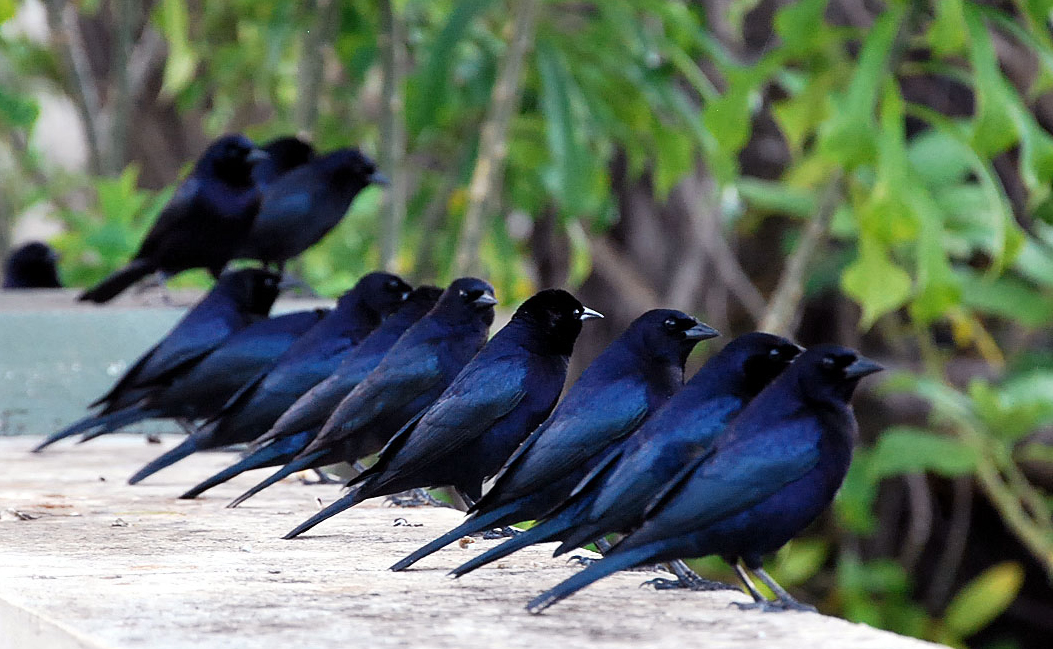
紫輝牛鸝 (Molothrus bonariensis)
photo: Shiny cowbird (wiki)

紫輝牛鸝 (Molothrus bonariensis) 也是一種寄生鳥蛋的物種,寄生時可能把原寄主的鳥蛋破壞,而且在南美洲是一種入侵性物種,也有可能會破壞原生物種的鳥蛋。褐黃沼澤雀 (Pseudoleistes virescens)是紫輝牛鸝的常見寄主,這種鳥會把白色光滑的寄生鳥蛋排除,但對於與自身鳥蛋相似,有褐色點的鳥蛋接受度很高,作者群想瞭解這種鳥對於決定寄生鳥蛋的排除或不排除之間的決策,或是是否能夠辨識寄生鳥蛋差異的光譜中,是否存在著某種「開關」?

Fig. 1 實驗中所使用的鳥蛋樣式
a圖上排 純白鳥蛋 (white immaclate, CwI)
中排 藍色有點 (Novel Blue spots, NBS)
下排 自然有點 (cowbird eggs, CwS)
Fig. 2 鳥蛋排除比例
作者群人工製作出幾種實驗樣式:純白 (cowbird immaculate, CwI)、藍色有點 (Novel Blue Spotted, NBS) 與自然有點的鳥蛋 (cowbird spotted, CwS),然後到野外尋找褐黃沼澤雀的巢,以人工寄生的方式把蛋放入鳥巢,測試親鳥對於這些鳥蛋的排除能力。結果顯示無論純白與藍色有點的鳥蛋排除率都很高,而自然有點的鳥蛋排除率較低,這部分顯示自然有點的鳥蛋擬態斑紋是有效果的。然而另一個部分的結果顯示,當自然有點與純白,或與藍色有點的鳥蛋同時放入鳥巢時,這兩種鳥蛋同時會受到高比例的排除,顯示當有非擬態型的鳥蛋混入時,褐黃沼澤雀對於擬態鳥蛋的接受度就降低。

作者群認為他們的結果顯示出鳥類在認知自身鳥蛋上的「閥值」,如果只有擬態型的鳥蛋,此時尚未達到閥值(開關還沒打開),因此褐黃沼澤雀能夠接受不是自己的鳥蛋,但如果把明顯不一樣的鳥蛋置入,此時達到認知閥值(開關打開),就能夠辨識所有不是自己的蛋並且將之排除。這可能也部分解釋為何有的鳥種為何能夠接受,或是無法辨識外來的寄生鳥蛋。
Wrote by Chia-Hsuan Wei
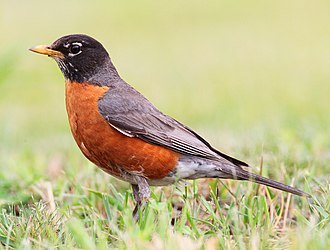
美洲知更鳥 (Turdus migratorius)
photo:
American robin (wiki)
標題:Experimental Shifts in Intraclutch Egg Color Variation Do Not Affect Egg Rejection in a Host of a Non-Egg-Mimetic Avian Brood Parasite

摘要

Avian brood parasites lay their eggs in the nests of other birds, and impose the costs associated with rearing parasitic young onto these hosts.Many hosts of brood parasites defend against parasitism by removing foreign eggs from the nest. In systems where parasitic eggs mimic host eggs in coloration and patterning, extensive intraclutch variation in egg appearances may impair the host’s ability to recognize and reject parasitic eggs, but experimental investigation of this effect has produced conflicting results. The cognitive mechanism by which hosts recognize parasitic eggs may vary across brood parasite hosts, and this may explain variation in experimental outcome across studies investigating egg rejection in hosts of egg-mimicking brood parasites. In contrast, for hosts of non-egg-mimetic parasites, intraclutch egg color variation is not predicted to co-vary with foreign egg rejection, irrespective of cognitive mechanism. Here we tested for effects of intraclutch egg color variation in a host of nonmimetic brood parasite by manipulating egg color in American robins (Turdus migratorius), hosts of brown-headed cowbirds (Molothrus ater).We recorded robins’ behav- ioral responses to simulated cowbird parasitism in nests where color variation was artificially enhanced or reduced. We also quantified egg color variation within and between unmanipu- lated robin clutches as perceived by robins themselves using spectrophotometric measures and avian visual modeling. In unmanipulated nests, egg color varied more between than within robin clutches. As predicted, however, manipulation of color variation did not affect rejection rates. Overall, our results best support the scenario wherein egg rejection is the outcome of selective pressure by a nonmimetic brood parasite, because robins are efficient rejecters of foreign eggs, irrespective of the color variation within their own clutch.


把鳥蛋下在別人家裡,讓其他的親鳥把自己的孩子拉拔長大,將飼養子代的成本轉嫁到其他的物種上,對於寄生者來說是一件省資源的好事,但對於被寄生的寄主來說就沒那麼輕鬆了。因此有些寄生者為了有效率的託孤鳥蛋,發展出能夠將鳥蛋生的跟寄主的蛋一樣,讓寄主分不出來,但也有些寄生者似乎不太在意相似度,採取以量取勝的策略,只要看到巢就到處生,這也造成寄主很容易的就把這些外來的蛋認出,使這次的寄生失敗。有意思的是,似乎不是每種被寄生的鳥都認得出來,或是辨識出來也不排除,即使鳥蛋的樣子非常不相似,這樣的行為可能與被寄生的鳥的認知能力系統差異有關。

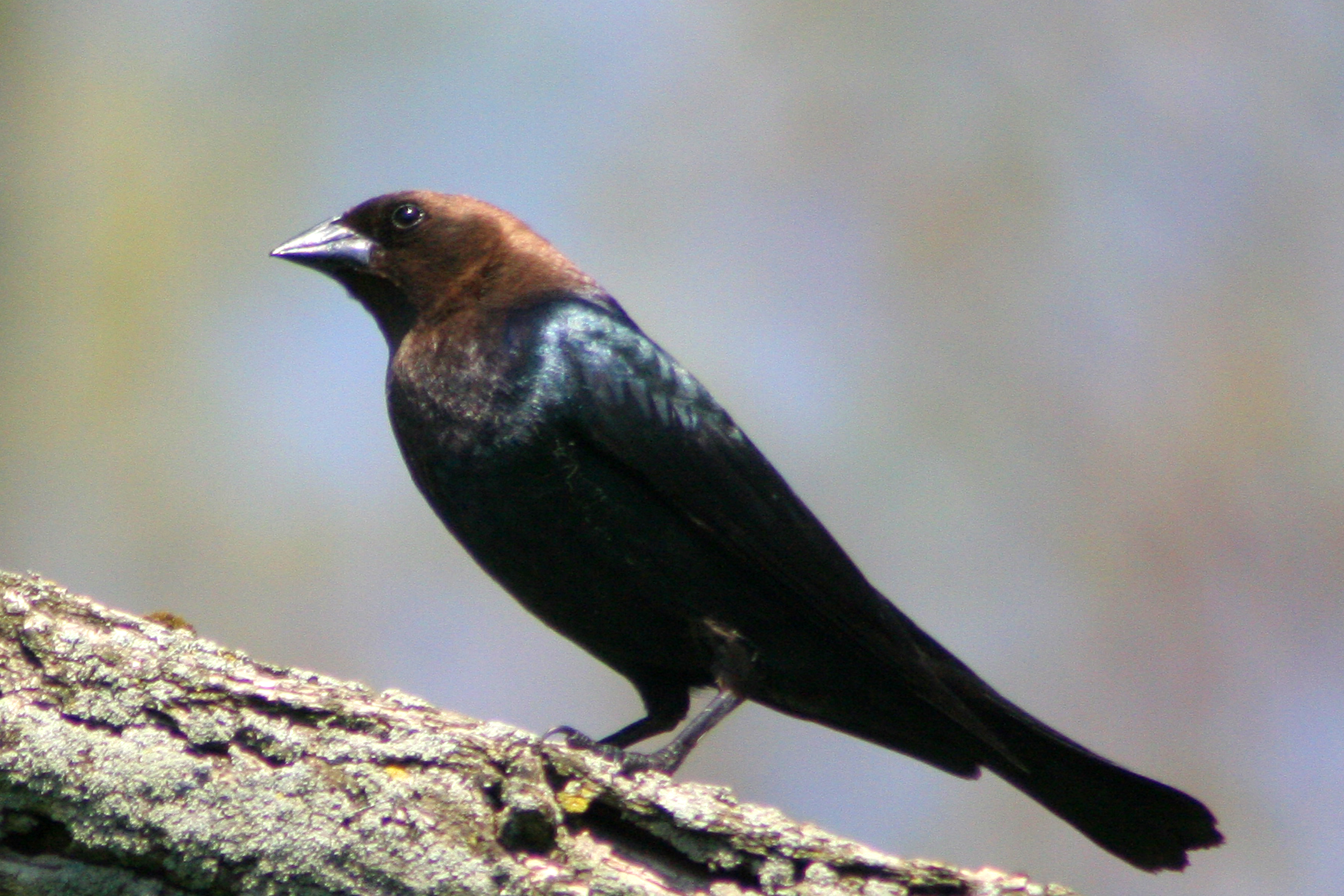
褐頭牛鸝 (Molothrus ater)
photo: Brown-headed cowbird (wiki)
褐頭牛鸝與美洲知更鳥的蛋
photo: Don Johnston
褐頭牛鸝 (Molothrus ater) 就是一種四處到別人家裡生蛋的鳥,而這種鳥的蛋就屬於完全不擬態的鳥蛋。其中的寄主之一,美洲知更鳥 (American robin, Turdus migratorius) 則是能夠高度排除褐頭牛鸝的鳥蛋,有時甚至能達到完全排除。但美國知更鳥的蛋與褐頭牛鸝的蛋差異很大,美國知更鳥之所以能有效率的排除外來的蛋,是因為其認知系統很強大到無論如何都能夠辨識並排除,或是單純的只是因為這顆蛋差異很大很奇怪,因此排除這顆鐵定與我無關的蛋?

Fig. 1 實驗進行所使用的鳥蛋顏色與反射光譜數據
Fig. 2 增加或減少鳥蛋顏色的條件下,知更鳥排除的比例
作者透過行為實驗操作,將褐頭牛鸝的蛋上色成與知更鳥的蛋類似的顏色但深淺不一,將其放入知更鳥的巢中記錄其行為,並且將這些顏色以鳥類的視覺模型檢驗,以推測究竟是認知系統或是視覺差異主導排除外來鳥蛋。結果顯示無論操作的顏色變化,都不會影響知更鳥的鳥蛋排除率,支持知更鳥的認知能夠幫助其排除外來鳥蛋。這個結果也顯示知更鳥的認知系統與寄生鳥蛋在演化上的競爭關係。
Wrote by Chia-Hsuan Wei
大杜鵑 (Cuculus canorus)
photo: Planet of Birds


標題:A shared chemical basis of avian host−parasite egg colour mimicry

摘要

Avian brood parasites lay their eggs in other birds’ nests and impose considerable fitness costs on their hosts. Historically and scientifically, the best studied example of circumventing host defences is the mimicry of host eggshell colour by the common cuckoo (Cuculus canorus). Yet the chemical basis of eggshell colour similarity, which impacts hosts’ tolerance towards parasitic eggs, remains unknown. We tested the alternative scenarios that (i) cuckoos replicate host egg pigment chemistry, or (ii) cuckoos use alternative mechanisms to produce a similar perceptual effect to mimic host egg appearance. In parallel with patterns of similarity in avian-perceived colour mimicry, the concentrations of the two key eggshell pigments, biliverdin and protoporphyrin, were most similar between the cuckoo host-races and their respective hosts. Thus, the chemical basis of avian host–parasite egg colour mimicry is evolutionarily conserved, but also intraspecifically flexible. These analyses of pigment composition reveal a novel proximate dimension of coevolutionary interactions between avian brood parasites and hosts, and imply that alternative phenotypes may arise by the modifications of already existing biochemical and physiological mechanisms and pathways.

Fig. 1 大杜鵑在匈牙利、芬蘭與捷克的蛋與當地寄主的相似度


大杜鵑 (Cuculus canorus) 是一種從內而外,從頭到尾都模仿其他物種的鳥類,成體的外觀類似某些雀鷹,牠們的鳥蛋能夠藉著擬態各種不同其他的鳥類的蛋,下在其他鳥類的窩裡,利用其他鳥類的資源來培養牠們的後代,其生活史幾乎可以說是寄生在其他鳥類的資源上,這個現象自然引起科學家對杜鵑濃厚的興趣,認為這無論是研究行為或演化,都是十分適合的生物模型。

這篇文章的作者群想討論一個問題:杜鵑的鳥蛋可以這麼相似,變化度又這麼大,是透過合成鳥蛋的化學機制控制,或是有什麼其他的機制控制呢?作者群取樣數種分佈在匈牙利、芬蘭與捷克的鳥種,其中有共域杜鵑的主要寄主、次級寄主與非寄主的鳥類,分析其鳥蛋表面的反射光譜與色素組成的化學結構,從光學與化學的角度推測杜鵑鳥蛋擬態的機制來源。

Fig. 2 光譜分析結果

Fig. 3 化學成分分析結果

結果發現杜鵑的蛋殼與當地寄主的蛋殼光譜有部分重疊,而杜鵑的蛋殼更廣泛的涵蓋到其他非寄主的蛋殼光譜。色素化學的分析結果顯示兩種主要形成蛋殼色素的化學物質,biliverdin與protoporphyrin,與當地寄主的蛋殼的濃度類似,顯示顏色的相似度可能來自色素化學物質濃度的趨同所導致。
Wrote by Chia-Hsuan Wei
Older Posts Home

FB專頁

熱門文章

  • 越紅越凶:草莓箭毒蛙的警戒色除了警告天敵也反應個體侵略性
  • 看起來很警戒,身上的顏色就都很警戒?重新評估北美經典擬態模型的警戒色的例子
  • 放棄身為跳蛛的堅持:除了型態之外,蟻蛛的動作也像螞蟻嗎?

精選文章

貓頭鷹蝶的眼紋真的擬態貓頭鷹的眼睛嗎?

相關網站

  • Heliconius Homepage
    Michel Cast sent me pictures of this nice hybrid specimen from Ceara, Brazil! Thank you Michel and P. Jauffret!
  • 這是什麼啊? 可以吃嗎?
    最近出現一個被狂轉的新聞,大意是說有人為了避免蝸牛被路殺所以在其殼上彩繪,希望這樣就能讓人類注意到蝸牛的存在而不要把牠們踩死。這聽起來好像立意不錯喔? 但就我們研究警戒與擬態的角度來說,我們認為這種作法天真且有些荒謬,為什麼呢? - 在偽裝(camouflage)與警戒(aposematism)形成...
  • WELCOME TO THE BIODIVERSITY LAB! | Biodiversity Lab
  • Kronforst Lab at the University of Chicago
  • mallet lab
  • MimeticButterflies
  • Mathieu Joron - Home
  • Evolution of predator-prey interactions — Bio- ja ympäristötieteiden laitos

文章類型

  • 文章 (Article) 113
  • 擬態環 (mimicry ring) 12
  • 回顧 (review) 10
  • 科普 4
  • 擬態那些事 3
  • 書 (Book) 3
  • 評論 (comment) 1

研究領域

  • 貝氏擬態 (Batesian mimicry) (43)
  • 警戒性 (Aposematism) (40)
  • 穆氏擬態 (Müllerian mimicry) (37)
  • 多態型 (polymorphism) (16)
  • 擬態環 (mimicry ring) (12)
  • 侵略型擬態 (aggressive mimicry) (10)
  • 隱蔽性 (crypsis) (10)
  • 不完美擬態 (imperfect mimicry) (6)
  • 種化 (speciation) (5)
  • 雌性擬態 (female-limited mimicry) (5)
  • 性擇 (sexual selection) (4)
  • 鳥蛋寄生 (egg parasite) (4)
  • 眼斑 (eyespot) (3)
  • 假頭 (false head) (2)
  • 性雙型性 (sexual dimorphism) (2)
  • 擬蟻性 (Myrmecomorphomania) (2)
  • 機動性擬態 (locomotory mimicry) (2)
  • "模糊"型擬態 (satyric mimicry) (1)

研究方式

  • 行為學 (Ethology) (46)
  • 生態 (Ecology) (21)
  • 系統發生學 (phylogenetics) (16)
  • 基因體 (Genomics) (12)
  • 視覺模型 (visual model) (10)
  • 模擬(modelling and simulation) (6)
  • 遺傳學 (genetics) (6)
  • 族群遺傳 (population genetics) (5)
  • 分子生物學 (Molecular biology) (4)
  • 化學生態 (Chemical ecology) (3)
  • 分子鑑定 (molecular identificaiton) (1)
  • 古生物學 (palaeontology) (1)
  • 地理資訊系統 (GIS) (1)
  • 演化發育學 (Evo-Devo) (1)

分類群

Copyright © 2015 擬態生物學. Designed by OddThemes | Distributed By Gooyaabi Templates