• 首頁 (Home)
  • 理論介紹 (Theories)
    • 警戒色
    • 貝氏擬態 (Batesian mimicry)
    • 穆氏擬態 (Mullerian mimicry)
    • 副貝氏擬態 (quasi-Batesian mimicry)
  • 研究團隊 (research teams)
    • Candy Rowe
    • James Mallet
    • John skelhorn
  • 文獻蒐集 (Bibliography)
    • 2010-
      • 2016
      • 2015
      • 2014
      • 2013
      • 2012
      • 2011
      • 2010
    • 2000-2009
      • 2009
      • 2008
      • 2007
      • 2006
      • 2005
      • 2004
      • 2003
      • 2002
      • 2001
      • 2000
    • More than 650 references on mimicry

擬態生物學

警戒色與擬態的介紹團隊,學術文章導讀,歷史背景,物種,與生物多樣性


原文標題:Direction and strength of selection by predators for the color of the aposematic wood tiger moth

摘要 [原文連結]

Conventionally, predation is assumed to select for conspicuousness and uniformity of warning signals in aposematic (i.e., chemically defended and warning signaling) prey because this enhances predators' initial and learned avoidance. On the other hand, it has been suggested that both variation in the background where the signal is displayed as well as variation in predators' probability to attack defended prey may favor intermediate signals or relax selection for signal monomorphism. We studied the direction and strength of selection for the hind wing color (orange vs. red) of female Parasemia plantaginis moths. Birds found the moths aversive and avoided them by sight both in laboratory and field experiments. A laboratory experiment with great tits showed that birds can discriminate between orange and red wings and attack red females less than orange females. This directional selection should decrease variation in hind wing color. However, the hind wing color did not significantly affect the “survival” of dead specimens under natural field conditions in a multipredator community. In addition, even though both orange and red were highly conspicuous against green leaves and silver birch trunks (backgrounds used in the studies), the magnitude of avian-perceived chromatic contrast (conspicuousness) differed against these backgrounds. Our results suggest that depending on the signal environment (background, predator community) directional selection for the warning signal monomorphism can be relaxed.


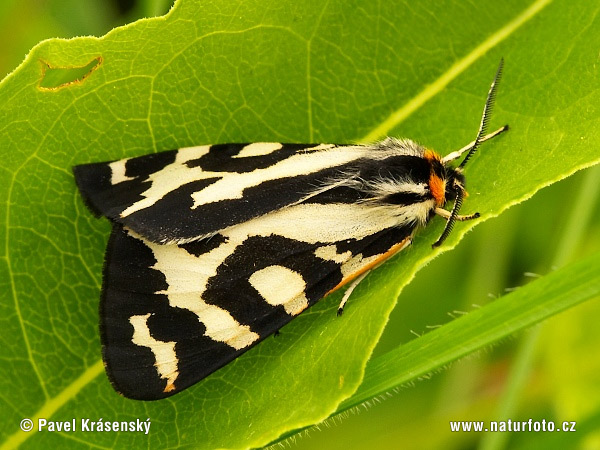
先介紹一下本篇所使用的物種Parasemia plantaginis(燈蛾科),廣泛分布於舊北區,食草廣泛,在大英的寄主資料庫中查到取食杜鵑花科、蓼科、車前草科、樺木科與菊科,而這種類似乎隨著食草不同,體內的防禦與免疫程度也會跟著變動。翅紋如上圖所示,後翅包含從紅色到接近黃色的多態型(圖中皆為雌性),對照組則使用的是wax moth(螟蛾科)。

這篇文章就是在討論如果警戒色本身有變化的話,那麼捕食者會如何應對,或是那個顏色本身就是比較有效的,天擇的壓力會不會傾向哪邊比較有利等等。實驗分為幾個部分,第一個部分是確認這個蛾的警戒色到底有多有效,這個部分使用的捕食者是pied flycatcher(見下圖);第二個部分是捕食者對於這個蛾的避忌記憶的速率(也就是測試多快會記得),這個部分使用的捕食者是大山雀(great tits);第三個部分則是將這些蛾放到野外去做實驗,測試對於野外的鳥類是否會避忌。
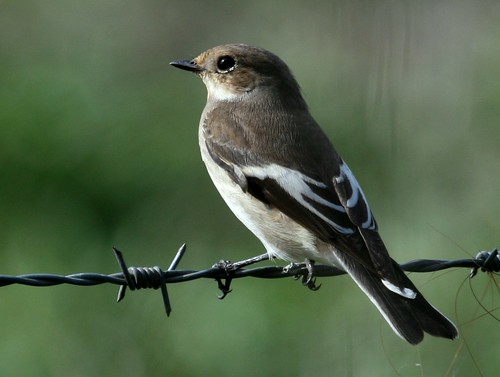
pied flycatcher

結果顯示無論是紅色或橘色在鳥類眼中都是十分顯眼的顏色,而紅色的效用似乎大於橘色,但兩個顏色都仍是有效的警戒色,作者認為這樣的結果代表兩個顏色都能分擔捕食壓力,因此這樣的多態型能夠被保留下來。

這個結果雖然在某種程度上可以解釋為何警戒色有多態型,不過一個物種的多態型成因有很多,不同的顏色也可能代表小時候吃的食物不同,進而反應個體品質之類的;另一個點在於,這個燈蛾與那個螟蛾的大小好像有點差距,雖然燈蛾的顏色是顯眼多了沒錯,不過也可能是因為比較大,螟蛾比較小的緣故,但這算是瑕不掩瑜的小缺點啦。
Wrote by Chia-Hsuan Wei
Older Posts Home

FB專頁

熱門文章

  • 越紅越凶:草莓箭毒蛙的警戒色除了警告天敵也反應個體侵略性
  • 看起來很警戒,身上的顏色就都很警戒?重新評估北美經典擬態模型的警戒色的例子
  • 放棄身為跳蛛的堅持:除了型態之外,蟻蛛的動作也像螞蟻嗎?

精選文章

貓頭鷹蝶的眼紋真的擬態貓頭鷹的眼睛嗎?

相關網站

  • Heliconius Homepage
    Michel Cast sent me pictures of this nice hybrid specimen from Ceara, Brazil! Thank you Michel and P. Jauffret!
  • 這是什麼啊? 可以吃嗎?
    最近出現一個被狂轉的新聞,大意是說有人為了避免蝸牛被路殺所以在其殼上彩繪,希望這樣就能讓人類注意到蝸牛的存在而不要把牠們踩死。這聽起來好像立意不錯喔? 但就我們研究警戒與擬態的角度來說,我們認為這種作法天真且有些荒謬,為什麼呢? - 在偽裝(camouflage)與警戒(aposematism)形成...
  • WELCOME TO THE BIODIVERSITY LAB! | Biodiversity Lab
  • Kronforst Lab at the University of Chicago
  • mallet lab
  • MimeticButterflies
  • Mathieu Joron - Home
  • Evolution of predator-prey interactions — Bio- ja ympäristötieteiden laitos

文章類型

  • 文章 (Article) 113
  • 擬態環 (mimicry ring) 12
  • 回顧 (review) 10
  • 科普 4
  • 擬態那些事 3
  • 書 (Book) 3
  • 評論 (comment) 1

研究領域

  • 貝氏擬態 (Batesian mimicry) (43)
  • 警戒性 (Aposematism) (40)
  • 穆氏擬態 (Müllerian mimicry) (37)
  • 多態型 (polymorphism) (16)
  • 擬態環 (mimicry ring) (12)
  • 侵略型擬態 (aggressive mimicry) (10)
  • 隱蔽性 (crypsis) (10)
  • 不完美擬態 (imperfect mimicry) (6)
  • 種化 (speciation) (5)
  • 雌性擬態 (female-limited mimicry) (5)
  • 性擇 (sexual selection) (4)
  • 鳥蛋寄生 (egg parasite) (4)
  • 眼斑 (eyespot) (3)
  • 假頭 (false head) (2)
  • 性雙型性 (sexual dimorphism) (2)
  • 擬蟻性 (Myrmecomorphomania) (2)
  • 機動性擬態 (locomotory mimicry) (2)
  • "模糊"型擬態 (satyric mimicry) (1)

研究方式

  • 行為學 (Ethology) (46)
  • 生態 (Ecology) (21)
  • 系統發生學 (phylogenetics) (16)
  • 基因體 (Genomics) (12)
  • 視覺模型 (visual model) (10)
  • 模擬(modelling and simulation) (6)
  • 遺傳學 (genetics) (6)
  • 族群遺傳 (population genetics) (5)
  • 分子生物學 (Molecular biology) (4)
  • 化學生態 (Chemical ecology) (3)
  • 分子鑑定 (molecular identificaiton) (1)
  • 古生物學 (palaeontology) (1)
  • 地理資訊系統 (GIS) (1)
  • 演化發育學 (Evo-Devo) (1)

分類群

Copyright © 2015 擬態生物學. Designed by OddThemes | Distributed By Gooyaabi Templates