• 首頁 (Home)
  • 理論介紹 (Theories)
    • 警戒色
    • 貝氏擬態 (Batesian mimicry)
    • 穆氏擬態 (Mullerian mimicry)
    • 副貝氏擬態 (quasi-Batesian mimicry)
  • 研究團隊 (research teams)
    • Candy Rowe
    • James Mallet
    • John skelhorn
  • 文獻蒐集 (Bibliography)
    • 2010-
      • 2016
      • 2015
      • 2014
      • 2013
      • 2012
      • 2011
      • 2010
    • 2000-2009
      • 2009
      • 2008
      • 2007
      • 2006
      • 2005
      • 2004
      • 2003
      • 2002
      • 2001
      • 2000
    • More than 650 references on mimicry

擬態生物學

警戒色與擬態的介紹團隊,學術文章導讀,歷史背景,物種,與生物多樣性


跳蛛的某些種類外觀看起來像蜂、螞蟻、或是有些像甲蟲,已經有許多的觀察與研究,但長得像蠅的似乎不太常見。這個研究描述了一個分佈於玻利維亞的跳蛛新種,其外觀的某些角度與幾種不同的蠅看起來十分相似,作者認為這可能是為了要靠近捕食這些蠅而形成的攻擊型擬態 (aggressive mimicry)

Perger, R., & Rubio, G. D. (2018). A wolf in sheep’s clothing: The description of a fly resembling jumping spider of the genus Scoturius Simon, 1901 (Araneae: Salticidae: Huriini). PLOS ONE, 13(1), e0190582. http://doi.org/10.1371/journal.pone.0190582
Wrote by Chia-Hsuan Wei
弓拱獵蛛 (Evarcha arcuata)
photo from wikipedia


標題:How variation in prey aposematic signals affects avoidance learning, generalization and memory of a salticid spider

摘要

Most studies of aposematism focus on the effect of warning signals on vertebrate predators, especially birds. In our experiments, we used jumping spiders, Evarcha arcuata (Araneae: Salticidae) as predators, and larvae of three colour forms (red, white, yellow) of an unpalatable firebug, Pyrrhocoris apterus (Heteroptera: Pyrrhocoridae) as prey. The experiments were divided into four successive steps, focusing on different aspects of predatore-prey interaction. (1) When presented with a firebug for the first time, the spiders captured the white, least conspicuous colour form more often than the other two. No differences in the attack latencies were observed between the colour forms. (2) In the avoidance-learning test, the spiders were offered in succession five firebugs of one of the three colour forms. The attack and capture rate decreased in all colour forms, more notably in the red, most conspicuous form. (3) After five presentations of the same prey, the spiders were presented with a different firebug colour form. The results of the generalization process were asymmetric: spiders' attack rate increased when the red prey was followed by the yellow or white one, but decreased when the red form was presented after the other colour forms. (4) Spiders attacked the same prey more often the next day, but the attacks were seldom fatal. Similarly to the initial reaction, spiders captured the white firebugs more often. Our results show that for E. arcuata, the red coloration can represent an effective aposematic signal. Red prey coloration decreased the attack rate during the avoidance-learning process and favoured the prey in generalization between different colour forms. Yellow coloration was moderately effective against E. arcuata, whereas white coloration was the least effective because of low innate bias against this signal.

無翅紅蝽 (Pyrrhocoris apterus) 紅色型

以行為實驗的設計捕食者對警戒色與擬態選擇的研究方法,是一個最直接了解在生態系中這些機制如何運作的方法。大多數的研究主要是以鳥類為實驗進行時的捕食者,是因為鳥類看起來對這類的獵物有明顯選擇,也被認為是推動擬態與警戒色的主要角色。然而,考慮到現實中有各式各樣的掠食生物,科學家也開始思考是否有能用其他動物來測試的可能性?

跳蛛在自然界是一個主要的捕食者,有些蛾的翅紋也與跳蛛擬態有關,但有關跳蛛的相關行為實驗卻很少。這個研究選擇以弓拱獵蛛 (Evarcha arcuata) 做為捕食者,以無翅紅蝽 (Pyrrhocoris apterus) 的三種色型-紅色、黃色與白色進行實驗。實驗分為四個部分 (1) 將跳蛛分為四組,分別是紅色、黃色、白色與果蠅做為獵物,結果發現對白色的捕捉率最高,但對所有色型的反該時間無顯著延遲; (2) 學習迴避測試:將其中一個色型的紅蝽連續給予同一隻跳蛛五隻,結果發現所有色型的捕捉率都逐漸下降,特別是最明顯的紅色;(3) 在給予五隻之後,給予不同色型,結果有趣的是如果一開始給的是紅色而後給白/黃色,跳蛛的攻擊率會上升,但如果是反過來的話,攻擊率會下降;(4) 跳蛛隔天對同樣獵物的攻擊較多,也同樣的對白色的獵物攻擊較多。這個結果顯示紅色對跳蛛而言是個有效的警戒色,黃色次之,白色效果最低。

在給予五隻紅蝽的測試結果:攻擊率與捕捉率
三角=紅色,圓型=黃色,方型=白色,菱型=果蠅

前五個給予紅-白與白-紅處理的結果

前五個給予紅-黃與黃-紅處理的結果
給予後三次與隔日的處理結果

這個研究的邏輯看似十分簡單,厲害的是他們的重覆數極多,每組的個體數都有25隻,加上每個子處理組,總共有200隻跳蛛。無論是要採200隻或是養200隻,若是考慮折損率,以跳蛛來說都是非輕易能達成的數量。另外,紅蝽的變異色也可能不容易取得,實際上來說這是很不容易的一個數量。而這類的行為研究也建議有這樣的重覆數才能有足夠的可信度。


Wrote by Chia-Hsuan Wei
photo from wongchunxing.com
Myrmarachne Merotai (非本實驗中用種類)
標題:Locomotory mimicry in ant-like spiders

摘要

The jumping spider genus Myrmarachne (Salticidae) consists of over 200 species of morphologically accurate ant mimics, enabling Myrmarachne to evade ant-averse predators that confuse the spiders with ants (Batesian mimicry). A conspicuous but untested trait of Myrmarachne, which is frequently mentioned in the literature, is locomotory mimicry. For these spiders, locomotion that is more ant like than salticid like may be an integral part of the suite of mimetic signals. We quantified the locomotory pattern of several species of non-ant-like salticids, Myrmarachne, and ants from Australia. We found that the locomotion of the mimics generally resembles that of ants, but not of other salticids. To tease out the effects of locomotion from those based on morphology, ant-eating salticids as visual predators were presented with 3D animations of ant-like salticids walking either in ant or in salticid fashion. Ant-eating salticids spent significantly longer looking at the stimulus with ant-like movement and were significantly more likely to visually track and stalk the stimulus with ant-like movement. Overall, our results suggest that there is selection pressure on Myrmarachne for increased resemblance to a model by locomotor mimicry, despite the associated costs when faced with ant-eating predators.

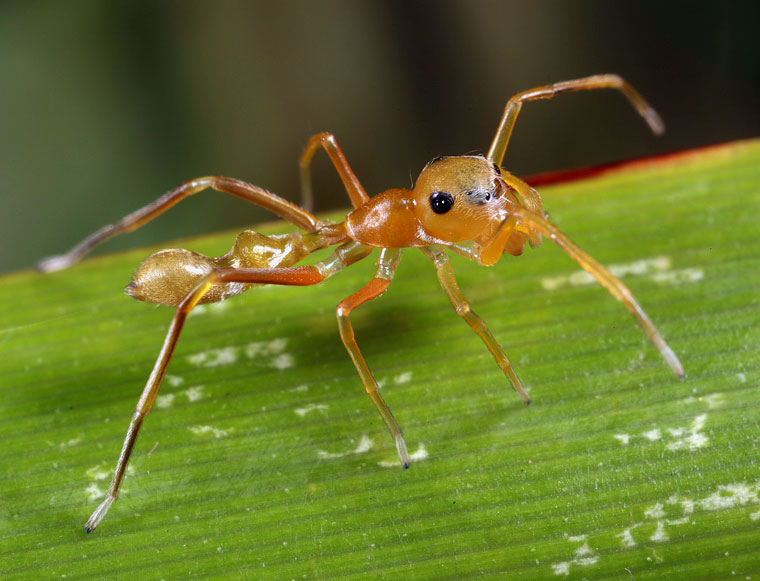
蟻蛛屬 (Myrmarachne,跳蛛科)全世界超過200種,令人驚訝的是精確的擬態各種螞蟻的型態與行為,可能帶給這群跳蛛躲避其他天敵的好處,被認為是一種貝氏擬態。但令人疑惑的是,跳蛛科有另外一群種類是專吃螞蟻的,蟻蛛也可能被其他專吃螞蟻的跳蛛攻擊,這樣擬態螞蟻反而可能承受更大的風險,使得科學家一直想弄清楚這群蟻蛛到底是想怎樣?

雖然以人類的角度來看,蟻蛛看起來像螞蟻,走起來像螞蟻,可是有科學上的證據嗎?意外的不多,大部分是觀察式的證據,因此這篇文章的作者們想透過分析澳洲的蟻蛛與螞蟻的行為比較,還有為了弄清楚行為與型態對擬態的貢獻,也把蟻蛛的3D影像播放給吃螞蟻蜘蛛看,同時藉由科學上的行為分析與捕食者的觀點來分析,蟻蛛到底像不像螞蟻。


實驗中觀察的種類之一,Myrmarachne smaragdina,Darwin, Female
photo from Dr. Greg Anderson

行為的紀錄分為三個類型:非螞蟻型跳蛛(其他跳蛛)、蟻蛛與螞蟻的行為模式,分析蟻蛛的行為究竟比較偏向普通的跳蛛,還是比較類似於螞蟻。行為的實驗則透過3D動畫建模,做出蟻蛛的型態,但行為分別是螞蟻與普通跳蛛的動畫,然後播放給吃螞蟻的跳蛛看(給蜘蛛看卡通的意思),分析蟻蛛究竟是透過行為或是型態來欺騙捕食者。

結果顯示蟻蛛的行為的確比較接近螞蟻而非像其他的跳蛛。吃螞蟻的跳蛛花了比較長的時間在螞蟻行為的蟻蛛影像上,顯示即使對捕食者來說,蟻蛛的行為也非常像螞蟻。因此總和來說,雖然偶爾可能面對來自吃螞蟻的蜘蛛的風險,蟻蛛的確受到某些未知的天擇壓力,迫使這樣精確擬態螞蟻的型態與行為留存。
Wrote by Chia-Hsuan Wei
photo from Danel Zurek

標題:Flexible color learning in an invertebrate predator: Habronattus jumping spiders can learn to prefer or avoid red during foraging

摘要

Understanding the design of prey defenses, such as aposematic colors, involves considering perceptual and cognitive abilities of predators that drive their evolution. Research has focused on avian predators, with little attention to small invertebrate predators. Jumping spiders are abundant and voracious; here, we examined their ability to learn, remember, and generalize color from interactions with aposematic prey. First, we demonstrated that Habronattus pyrrithrix can learn to avoid red, aposematic milkweed bugs. Then, we asked whether exposure to either palatable or unpalatable red prey can drive generalized color biases. Spiders were assigned to one of 3 diets that included exposure to 1) distasteful red milkweed bugs (fed milkweed seeds), 2) palatable red milkweed bugs (fed sunflower seeds), or 3) white-eyed Drosophila only (control). After exposure, we tested spiders for red biases using artificially colored crickets. In our first color-learning experiment, field-collected adult spiders did not exhibit generalized color biases. However, in a second (similar) experiment with lab-raised juveniles, we found evidence of generalized color learning: Group 1 demonstrated red aversion, Group 2 demonstrated red preference, and Group 3 showed no bias. Finally, we examined persistence of memory and found that learned aversions to milkweed-fed bugs lasted less than 2 weeks if they were not continuously reinforced. We discuss our findings in the context of predator psychology and suggest that jumping spider color generalization may differ from that of avian predators. Such invertebrate predators should be considered more when thinking broadly about the evolution of prey color.

很多的研究與很多的例子告訴我們,警戒色與擬態的基本配色就是紅、黃、黑,捕食者似乎也自然而然的接受別去招惹這類的獵物,這個現象可能是因為捕食者天生就對某些顏色偏好或厭惡。若是前者,就需要捕食者的判斷以及學習,若是後者,則無關捕食者聰不聰明,反正天生就是討厭這類東西。討論這樣的問題的時候,一般說來會想到的是高等脊椎動物,因為視力好,行為容易觀察,並且確定有某種程度的心智力。但比起脊椎動物來說,數量更多的無脊椎動物反而討論的少,主要是因為對於其視覺系統難以想像,以及比起脊椎動物來說,更豐富的行為多樣性。

photo from Large milkweed bug (wiki)

這篇文章以一種跳蛛(Habranattus pyrrithrix)為研究對象,跳蛛主要是以兩顆大大的前中眼做為判別周遭情況的受器,比起很多昆蟲與蛛型綱物種來說,視力算是極佳,但問題在於這樣的視力是不是能判別某些顏色,而喜歡或厭惡這些顏色又是來自天生內在的或是後天學習的。這個實驗設計三個不同的處理,分別是餵食馬利筋的椿象(代表有毒),餵食向日葵的椿象(代表無毒),以及白眼果蠅(控制組),分別給跳蛛取食這三種不同的獵物。結果顯示跳蛛對於有毒的獵物產生避忌,而對無毒的獵物有偏好,控制組則沒有明顯差異。也就是說,如果獵物外觀一樣,跳蛛是透過學習來判斷獵物是否能吃,而非透過天生的偏好,而且對於紅色也沒有特殊的偏好。

這樣的研究提醒我們,除了一直認為的脊椎動物可能推動警戒色與擬態的演化,無脊椎動物也可能有重要的生態角色

意思就是未來要考慮的事情越來越多,實驗越來越難做了(嘆)。


Wrote by Chia-Hsuan Wei
 
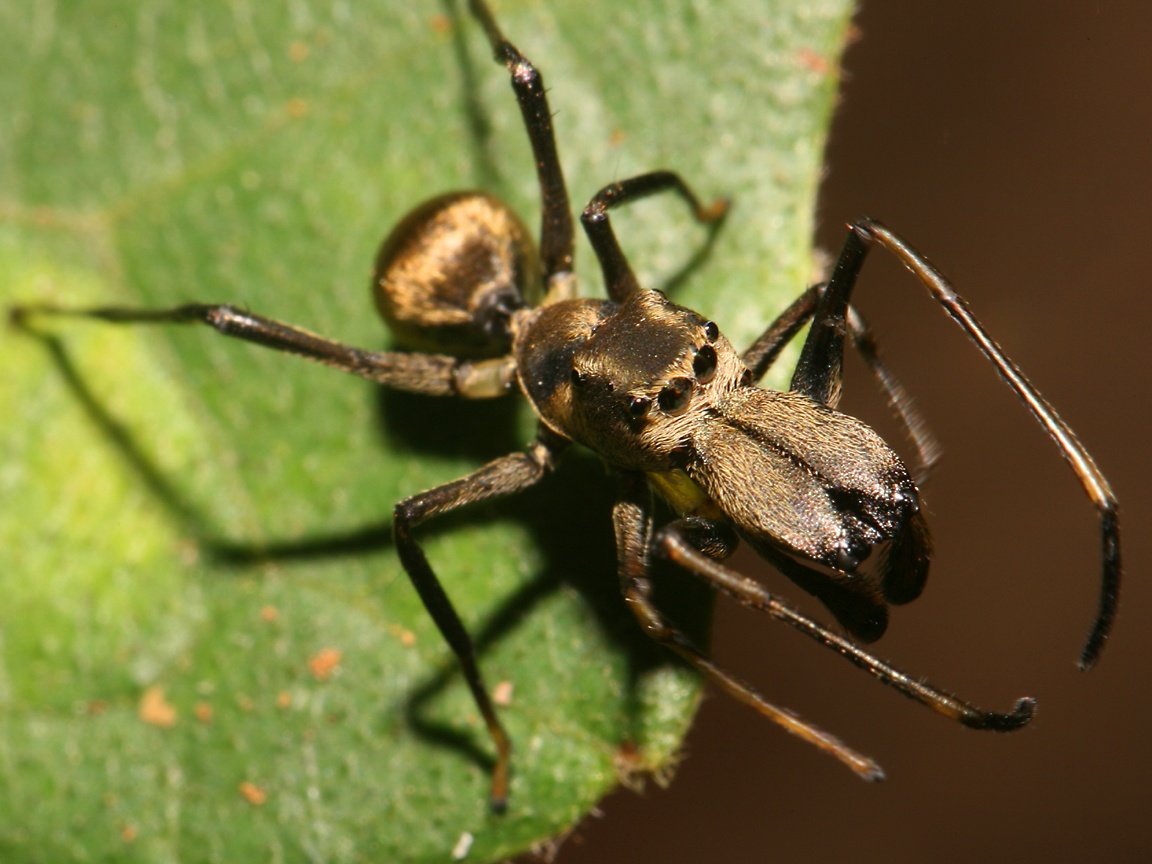
(photo from http://www.thefeaturedcreature.com/ant-spider-weird-ant-mimicking-spider/)
(圖片非當事蛛)
原文標題:Dynamics of the evolution of Batesian mimicry: molecular phylogenetic analysis of ant-mimicking Myrmarachne (Araneae: Salticidae) species and their ant models
[摘要] [原文網址]
Batesian mimicry is seen as an example of evolution by natural selection, with predation as the main driving force. The mimic is under selective pressure to resemble its model, whereas it is disadvantageous for the model to be associated with the palatable mimic. In consequence one might expect there to be an evolutionary arms race, similar to the one involving host–parasite coevolution. In this study, the evolutionary dynamics of a Batesian mimicry system of model ants and ant-mimicking salticids is investigated by comparing the phylogenies of the two groups. Although Batesian mimics are expected to coevolve with their models, we found the phylogenetic patterns of the models and the mimics to be indicative of adaptive radiation by the mimic rather than co-speciation between the mimic and the model. This shows that there is strong selection pressure on Myrmarachne, leading to a high degree of polymorphism. There is also evidence of sympatric speciation in Myrmarachne, the reproductive isolation possibly driven by female mate choice in polymorphic species.
這篇很誇張。

作者感覺野心很大,想要用一個簡單的模型,來測試擬態中的pattern演化是否連動,甚至是共演化的,於是他們選用的是蟻蜘,與當地蟻蜘擬態的螞蟻,方法也很簡單,把蟻蜘的phylogeny做出來,把model螞蟻的phylogeny做出來,然後用tangle tree的方式看有沒跟host-parasite一樣的共演化。

但是整篇都是悲劇,首先是文章中的蟻蜘分類不明,生殖器有多態型變異,體色多態型,所以無法從型態上區分種類,也無從判斷不同的mimic是不是同種,甚至有沒有雜交都很難說,其次蜘蛛要到終齡生殖器才會成熟,文中也提到蟻蜘是個漸進擬態的物種,也是不同齡期體色都會變化,看起來都可能像不同的螞蟻,因此如果抓到非終齡個體,就是悲劇了。分子樹看起來的結果也無法明顯分類,而且樣本數非常少(N=12)。再來他們把不同的螞蟻model,通通拿來做一棵樹,即使這些螞蟻通通都是不同亞科的分類群,只為了要跑tangle tree analysis,想當然這樣做出來的結果不只樹形沒顯著相關,各種演化事件也分布的十分奇怪,但看起來只是個軟體計算的結果。
Wrote by Chia-Hsuan Wei

原圖位置http://goo.gl/vOcUhl

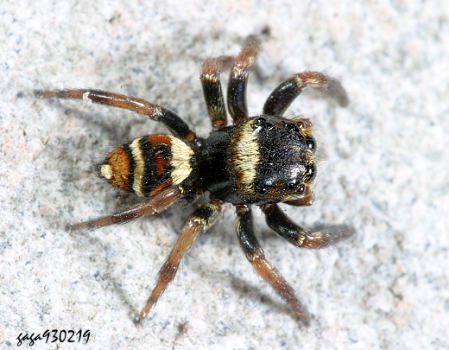
由黃文俊老師拍到的跳蜘,由第一對步足的型態判斷可能是擬態擬蠍

嗯.....可是擬態擬蠍可以幹嘛....而且其實體態不太相似

或者那步足只是單純的捕捉足,跟擬態沒關係?

補充:的確有文章指出這個樣子的跳蜘是擬態擬蠍 http://goo.gl/AoBX4s,是在美國的種類

該文根據的理由是(1)跟擬蠍共棲於樹皮下(2)體態扁平(3)花紋看起來由跟擬蠍一樣的分節

雖然這不是沒可能,但擬蠍....不好吃嗎?(驚)
Wrote by Chia-Hsuan Wei

相關的其他圖片請看這裡

蕨螟亞科的物種有很多參與跳蛛的擬態,可是大部分都有眼斑

這隻沒眼斑只有條紋,不知道是不是真的參與了擬態?
Wrote by Chia-Hsuan Wei

原文標題: Salticid predation as one potential driving force of ant mimicry in jumping spiders

摘要 [原文網址]

Many spiders possess myrmecomorphy, and species of the jumping spider genus Myrmarachne exhibit nearly perfect ant mimicry. Most salticids are diurnal predators with unusually high visual acuity that prey on various arthropods, including conspecifics. In this study, we tested whether predation pressure from large jumping spiders is one possible driving force of perfect ant mimicry in jumping spiders. The results showed that small non-ant-mimicking jumping spiders were readily treated as prey by large ones (no matter whether heterospecific or conspecific) and suffered high attack and mortality rates. The size difference between small and large jumping spiders significantly affected the outcomes of predatory interactions between them: the smaller the juvenile jumping spiders, the higher the predation risk from large ones. The attack and mortality rates of ant-mimicking jumping spiders were significantly lower than those of non-ant-mimicking jumping spiders, indicating that a resemblance to ants could provide protection against salticid predation. However, results of multivariate behavioural analyses showed that the responses of large jumping spiders to ants and ant-mimicking salticids differed significantly. Results of this study indicate that predation pressure from large jumping spiders might be one selection force driving the evolution of nearly perfect myrmecomorphy in spiders and other arthropods.

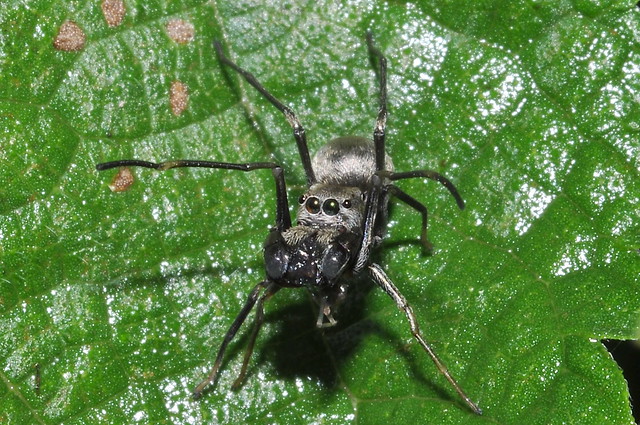
這篇是由東海大學卓逸民教授率領的團隊的研究,旨在討論為何蟻蜘需要擬態螞蟻。

蟻蜘的擬態這件事其實一直以來都弄不太清楚,一來是蟻蜘不是說找就找的到,二來是每隻看到的好像都不太一樣,不太確定這些東西到底是不是不同種還是多態型;以前有人認為蟻蜘擬態螞蟻是為了要吃螞蟻,也就是攻擊型擬態(aggressive mimicry),但是根據很多人的觀察發現蟻蜘似乎也不太吃螞蟻,一些相關的報告也指出跳蜘科其實是不太攻擊螞蟻;另外也有人回到防禦性擬態的範圍下,擬態螞蟻並不是跳蜘的專利,而且擬態螞蟻似乎可以獲得某種程度的保護,因此蟻蜘的擬態或許比較跟逃避天敵有關。

有研究指出跳蜘會捕食其他大量的跳蜘(好像~30%的食性)為食物,因此蟻蜘之所以模仿螞蟻,是不是為了逃避其他跳蜘的攻擊呢?

這篇研究用了三種跳蜘做實驗

多彩扭蜘 Telamonia festiva

毛垛兜跳蛛 Ptocasius strupifer 

大蟻蛛 Myrmarachne magnus

用不同的齡期與大小讓牠們互相攻擊,結果發現蟻蜘被攻擊的次數明顯比較少,因此像螞蟻應該是有用的(細節請自行參閱內文)。

這個結果十分有趣,因為在擬態的研究中通常無法確定天敵到底是誰,這個研究提供了一個方向讓我們了解捕食者有可能就是同類型的生物,但其他脊椎動物捕食者也會取食大量的螞蟻,但這些捕食者取食的螞蟻是否與被擬態的螞蟻類群相同,而這是否會造成某種程度上擬態失效,或是促進擬態的多態性,或許可以進一步的討論。

Wrote by Chia-Hsuan Wei
Older Posts Home

FB專頁

熱門文章

  • [科普]自然界中的詐騙集團:生物間「擬態」現象的奧祕
  • 擬態蛇頭的天蛾幼蟲
  • [Review] 昆蟲的擬態

精選文章

貓頭鷹蝶的眼紋真的擬態貓頭鷹的眼睛嗎?

相關網站

  • Heliconius Homepage
    Michel Cast sent me pictures of this nice hybrid specimen from Ceara, Brazil! Thank you Michel and P. Jauffret!
  • 這是什麼啊? 可以吃嗎?
    最近出現一個被狂轉的新聞,大意是說有人為了避免蝸牛被路殺所以在其殼上彩繪,希望這樣就能讓人類注意到蝸牛的存在而不要把牠們踩死。這聽起來好像立意不錯喔? 但就我們研究警戒與擬態的角度來說,我們認為這種作法天真且有些荒謬,為什麼呢? - 在偽裝(camouflage)與警戒(aposematism)形成...
  • WELCOME TO THE BIODIVERSITY LAB! | Biodiversity Lab
  • Kronforst Lab at the University of Chicago
  • mallet lab
  • MimeticButterflies
  • Mathieu Joron - Home
  • Evolution of predator-prey interactions — Bio- ja ympäristötieteiden laitos

文章類型

  • 文章 (Article) 113
  • 擬態環 (mimicry ring) 12
  • 回顧 (review) 10
  • 科普 4
  • 擬態那些事 3
  • 書 (Book) 3
  • 評論 (comment) 1

研究領域

  • 貝氏擬態 (Batesian mimicry) (43)
  • 警戒性 (Aposematism) (40)
  • 穆氏擬態 (Müllerian mimicry) (37)
  • 多態型 (polymorphism) (16)
  • 擬態環 (mimicry ring) (12)
  • 侵略型擬態 (aggressive mimicry) (10)
  • 隱蔽性 (crypsis) (10)
  • 不完美擬態 (imperfect mimicry) (6)
  • 種化 (speciation) (5)
  • 雌性擬態 (female-limited mimicry) (5)
  • 性擇 (sexual selection) (4)
  • 鳥蛋寄生 (egg parasite) (4)
  • 眼斑 (eyespot) (3)
  • 假頭 (false head) (2)
  • 性雙型性 (sexual dimorphism) (2)
  • 擬蟻性 (Myrmecomorphomania) (2)
  • 機動性擬態 (locomotory mimicry) (2)
  • "模糊"型擬態 (satyric mimicry) (1)

研究方式

  • 行為學 (Ethology) (46)
  • 生態 (Ecology) (21)
  • 系統發生學 (phylogenetics) (16)
  • 基因體 (Genomics) (12)
  • 視覺模型 (visual model) (10)
  • 模擬(modelling and simulation) (6)
  • 遺傳學 (genetics) (6)
  • 族群遺傳 (population genetics) (5)
  • 分子生物學 (Molecular biology) (4)
  • 化學生態 (Chemical ecology) (3)
  • 分子鑑定 (molecular identificaiton) (1)
  • 古生物學 (palaeontology) (1)
  • 地理資訊系統 (GIS) (1)
  • 演化發育學 (Evo-Devo) (1)

分類群

Copyright © 2015 擬態生物學. Designed by OddThemes | Distributed By Gooyaabi Templates